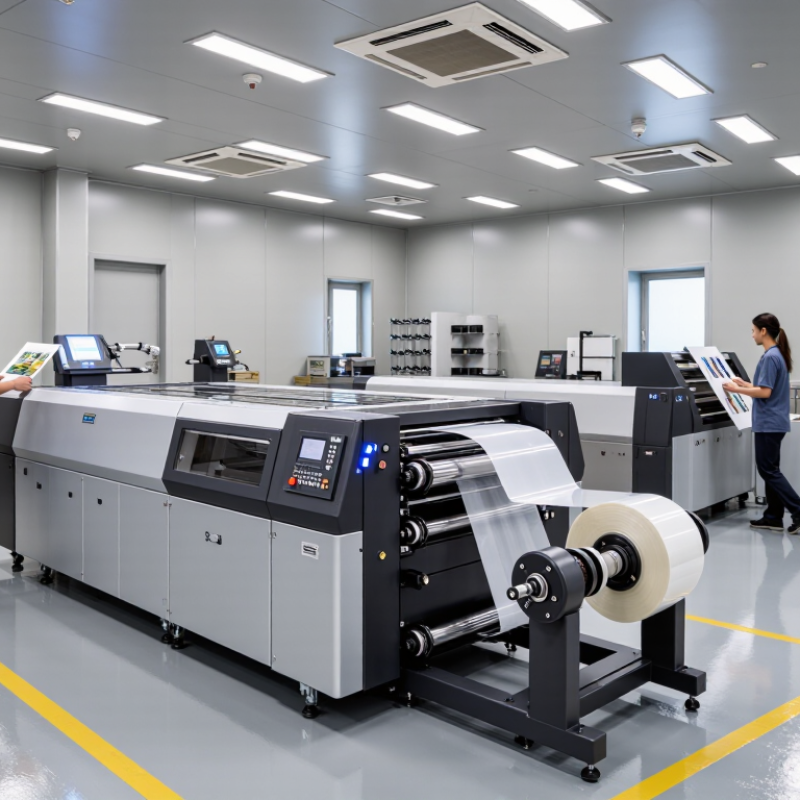
| Direct-to-Film (DTF) Printer | Prints a color image, usually with a white-ink layer, onto coated PET film. Adhesive powder is applied and cured before the design is heat-pressed onto fabric. | Coated PET film with heat-activated adhesive powder | T-shirts, hoodies, uniforms, bags, and other cotton, polyester, or blended textiles | Works across a broad range of fabric colors and blends; suitable for short runs and detailed, multicolor artwork. | Requires powder application, curing, and a heat press. Wash durability depends on ink, film, adhesive, curing, and pressing conditions. |
| Solvent or Eco-Solvent Wide-Format Printer | Uses solvent-based or lower-solvent inks to print graphics on compatible heat-transfer vinyl or printable transfer media. The printed design is cut or trimmed and heat-applied. | Printable heat-transfer vinyl or other ink-compatible transfer media | Garment graphics, team apparel, names and numbers, and small-to-medium custom orders | Can produce vivid graphics on printable media and supports versatile wide-format sign-and-apparel workflows. | Media must be matched to the ink and fabric. Some designs require contour cutting, weeding, and careful ventilation during production. |
| Latex or Resin-Based Wide-Format Printer | Prints with water-based latex or resin inks onto compatible printable transfer media; the finished graphic is transferred to fabric using heat and pressure. | Printable heat-transfer vinyl or manufacturer-specified transfer media | Apparel graphics, sportswear decoration, and short-run customized garments | Can support flexible wide-format production and is often selected where water-based ink workflows are preferred. | Not every media type is compatible. Check curing requirements, transfer instructions, stretch performance, and fabric suitability before production. |
| Dye-Sublimation Transfer Printer | Prints dye-sublimation ink onto transfer paper. Heat turns the dye into a gas that bonds with polyester fibers or polymer-coated surfaces. | Sublimation transfer paper; this process typically uses paper rather than transfer film | Polyester apparel, sportswear, flags, soft signage, and polymer-coated promotional products | Produces durable, smooth-feeling prints without a separate adhesive layer on suitable substrates. | Best suited to white or light-colored polyester and polymer-coated items. It is generally not suitable for untreated cotton. |
| UV DTF Printer | Prints UV-curable inks and adhesive layers onto a transfer film, often using a second film to create a peel-and-apply decal. | UV DTF transfer films | Decorating hard, smooth items such as glass, metal, plastic, and coated promotional products | Can create detailed, full-color decals for objects that are difficult to feed through a printer. | Usually applied by pressure rather than heat. It is a film-transfer option, but it is not a conventional heat-transfer process and is generally not intended for garments. |
| Screen-Printed Transfer System | Uses screen printing to build ink layers on transfer paper or film. The prepared transfer is applied to the garment with a heat press. | Screen-print transfer paper or specialty transfer film | Bulk apparel orders, uniforms, promotional garments, and repeat designs | Efficient for larger runs and repeat artwork; can produce opaque graphics with suitable inks and transfer materials. | Setup and screen preparation make it less convenient for frequent design changes or very small quantities. Transfer performance depends on the ink and fabric combination. |