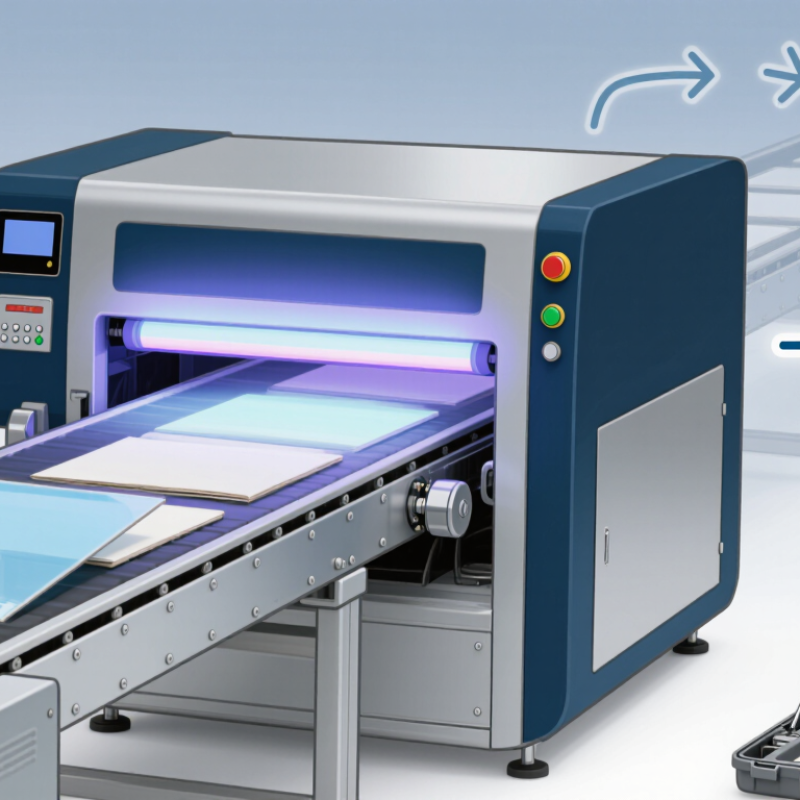
| Conveyorized UV system with mercury-vapor lamps | Continuous coating, printing, and finishing lines; compatible UV formulations | Throughput is primarily affected by conveyor speed, usable belt width, lamp power, and the number of curing zones. | Belt-speed adjustment, lamp power settings, exhaust or cooling monitoring, and optional UV-dose measurement | Suitable for continuous production and a broad range of conventional UV-curable materials | Requires attention to heat-sensitive substrates, lamp maintenance, ventilation, and compatible coating chemistry |
| Conveyorized UV LED system | Production lines using coatings formulated for the LED emission wavelength | Depends on LED irradiance, illuminated width, exposure time, lamp-to-part distance, and line speed. | LED output level, conveyor speed, temperature monitoring, and optional irradiance or dose verification | Instant on/off operation and generally lower infrared heat output than conventional mercury-vapor lamps | Confirm that the photoinitiator system responds to the LED wavelength and that the required dose reaches the full coating layer |
| Batch UV curing chamber | Small or varied production runs, parts that do not suit a conveyor, and laboratory or job-shop work | Batch size is limited by chamber dimensions, loading arrangement, lamp placement, and the need for even exposure. | Cycle timer, lamp power, interlocked door, cooling or exhaust monitoring, and recipe selection on some systems | Flexible for different part shapes and production quantities; does not require a continuous line | Check for shadowing, consistent part positioning, chamber ventilation, and repeatable loading procedures |
| UV flood-curing system | Flat panels, printed sheets, and multiple small parts presented together | Effective area and exposure time determine practical output; uniformity across the illuminated area should be verified. | Exposure timer, lamp intensity or power adjustment, work distance, and optional dose measurement | Can expose a broad area at once and accommodate items that are awkward to convey | Evaluate edge-to-center dose uniformity and whether parts need rotation or more than one exposure |
| Spot or focused UV curing system | Localized curing, small coated areas, assembly work, and precision applications | Output depends on spot size, irradiance at the work surface, exposure duration, and positioning accuracy. | Exposure timer, intensity setting, optical-head positioning, and optional foot-switch or automated triggering | Targets a limited area and can be integrated into manual or automated workstations | Not intended for broad-area curing; confirm spot coverage and avoid uneven results at the edges of the cured area |