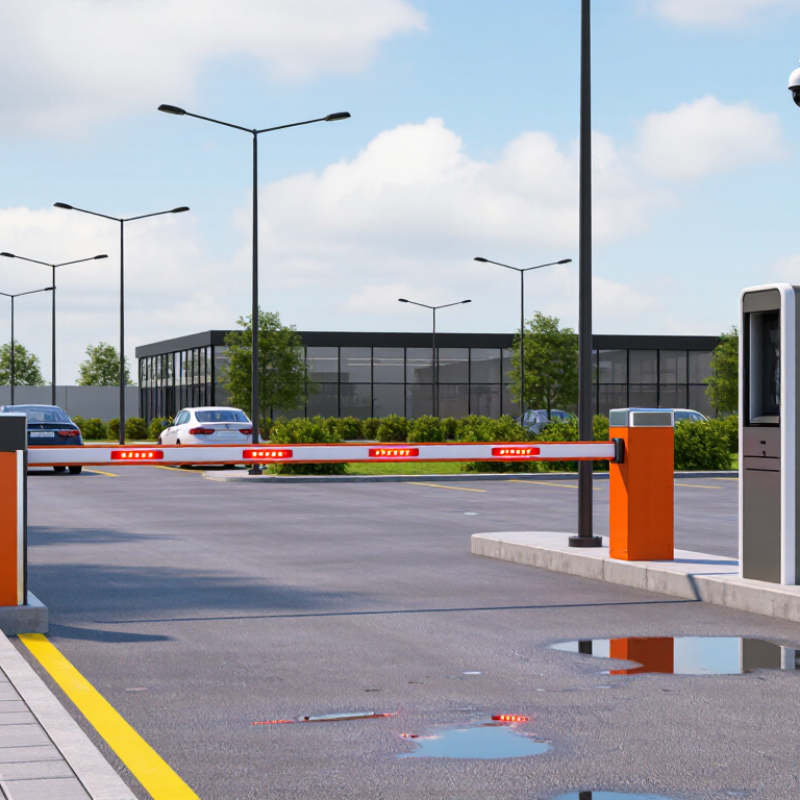
| Small Office or Residential Lot | Up to 60 | Low volume with predictable entry and exit periods. | Limited queuing space; barrier should not obstruct pedestrian routes or turning areas. | Standard automatic straight-arm barrier | 2.5–3.5 m | Keypad, remote control, or proximity card | A simple barrier provides effective access restriction without unnecessary system complexity. |
| Retail Parking Area | 60–180 | Moderate flow with short peaks during business hours and weekends. | Separate entry and exit lanes where possible; provide clear vehicle detection zones. | Automatic barrier with loop detector or radar sensor | 3–4 m | Ticketing, QR validation, or license plate recognition | Automated detection reduces unnecessary stops and helps maintain smooth customer circulation. |
| Office or Business Park | 100–300 | Strong morning and evening peaks with regular authorized users. | Allow sufficient approach distance for queues; avoid placing the barrier immediately beside a junction. | High-cycle automatic barrier with access-control integration | 3–4 m | RFID, proximity card, mobile credential, or license plate recognition | Fast recognition and high operating cycles are important for concentrated commuter traffic. |
| Hospital or Medical Facility | 120–350 | Variable flow with urgent arrivals, visitors, staff, and service vehicles. | Keep emergency access unobstructed; provide generous lane width and visible fallback controls. | High-speed barrier with emergency override and safety sensors | 3–4 m | Priority credentials, intercom, camera verification, and emergency release | Safety, reliability, and continuous access for authorized emergency vehicles should take precedence over fee collection. |
| Shopping Center or Event Venue | 250–700 | High surges before opening, after closing, or during events. | Use multiple lanes, upstream signage, and adequate stacking capacity to prevent public-road spillback. | High-speed, high-cycle barrier system with synchronized lane control | 3–4.5 m | Ticketless payment, license plate recognition, and centralized monitoring | Multiple lanes and rapid transaction handling are needed to limit queues during short, intense peaks. |
| Airport, Transit, or Transport Hub | 300–900 | Continuous high-volume flow with strict separation of public and operational traffic. | Design for lane redundancy, clear wayfinding, weather protection, and safe pedestrian separation. | Industrial high-duty barrier with redundant safety and control systems | 3–4.5 m | Integrated payment, credentialing, CCTV, intercom, and central management | Continuous duty, fail-safe operation, and system redundancy are essential where delays can affect wider transport operations. |
| Industrial or Logistics Facility | 80–250 | Mixed traffic involving employees, trucks, contractors, and scheduled deliveries. | Allow larger turning radii and protect the barrier from reversing or wide-load movements. | Heavy-duty barrier with vehicle classification and safety detection | 4–6 m | Long-range RFID, license plate recognition, intercom, and visitor management | Durability, vehicle clearance, and accurate authorization checks are more important than maximum opening speed. |
| Outdoor Lot in High-Wind or Harsh Weather | 30–180 | Traffic may be moderate, but weather can reduce visibility and affect equipment operation. | Use a sheltered control cabinet, drainage, impact protection, and sufficient clearance from exposed corners. | Weather-rated barrier with reinforced arm and protective safety sensors | 2.5–4 m | Contactless credentials, camera verification, and manual override | Environmental protection and reliable detection help maintain safe operation when visibility or weather conditions deteriorate. |