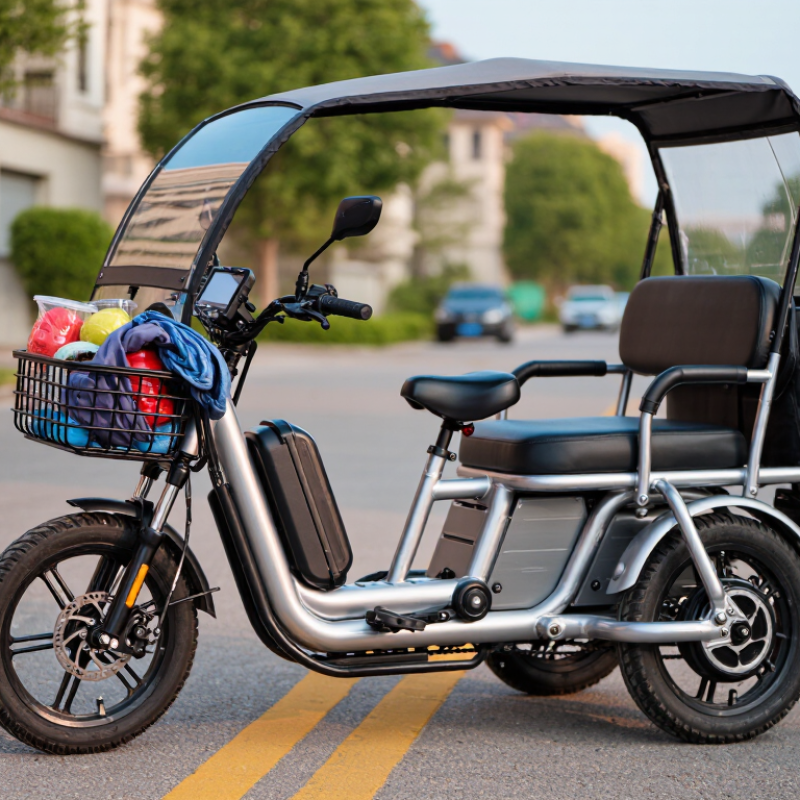
| Safety | Frame and chassis stability | Low center of gravity, wide track, rigid frame, and no noticeable frame flex during normal cornering. | Ride slowly through controlled turns, inspect welds and joints, and check that the frame remains stable when mounting or dismounting. | Visible cracks, loose joints, excessive twisting, or a narrow stance combined with a high seat position. |
| Safety | Braking system | Separate, progressive brakes with reliable stopping performance on dry and slightly wet surfaces. | Test braking from a moderate speed in a traffic-free area. The bike should stop in a straight line without pulling, juddering, or requiring excessive lever force. | Soft levers, brake fade, uneven braking, exposed or damaged cables, or wheels that lock too easily. |
| Safety | Lighting and visibility | White front light, red rear light or reflector, side reflectors, a bell or horn, and high-visibility surfaces. | Confirm that lights are visible from the front, rear, and sides. Check operation with the motor running and under battery power. | Lights powered only by removable accessories, poor side visibility, difficult-to-reach controls, or no reflective elements. |
| Safety | Electrical protection | Protected wiring, secure battery mounting, battery-management protection, and a charger with clear status indicators. | Inspect connectors and cables for abrasion, verify that the battery cannot move during riding, and review charging and overheating instructions. | Loose battery movement, exposed terminals, swollen battery casing, damaged cables, or an unlabelled charger. |
| Safety | Load capacity and distribution | A clearly stated combined rider-and-cargo rating, commonly around 120–180 kg for utility-oriented designs. | Include the rider, passenger, basket contents, and accessories when comparing the stated payload rating. Check whether the rating changes on slopes. | No published payload limit, overloaded rear rack, unstable cargo position, or unclear passenger seating requirements. |
| Comfort | Riding position and adjustability | Adjustable saddle and handlebar positions that allow a relaxed back, slightly bent knees, and easy control access. | Test the bike for at least 15 minutes. Confirm that both feet can reach the ground comfortably when stopped. | Fixed controls, cramped knee room, excessive wrist angle, or difficulty reaching brakes and shifting controls. |
| Comfort | Seat and suspension | Supportive seat padding, an appropriate seat width, and suspension or large-volume tires suited to the intended roads. | Ride over smooth pavement, rough paths, and small bumps. Check whether vibration reaches the seat, hands, or back. | Bottoming-out suspension, unstable seat movement, excessive vibration, or a seat that restricts pedaling. |
| Comfort | Weather protection and accessibility | Practical mudguards, a stable roof or canopy where needed, easy step-through access, and sufficient legroom. | Check entry height, turning space, visibility through the canopy, ventilation, and access to storage areas. | Blocked sightlines, poor ventilation, difficult entry, water collecting near the rider, or doors that cannot be operated from inside. |
| Performance | Motor assistance and hill ability | Smooth power delivery, controllable low-speed assistance, and a published rated motor output that complies with local regulations. | Test starts on level ground and on a moderate incline using the intended load. Assistance should engage progressively without surging. | Delayed response, abrupt acceleration, overheating on short climbs, or performance that depends on a nearly full battery. |
| Performance | Real-world range | For many pedal-assist utility designs, approximately 20–60 km per charge is a realistic planning range; actual results vary considerably. | Compare the battery watt-hours, rider-and-cargo load, terrain, temperature, tire pressure, and assistance level—not only the advertised maximum. | Range stated without test conditions, no battery-capacity information, or a sharp drop in performance under normal load. |
| Performance | Handling and turning radius | Predictable steering at low speed and a turning radius suitable for the intended paths, entrances, and storage area. | Perform slow U-turns, negotiate a narrow passage, and check steering clearance around the rider, passenger, and cargo. | Front-wheel shudder, excessive steering effort, wheel interference, or difficulty recovering from a small steering error. |
| Performance | Gearing, tires, and rolling resistance | Low enough gearing for starts and hills, puncture-resistant tires, and tire width appropriate for the surface. | Test starts with the intended load and inspect tread, sidewalls, valve access, and recommended tire pressure markings. | Gear range too high for hills, tires unsuitable for wet or uneven surfaces, or pressure requirements that are not documented. |
| Durability | Frame and finish quality | Corrosion-resistant treatment, sealed or protected joints, durable fasteners, and a finish without exposed bare metal. | Inspect welds, underside areas, drainage points, hinges, and fasteners. Pay special attention to areas exposed to road spray. | Rust at welds, chipped coating around mounting points, water traps, or mismatched and loose fasteners. |
| Durability | Battery service life | A quality lithium-ion battery commonly supports several hundred full equivalent cycles; capacity gradually decreases with use and age. | Check battery replacement cost, storage temperature guidance, charging limits, diagnostic support, and availability of a replacement pack. | No replacement pathway, unknown cell or protection information, excessive heat during charging, or battery swelling. |
| Durability | Serviceability and spare parts | Standard tires, tubes, brake parts, cables, bearings, and fasteners that can be inspected or replaced by a qualified technician. | Ask for a maintenance schedule and confirm access to service documentation, compatible parts, and battery or motor diagnostics. | Proprietary parts with no stated availability, sealed components that cannot be serviced, or missing maintenance instructions. |
| Durability | Storage and transport | Secure parking capability, weather-resistant electrical components, and dimensions compatible with the intended storage space. | Measure total length, width, height, turning clearance, and storage-door width. Confirm whether the battery can be removed safely. | Cannot fit through the storage route, unstable parking stand, water entering electrical areas, or excessive lifting weight. |
| Overall Decision | Value and ownership cost | Compare purchase price with charging, maintenance, tires, brake wear, battery replacement, insurance, and secure-storage costs. | Estimate total cost over three to five years rather than comparing purchase prices alone. Include expected service intervals and local regulations. | Low initial price but unavailable parts, unclear warranty coverage, expensive battery replacement, or high routine maintenance needs. |