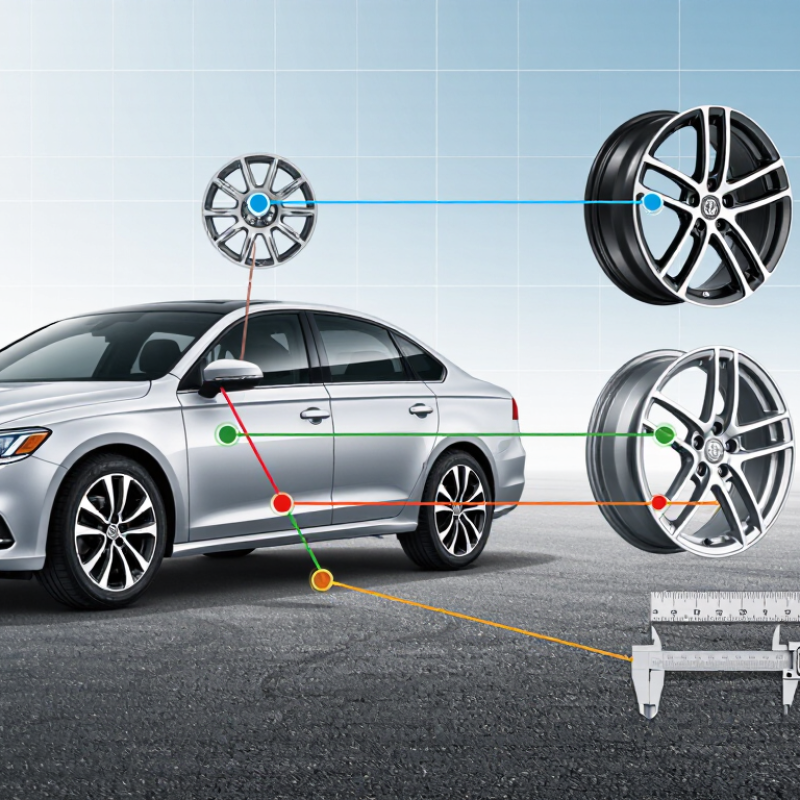
| Wheel Diameter | The diameter of the wheel where the tire bead sits, measured in inches. | 15–20 inches for many passenger cars | A larger diameter can improve steering response and appearance but usually reduces sidewall height and ride comfort. | Confirm tire availability, overall tire diameter, brake clearance, and the vehicle maker’s approved fitment range. |
| Wheel Width | The distance between the inner and outer bead seats, measured in inches. | 6–9 inches for many passenger cars | A wider wheel may support a wider tire and increase cornering stability, but it can add weight and increase clearance risks. | Use a tire width approved for the selected rim; check inner suspension, outer fender, and steering clearance. |
| Offset (ET) | The distance between the wheel’s mounting face and its centerline, measured in millimeters. | Approximately +30 to +50 mm on many modern passenger cars | Higher positive offset moves the wheel inward; lower positive offset moves it outward. | Check fender, suspension, brake, and hub clearance. Excessive changes can affect steering geometry and bearing loads. |
| Bolt Pattern | The number of wheel fasteners and the diameter of the circle passing through their centers, such as 5×114.3 mm. | Varies widely by vehicle | Determines whether the wheel can physically attach to the vehicle hub. | The bolt count and pitch circle diameter must match exactly. Do not rely on visual similarity. |
| Center Bore | The diameter of the center hole in the wheel that fits over the vehicle hub. | Vehicle-specific; commonly about 54–72 mm on passenger cars | A correct hub fit helps center the wheel and reduce the risk of vibration. | A wheel bore may be larger with correctly sized hub-centric rings, but it must not be smaller than the vehicle hub. |
| Load Rating | The maximum load the wheel is designed to support, normally listed in kilograms or pounds. | Must meet or exceed the vehicle’s required wheel load | A higher rating provides an appropriate safety margin for passengers and cargo. | Never choose a wheel with a lower load rating than the vehicle requirement. Consider axle load, not only curb weight. |
| Overall Tire Diameter | The complete diameter of the mounted tire and wheel assembly. | Ideally close to the original equipment diameter | Maintaining a similar diameter helps preserve speedometer accuracy, gearing, and electronic-system operation. | As a general planning target, keep the replacement diameter within about ±3% of the original specification unless approved otherwise. |
| Brake Clearance | The space required for brake calipers, rotors, and other braking components. | Depends on the vehicle and brake package | A wheel with the correct diameter may still fail to clear the brakes because of spoke shape or barrel design. | Verify manufacturer fitment data or perform a professional test fit before mounting tires. |