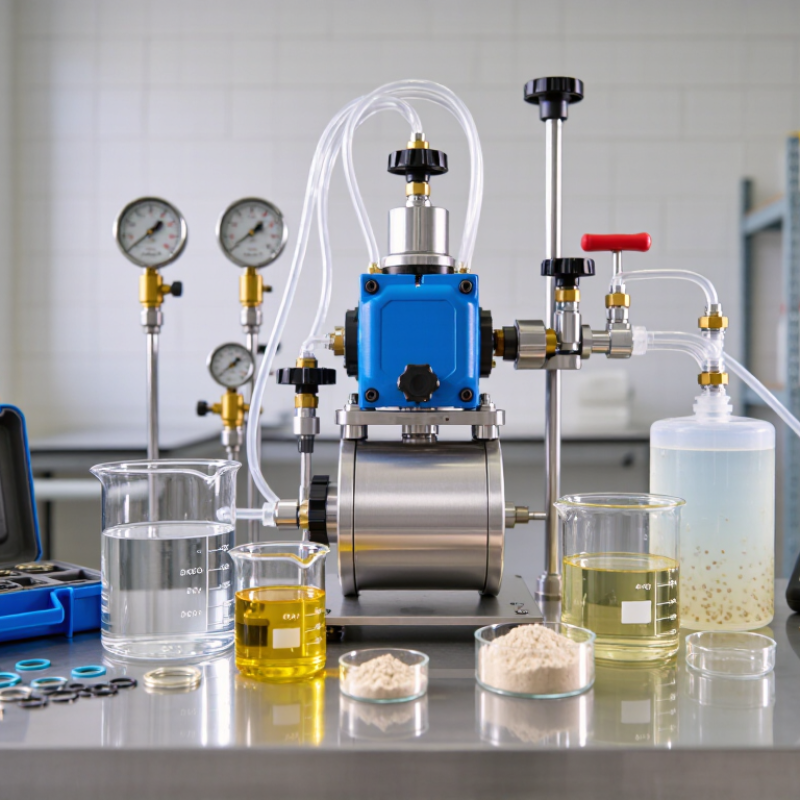
Choosing a vacuum transfer pump starts with the material, not the catalog number. List the liquid’s viscosity, temperature, vapor pressure, solids, and chemical concentration. A solvent may soften an elastomer that looks suitable on paper. A thick fluid may also overload the motor and slow transfer. Request compatibility data for every wetted part, including seals, hoses, valves, and coatings. Test a small sample when the fluid changes. Real fluids are rarely perfect.
Check system compatibility next. Confirm the pump’s vacuum range, flow rate, inlet size, lift height, and duty cycle. Vapor-heavy liquids can cause cavitation or unstable suction. The U.S. Department of Energy’s Pumping System Assessment Tool emphasizes matching pump capacity to actual demand, because oversized equipment often wastes energy through throttling and repeated cycling. That warning deserves attention. Bigger is not automatically better.
Safety and maintenance should be visible in daily operation. Provide grounding where static electricity may accumulate, secure hoses, and install guards around moving parts. OSHA’s noise standard uses 85 dBA over eight hours as a hearing-conservation threshold, so measure noise near the operator, not only at the pump. Follow ISO 12100 principles for hazard identification and risk reduction. Inspect seals, filters, oil, vibration, and unusual heat on a fixed schedule. The Hydraulic Institute recommends life-cycle thinking for pump decisions, including energy, service, and replacement costs. Keep records. Missed maintenance is common, and small leaks often become expensive failures.