| Path and Walkway Lighting | Low-level fixtures that illuminate pedestrian routes, steps, and transitions. | Light is directed downward or outward at a controlled angle to improve visibility along walking surfaces. | Support safe movement and help define the layout of an outdoor area. | Garden paths, sidewalks, stairs, entrances, and driveways. |
| Area and Flood Lighting | Fixtures designed to illuminate broad outdoor spaces or large surfaces. | A wider beam spreads light across yards, parking areas, building exteriors, or work zones. | Increase general visibility and provide functional illumination over a large area. | Driveways, patios, loading areas, sports areas, and building surroundings. |
| Accent Lighting | Focused lighting used to emphasize selected landscape or architectural features. | A narrow or adjustable beam concentrates light on objects such as trees, walls, sculptures, or signs. | Create visual emphasis, depth, and nighttime character without lighting every surface equally. | Landscape features, façades, columns, trees, fountains, and outdoor artwork. |
| Wall and Entry Lighting | Fixtures mounted on exterior walls near doors, gates, garages, or service areas. | The fixture directs light onto nearby surfaces and access points, often using a downward or diffused output. | Improve visibility at entrances and provide practical illumination around access points. | Front doors, back doors, garages, gates, porches, and utility areas. |
| Security Lighting | Lighting intended to improve visibility around vulnerable or poorly observed areas. | Wide-area fixtures may operate continuously or be activated by a motion sensor, timer, or photocell. | Reduce dark areas, support observation, and make movement around a property easier to detect. | Side yards, rear entrances, parking areas, fences, and storage zones. |
| Solar Outdoor Lighting | Self-contained lighting that uses a photovoltaic panel, battery, controller, and LED light source. | The panel converts daylight into electricity; the battery stores energy for use after dark, usually through automatic controls. | Provide lighting where wiring is difficult or where independent operation is preferred. | Paths, gardens, remote signs, decorative areas, and temporary installations. |
| Low-Voltage Lighting | Outdoor lighting supplied at a reduced voltage through a transformer rather than directly from standard mains voltage. | A transformer lowers the incoming voltage, and cables distribute power to connected fixtures. | Provide flexible landscape illumination with lower operating voltage on the fixture side of the system. | Residential landscapes, gardens, paths, patios, and small architectural features. |
| LED Light Sources | Solid-state light sources that produce illumination when electrical current passes through a semiconductor. | An LED driver regulates electrical power, while the diode converts much of that energy into visible light. | Deliver efficient, long-lasting illumination in compact outdoor fixtures. | Path lights, floodlights, wall lights, bollards, step lights, and decorative fixtures. |
| Controls and Automation | Devices and settings that determine when outdoor lights turn on, turn off, or change operation. | Timers follow scheduled periods; photocells respond to ambient light; motion sensors respond to detected movement. | Reduce unnecessary operation, improve convenience, and support consistent lighting behavior. | Entrances, security zones, pathways, driveways, and energy-managed installations. |
| Color Temperature | The visual warmth or coolness of white light, measured in kelvins (K). | Lower color-temperature values appear warmer and more amber; higher values appear cooler and more bluish. | Influence atmosphere, visibility, and how landscape colors and building materials appear at night. | Warm residential landscapes, neutral work areas, entrances, façades, and public spaces. |
| Brightness and Light Output | The amount of visible light produced by a fixture, commonly expressed in lumens (lm). | Higher lumen output generally produces more available light, although beam angle, mounting height, and surface reflectance also affect results. | Match illumination levels to the task, area size, and desired visual effect. | Task lighting, pathways, building exteriors, landscape accents, and security areas. |
| Weather Resistance | The ability of a fixture enclosure to limit the entry of solids and water, commonly described by an IP rating. | The enclosure, seals, and cable entries are designed and tested to provide a stated level of protection against environmental exposure. | Help the fixture operate reliably in outdoor conditions such as rain, dust, and moisture. | Exposed walls, gardens, pool surroundings, driveways, coastal areas, and uncovered walkways. |
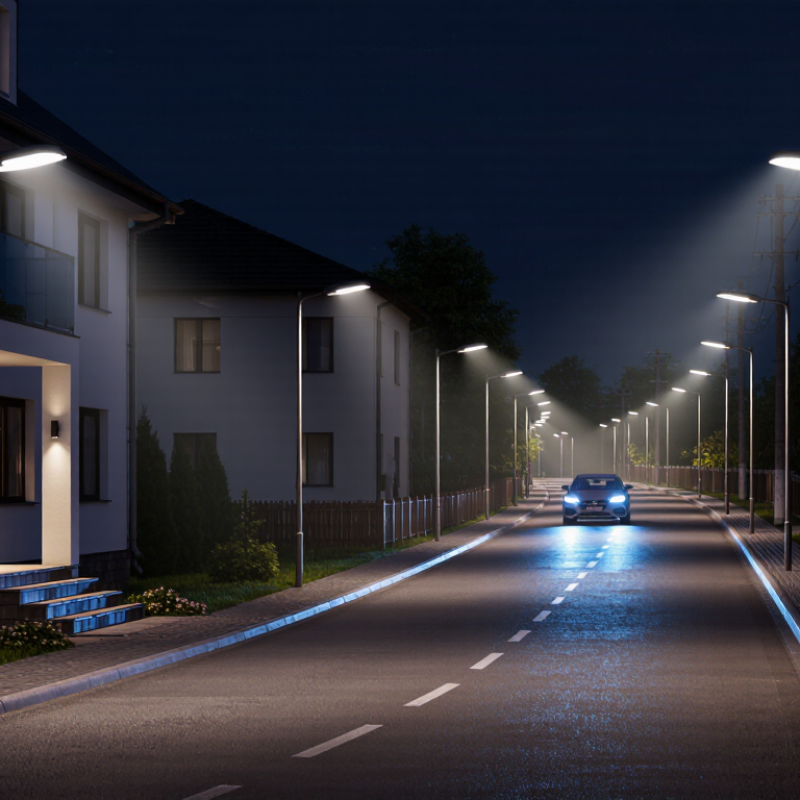
| Glare and Light Spill Control | Design practices that limit uncomfortable brightness and unwanted light directed outside the intended area. | Shielding, aiming, lower mounting heights, appropriate beam angles, and dimming keep light focused where it is needed. | Improve visual comfort, preserve nighttime visibility, and reduce disturbance to neighboring areas and the sky. | Residential boundaries, streetscapes, pathways, gardens, entrances, and environmentally sensitive locations. |