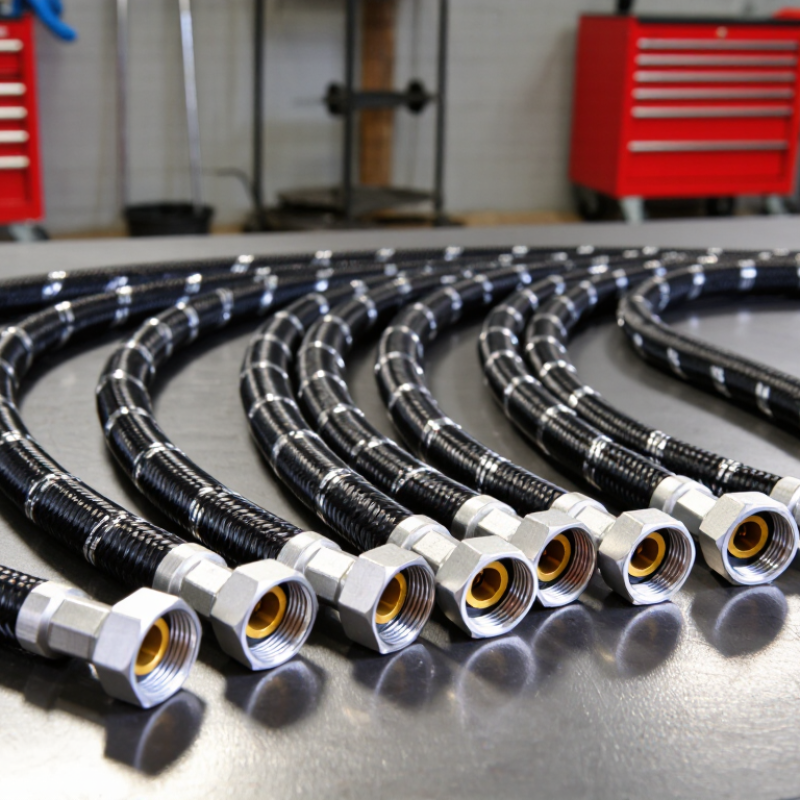
| 1. Compact auxiliary line | -3 AN; about 3/16 in (4.8 mm) | Small auxiliary fuel or instrument-related plumbing where the system design specifies a narrow line. | PTFE inner tube with a suitable reinforcing braid. | The smaller bore can restrict flow. Confirm required flow, pressure, and fitting compatibility rather than choosing by outside diameter. |
| 2. Compact fuel feed or return | -4 AN; about 1/4 in (6.4 mm) | Compact fuel-system routing when the vehicle or component specifications call for this bore. | Smooth-bore PTFE with compatible, hose-specific end fittings. | Check the actual inside diameter and the fitting assembly instructions; AN size alone does not establish the hose’s flow capacity. |
| 3. General-purpose fuel plumbing | -6 AN; about 3/8 in (9.5 mm) | A common size to evaluate for fuel feed or return plumbing, subject to the system’s flow requirements. | Smooth-bore PTFE; choose an appropriate braid and any required protective sleeve for the installation. | Account for line length, bends, pump capacity, fittings, and fuel-system pressure when sizing. |
| 4. Higher-flow feed or return line | -8 AN; about 1/2 in (12.7 mm) | Applications that require a larger bore, as established by fuel-flow calculations or vehicle specifications. | PTFE liner with reinforcement rated for the intended pressure and operating environment. | Larger hose can require more routing space and compatible larger fittings; verify clearance and bend radius. |
| 5. Large-bore fuel plumbing | -10 AN; about 5/8 in (15.9 mm) | Systems whose calculated flow demand and components call for a large-bore line. | Smooth-bore PTFE with pressure-rated, matching hose ends. | Do not assume a larger line improves performance by itself; the complete system, including the pump and regulator, must be compatible. |
| 6. Very large-bore fuel line | -12 AN; about 3/4 in (19.1 mm) | Specialized high-flow layouts where the design specifically requires a large internal passage. | PTFE hose and end fittings rated and intended for the application. | Check installation space, bend radius, connection sizes, and routing support before selecting this size. |
| 7. Flexible routing option | Choose the required bore; convoluted PTFE is available in some designs. | Routes that need additional flexibility, where the hose specification allows convoluted construction. | Convoluted PTFE liner with suitable external reinforcement. | Convolutions can affect flow and cleaning compared with a smooth bore. Confirm the design’s pressure rating and bend limits. |