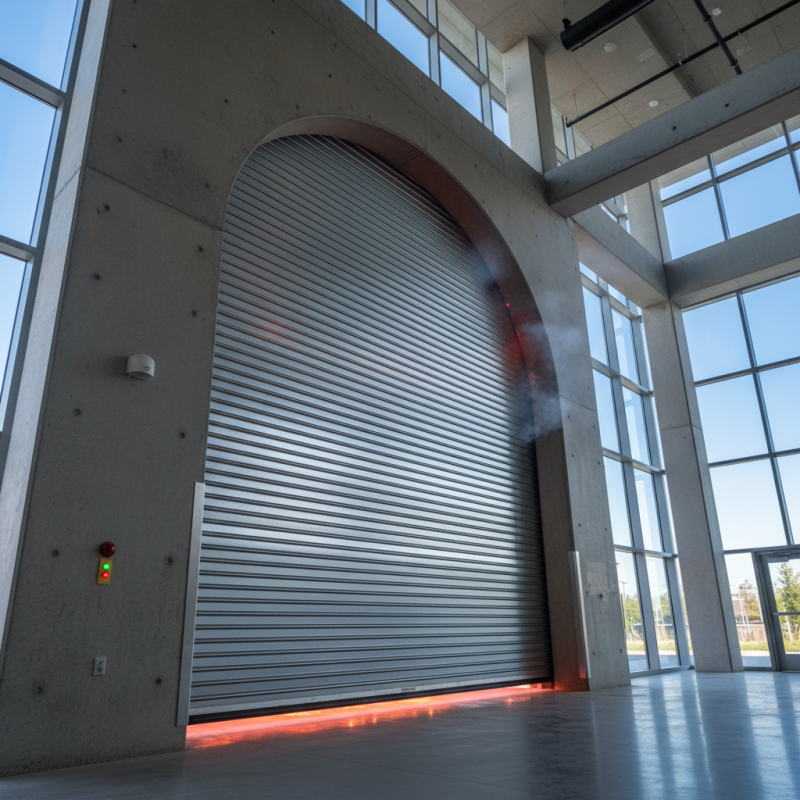
What is a Roll Down Fire Door and How Does It Work?
Roll Down Fire Doors are crucial safety features in modern buildings. They are designed to prevent the spread of fire and smoke. When a fire alarm activates, these doors automatically descend to seal off areas, protecting occupants and property.
These doors are made from durable, fire-resistant materials. Their operation is generally simple and relies on a balance system. However, regular maintenance is vital to ensure they function properly when needed. Sometimes, they may fail due to wear and tear, leading to critical safety issues.
Understanding the mechanics of Roll Down Fire Doors can enhance fire safety in various settings. For instance, how often should they be inspected? Are there spots where they should be installed but are not? These questions require careful consideration. Fire safety is not just about installation; it’s about ensuring readiness and efficiency.
What is a Roll Down Fire Door?
A roll down fire door is a pivotal safety feature in commercial and industrial spaces. These doors act as barriers to contain fire and smoke, protecting people and property. Constructed from sturdy materials, they can withstand high temperatures. When a fire alarm activates, the door rolls down swiftly. This action helps to seal off areas, reducing the spread of flames.
Installation is crucial for effectiveness. Many designs incorporate sensors or alarms to trigger deployment. Regular maintenance is necessary to ensure reliability. Without it, functionality may diminish, posing risks during emergencies. Observing the inspection schedule can be a challenge. Facility managers might overlook minor issues, which can lead to significant safety hazards.
In some cases, failures occur not due to the door itself, but due to a lack of understanding. Users may not know how to operate them correctly. This highlights the need for proper training. Awareness about the door's operation can save lives. Investing in ongoing education about safety protocols is vital for everyone.
Key Components of Roll Down Fire Doors
Roll down fire doors are essential for safety in commercial buildings. They act as barriers, preventing the spread of flames and smoke. Understanding their key components helps ensure proper installation and maintenance.
One of the main components is the door curtain. This is the visible part that rolls down when triggered. It's typically made of steel or other fire-resistant materials. The curtain must meet specific safety standards to be effective. Another important part is the fire detection system. It automatically signals the door to close in an emergency. The reliability of this system can be a point of concern. Regular checks are necessary to avoid malfunctions.
Additionally, the drive mechanism controls how the door operates. It can be powered or gravity-operated, each with pros and cons. Power-operated doors usually perform faster. However, they depend on electricity. Gravity-operated doors are simpler but might require more manual intervention. Reflecting on these components can help users recognize potential issues and ensure better efficiency in fire safety protocols.
Operational Mechanism of Roll Down Fire Doors
Roll down fire doors are critical safety features in many buildings. Their operational mechanism is designed to provide a reliable barrier against smoke and flames. Typically, these doors are made of metal and are equipped with a curtain that rolls down from a secure housing. In the event of a fire, the doors close automatically, thanks to a spring-loaded system or electronic activation. This ensures that hazardous materials and flames are contained, mitigating the potential for fire spread.
According to industry reports, fire doors can reduce the spread of flames by up to 70%. However, their effectiveness relies heavily on regular maintenance. Many facilities end up neglecting this, leading to malfunctioning doors. Studies suggest that over 43% of fire doors in commercial buildings do not operate as intended due to a lack of inspections. Furthermore, changes in building layout can complicate the door's function, making it essential to routinely reassess these installations.
Understanding the specific operational features is crucial. Some roll down fire doors utilize heat sensors, while others may depend on smoke detection systems. These systems require a precise installation to be effective. Moreover, many building codes vary, which adds complexity to compliance. A successful fire door system hinges upon knowing these details well. Regular training and inspections are key to ensuring these systems are up to code and functioning correctly.
Industry Standards and Certifications for Fire Door Safety
Fire doors are crucial for safety in commercial buildings. They are designed to prevent the spread of smoke and fire. Industry standards dictate their efficacy. The National Fire Protection Association (NFPA) publishes guidelines, ensuring doors meet rigorous safety criteria. Each door must have a fire-resistance rating. This rating indicates how long a door can withstand a fire. Most doors have ratings from 20 minutes to 3 hours.
Certification is a vital part of fire door safety. Third-party testing agencies evaluate fire doors before they go to market. In 2020, a report from the World Fire Safety Foundation noted that about 20% of fire doors failed during inspections. Many failures were due to improper installation or lack of maintenance. These statistics underline the need for regular checks.
Compliance with regulations is essential for all buildings. Organizations must ensure their fire doors are up to code. Even minor lapses can lead to serious consequences. A door that does not function properly can jeopardize lives. Continuous education on fire door maintenance is critical for safety.
What is a Roll Down Fire Door and How Does It Work? - Industry Standards and Certifications for Fire Door Safety
| Feature | Description |
| Material | Typically made from steel, aluminum, or fire-resistant materials. |
| Operation | Automatically rolls down in case of fire to contain flames and smoke. |
| Certification Standard | Must meet standards such as UL 263 or NFPA 80 for fire safety compliance. |
| Fire Resistance Rating | Typically rated for 1 to 4 hours depending on the model and installation. |
| Control Method | Can be manually operated or integrated with fire alarm systems for automatic deployment. |
| Maintenance Requirements | Regular inspections and maintenance are required to ensure functionality and compliance. |
| Applications | Commonly used in warehouses, parking garages, and areas where fire resistance is critical. |
Importance of Regular Maintenance and Inspection of Fire Doors
Regular maintenance and inspection of fire doors are crucial for safety. According to the National Fire Protection Association, nearly 70% of fire door failures occur due to lack of maintenance. A well-maintained fire door prevents fire and smoke from spreading. This is essential in protecting lives and property during emergencies. Many organizations overlook regular inspections, focusing more on visible safety measures.
Ignoring fire doors can have serious consequences. A survey revealed that about 30% of fire doors are not installed properly. This raises doubts about their effectiveness during a fire incident. Inspecting fire doors means checking for proper sealing and closure. If a door does not close correctly, it may not serve its purpose. Maintaining fire doors should include checking for damage and wear. A frequent inspection schedule can catch issues early.
Moreover, regulations require that fire doors be inspected at least annually. However, many facilities skip these inspections. A report from the Fire Protection Research Foundation indicates that many fire doors do not comply with safety regulations. This neglect can lead to increased risks and liabilities. Organizations must prioritize their fire door maintenance plans to ensure safety and compliance.