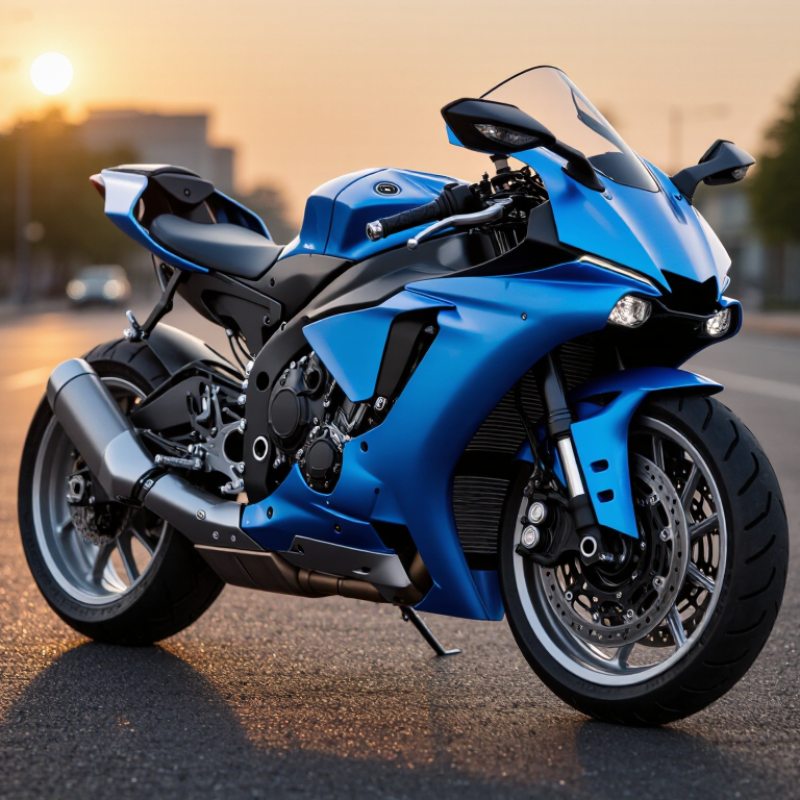
| Vehicle Definition | A scooter sport bike normally combines step-through scooter ergonomics, automatic CVT transmission, under-seat storage, and sport-oriented bodywork. | It is usually designed for urban commuting and short-to-medium-distance travel rather than the track-focused use of a manual sport motorcycle. | Confirm whether the vehicle is classified locally as a moped, scooter, motorcycle, or low-speed motorcycle. |
| Engine and Performance Class | 50cc: commonly limited to around 45 km/h in moped categories.
125cc: commonly around 80–105 km/h, depending on power, weight, and gearing.
150–160cc: commonly around 95–115 km/h.
250–300cc: commonly around 115–140 km/h. | Actual speed varies substantially with rider weight, road gradient, aerodynamics, tire size, transmission calibration, and local legal restrictions. | Request certified engine displacement, rated power, maximum design speed, curb weight, and emissions data rather than relying only on marketing claims. |
| Homologation Category | European two-wheel classifications commonly distinguish low-speed mopeds from motorcycles, with categories affected by displacement, power, and maximum design speed. | A vehicle approved in one market is not automatically legal for registration in another. Type approval, lighting, noise, emissions, braking, and safety requirements may differ. | Obtain the Certificate of Conformity or equivalent type-approval document, VIN records, technical specifications, and market-specific compliance statement. |
| Emissions and Noise Compliance | New petrol models sold in regulated markets generally require current local emissions compliance; requirements can include evaporative-emission controls and diagnostic systems. | Older engine calibrations may be difficult or impossible to register in markets with newer emissions standards, even when the vehicle runs correctly. | Verify the applicable emissions stage, test-cycle documentation, catalytic-converter specification, evaporative-control equipment, and noise test results. |
| Electrical System | Most modern scooters use a 12-volt electrical system. Export configurations may differ in lighting, charging connectors, dashboard language, and immobilizer equipment. | Electrical compatibility affects registration, local servicing, accessory installation, and replacement-part sourcing. | Confirm voltage, alternator output, battery type, headlamp beam pattern, turn-signal compliance, connector standards, and wiring diagrams. |
| Shipping Method | Sea freight is normally the lowest-cost option for commercial quantities. A single crated unit may use consolidated sea freight, while air freight is faster but substantially more expensive. | Ocean transit commonly takes several weeks, excluding production, port handling, customs clearance, and inland delivery. Crating increases volume and protects body panels. | Compare EXW, FOB, CIF, and DDP quotations. Confirm crate dimensions, gross weight, container or LCL charges, port fees, insurance, destination handling, and final-mile delivery. |
| Indicative Freight Budget | For planning only, consolidated sea freight for one small crated scooter can be roughly USD 300–900 before destination taxes and local charges; air freight may exceed USD 1,000. | These are budgeting ranges, not fixed quotations. Port congestion, fuel surcharges, seasonal demand, route length, and crate volume can change the final amount. | Request a written door-to-door quote with an itemized list of origin charges, ocean freight, destination charges, customs brokerage, delivery, and insurance. |
| Import Duties and Taxes | Import duty, VAT or sales tax, registration fees, and inspection charges vary by destination and may be calculated from the customs value plus freight and insurance. | A low purchase price does not necessarily produce a low landed cost. Taxes and mandatory registration can represent a large share of the final budget. | Ask the customs authority or a licensed broker for the correct HS classification, duty rate, tax basis, documentation requirements, and valuation rules. |
| Documentation Package | A standard export package may include a commercial invoice, packing list, bill of lading, VIN or chassis details, certificate of origin, and technical specifications. | Missing or inconsistent vehicle-identification data can delay customs clearance, registration, financing, and warranty claims. | Match the VIN, engine number, model code, invoice, packing list, shipping document, conformity certificate, and registration paperwork before shipment. |
| Parts Availability | Common service parts include drive belts, rollers, brake pads, tires, filters, spark plugs, batteries, bulbs, cables, seals, and suspension components. | Wear items should be available locally or supplied in advance. Unique body panels, electronic control units, instrument clusters, and ABS components may have longer lead times. | Request a parts catalogue, exploded diagrams, part numbers, recommended stock list, interchange information, and a confirmed source for electronic components. |
| Recommended Initial Spare Parts | For commercial buyers, an initial service package often includes 1–2 drive belts, several sets of brake pads, filters, spark plugs, rollers, bulbs, fuses, and common seals per unit group. | Holding fast-moving consumables can reduce vehicle downtime when the local dealer network is limited. | Base the quantity on expected mileage, fleet size, local climate, warranty history, and supplier lead time rather than using a generic percentage. |
| Warranty Coverage | Export warranties commonly range from 12 to 24 months, with distance limits or exclusions for wear parts, misuse, accident damage, unauthorized modifications, and poor maintenance. | A written warranty is only as useful as the claims process, diagnostic support, replacement-parts supply, and responsibility for freight or labor. | Confirm the warranty period, start date, mileage limit, covered components, labor reimbursement, claim evidence, approval process, and return-freight responsibility. |
| Maintenance Intervals | Initial inspection is often required within the first 500–1,000 km. Routine service intervals commonly fall around every 3,000–6,000 km, depending on engine design and operating conditions. | Frequent stop-and-go traffic, dust, extreme heat, heavy loads, and poor road surfaces can shorten service intervals. | Obtain the official service schedule, fluid specifications, belt inspection interval, valve-clearance procedure, torque settings, and diagnostic instructions. |
| Safety Equipment | Depending on the market and vehicle class, safety equipment may include front and rear disc brakes, combined braking, ABS, daytime running lights, hazard lamps, and side reflectors. | Safety equipment can affect both legal approval and insurance cost. Features listed as optional may be mandatory in the destination market. | Verify braking-system type, ABS or combined-braking status, tire-load rating, lighting approval marks, reflector placement, and passenger-footrest requirements. |
| Fuel Economy and Operating Cost | Small fuel-injected scooters often achieve approximately 2.0–3.5 L/100 km under mixed use; larger or heavier models may consume more. | Real consumption depends on speed, traffic, rider load, tire pressure, maintenance, temperature, and fuel quality. | Use a standardized test figure only for comparison. Build the operating budget from expected annual distance, local fuel price, service cost, tires, and insurance. |
| Indicative Landed-Cost Structure | Purchase price: often the largest component.
Freight and insurance: commonly several percent to more than 15%.
Duty and taxes: destination-dependent.
Registration, inspection, assembly, and local delivery: additional. | The landed cost is not the same as the factory or export price. A small freight quotation can still result in a high total cost after taxes and compliance work. | Build a spreadsheet using: vehicle price + export charges + freight + insurance + customs duty + taxes + broker fees + registration + inspection + local delivery + spare parts. |
| Illustrative Total-Cost Example | For a scooter with a USD 2,000 export price, a realistic final budget may exceed USD 2,800–4,000 after freight, duty, taxes, registration, and local charges, depending on the destination. | This example is for planning only and is not a universal quotation. High-tax markets or markets requiring additional testing may exceed this range. | Replace the estimate with a destination-specific customs calculation and a door-to-door logistics quotation before placing an order. |
| Best Fit for Global Buyers | Urban commuting Short-distance delivery Fleet use Value-focused mobility | A scooter sport bike is usually most practical where automatic operation, low fuel consumption, compact dimensions, and accessible maintenance matter more than high-speed touring. | Prioritize legal registration, parts continuity, service training, warranty response, and total landed cost over appearance or the lowest initial unit price. |