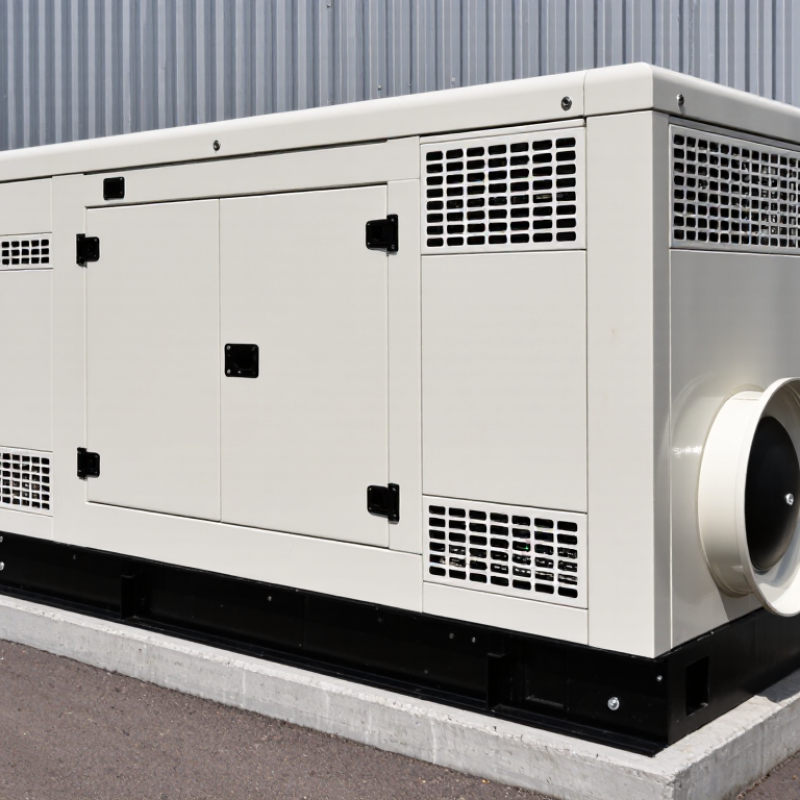
| Definition | Silent diesel generator set | A diesel engine coupled to an alternator and installed in an acoustic enclosure. The enclosure helps reduce operating noise while allowing cooling air to flow and exhaust gases to discharge safely. |
| Main components | Engine and alternator | The engine converts diesel fuel into mechanical power; the alternator converts that power into electrical energy. A control panel monitors operating conditions and manages starting and shutdown. |
| Main components | Acoustic enclosure | Typically includes sound-absorbing lining, ventilation openings, access doors, and an exhaust silencer. Air inlets and outlets must remain unobstructed to prevent overheating. |
| Operating process | 1. Pre-start inspection | Check engine oil and coolant levels, fuel supply, battery condition, visible leaks, ventilation paths, exhaust routing, and the condition of cables and connections. Follow the set’s operating manual. |
| Operating process | 2. Start-up | Start the engine using the control panel or approved automatic-start system. Confirm that the engine reaches stable speed and that no warning or shutdown alarms are present before applying load. |
| Operating process | 3. Warm-up and checks | Allow the engine to stabilize before loading. A brief warm-up period is common, but the required time depends on the equipment, ambient conditions, and manufacturer instructions. |
| Operating process | 4. Load connection | Connect or transfer loads using correctly rated switching equipment. Add loads in stages where practical, and avoid exceeding the generator’s applicable prime or standby rating. |
| Operating process | 5. Running and monitoring | Monitor voltage, frequency, current, engine temperature, oil pressure, fuel level, and alarms. Keep ventilation openings clear and investigate abnormal vibration, smoke, noise, or odor. |
| Operating process | 6. Unloading and shutdown | Remove or transfer the electrical load before stopping the engine. Allow a suitable no-load cool-down period when required by the equipment instructions, then stop the set and record operating hours or faults. |
| Electrical performance | Frequency and engine speed | For a four-pole generator, 1,500 rpm corresponds to 50 Hz and 1,800 rpm corresponds to 60 Hz. Actual frequency depends on the set design and must match the connected equipment. |
| Electrical performance | Voltage and load balance | Output voltage depends on the alternator and system configuration. Balanced phase loading on a three-phase set helps limit voltage imbalance and excessive current in individual phases. |
| Performance factor | Load profile | Motor starting, sudden load changes, non-linear loads, and poor power factor can affect voltage and frequency stability. Select capacity with starting demand and future load requirements in mind. |
| Performance factor | Fuel consumption | Consumption varies with engine size, load, condition, and fuel properties. Diesel engines commonly use more fuel per hour as electrical load rises; use the specific set’s fuel-consumption curve for planning. |
| Performance factor | Ambient conditions | High temperature, high altitude, restricted airflow, and poor cooling can reduce available output or affect reliability. Apply any required derating stated by the equipment manufacturer. |
| Performance factor | Noise level | Acoustic performance depends on enclosure design, exhaust silencing, installation, load, and measurement conditions. A sound-pressure value should be compared only when the distance and test method are specified. |
| Performance factor | Maintenance and fuel quality | Regular servicing of filters, oil, coolant, battery, and fuel system supports dependable operation. Use suitable clean fuel and follow the recommended service intervals. |
| Safety | Installation and exhaust | Install the set on a suitable base with adequate ventilation and safe exhaust discharge. Keep exhaust gases away from air intakes and occupied spaces; never operate a diesel generator indoors or in an inadequately ventilated area. |