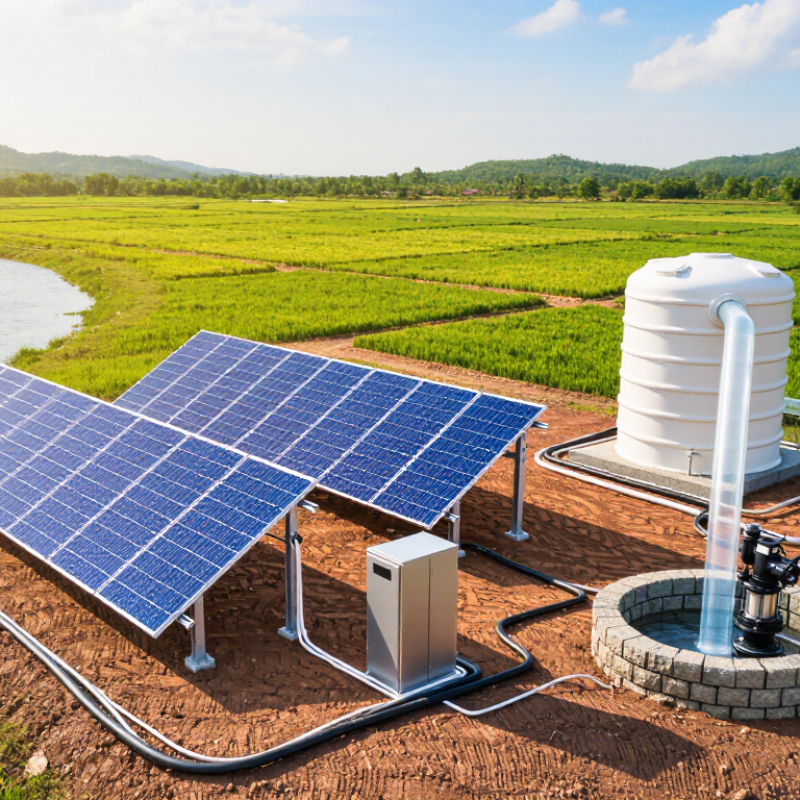
A solar water pump uses photovoltaic panels to power a motor that moves water from a well, borehole, pond, or canal.
The common types are submersible and surface pumps. Submersible models sit underwater and suit deeper wells; surface pumps draw from nearby, shallow sources. Some systems pump directly when sunlight is available, while others use batteries or a raised storage tank to provide water later. The tank is often simpler to maintain than batteries, but it needs space and correct sizing.
These pumps serve livestock troughs, household water supplies, and small farms using drip or sprinkler irrigation.
FAO estimates that agriculture accounts for about 70% of global freshwater withdrawals, making careful irrigation design important.
IRENA’s Renewable Power Generation Costs in 2023 reports that utility-scale solar photovoltaic electricity costs fell about 90% from 2010 to 2023; that trend does not, by itself, guarantee a low-cost pumping system.
Pump size, well depth, daily water demand, and seasonal sunlight all affect performance. A planning mistake is treating sunny hours as a guaranteed water supply. Clouds, sediment, and dry-season water levels can change the result.
Small systems differ. A local water-source assessment helps match the pump to the actual site.