What is a Switching Power Supply and How Does it Work?
The "Switching Power Supply" is an essential component in modern electronic devices. As the industry progresses, its efficiency has become crucial. Reports show that the global switching power supply market is projected to reach $48 billion by 2025. This significant growth underscores the importance of understanding how these power supplies operate.
Switching power supplies convert electrical energy with high efficiency. They use a process called pulse width modulation. This allows for greater energy savings and reduced heat production. While they are widely used in computers and smartphones, many still confuse them with linear power supplies. This confusion can lead to improper applications and missed performance benefits.
Despite their advantages, switching power supplies have drawbacks. Their complexity can lead to electromagnetic interference. Sometimes, users may struggle with selecting the right power supply for specific applications. Awareness of these issues can lead to better choices in design and implementation. Understanding switching power supplies is essential for engineers and designers in the electronics field.
Definition of a Switching Power Supply
A switching power supply is an essential component in modern electronics. It converts electrical energy efficiently. Unlike traditional linear power supplies, it uses a high-frequency switch to control output voltage. This method greatly reduces energy loss. The supply can adjust voltage levels by rapidly turning the switch on and off. This process is known as pulse-width modulation.
The key advantage of switching power supplies is efficiency. They can achieve up to 90% efficiency under optimal conditions. This means less heat generation, prolonging the lifespan of your devices. However, they can be more complex, which may lead to potential issues. Electromagnetic interference is a common challenge. Designers need to pay extra attention to noise reduction.
Another aspect to consider is size. Switching power supplies tend to be smaller than their linear counterparts. This compact design is often a significant benefit in small devices. Still, the intricacy of components may complicate repairs. DIY enthusiasts may find them challenging. Understanding their operation is crucial before making any modifications or repairs.
Components of a Switching Power Supply
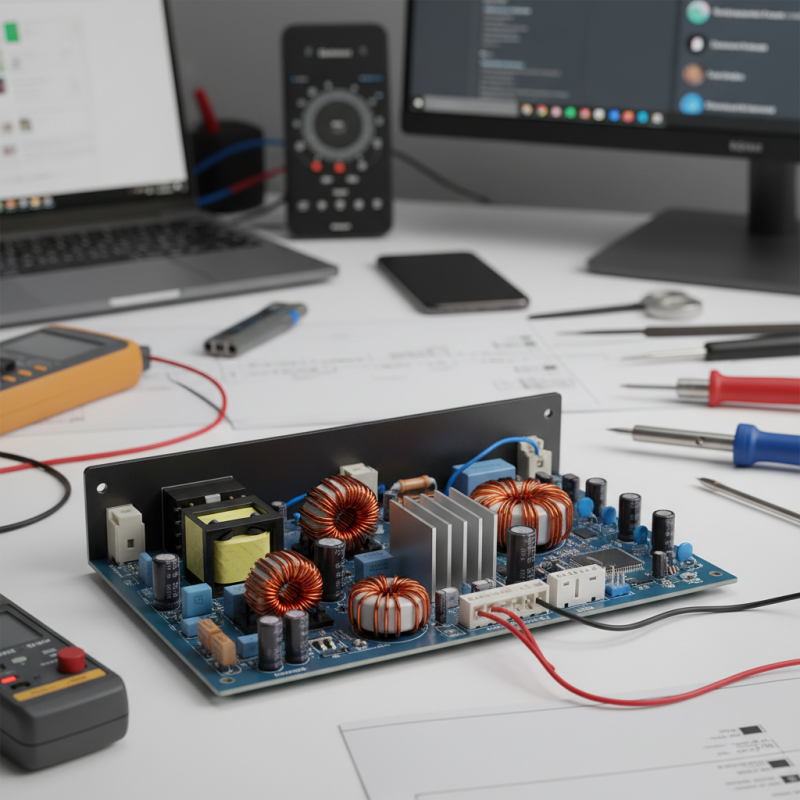
A switching power supply consists of several key components essential for its functionality. The heart of the system is the switching transistor. This component rapidly turns on and off, allowing energy to flow. By controlling the switch, the power supply regulates voltage and manages power efficiently. This is a fundamental feature that distinguishes switching power supplies from linear ones.
Another critical component is the transformer. It steps up or steps down voltage levels as needed. Additionally, it provides isolation between input and output. This feature enhances safety and protects devices from electrical surges. Capacitors also play a vital role. They smoothen out voltage fluctuations, ensuring a stable power output.
Inductors are equally important. They store energy temporarily and help filter unwanted noise. There’s also the diode, which prevents backflow and directs current properly. Each component works in tandem, creating a complex yet efficient system. However, the design process can be tricky. Balancing performance with heat management presents challenges. Achieving the right efficiency often requires tinkering and adjustments. The quest for optimal performance drives innovation in power supply design.
Operational Principles of Switching Power Supplies
Switching power supplies (SPS) are critical components in modern electronics. They convert electrical power efficiently, reducing energy loss and heat generation. The core operational principle relies on high-frequency switching. This process involves switching transistors on and off rapidly to regulate voltage.
Power supplies utilize inductors and capacitors for energy storage and smoothing. According to industry data, SPS can achieve efficiencies exceeding 90%. This performance metric is significant for applications requiring high reliability, like personal computers and telecommunication systems. However, high-frequency switching can introduce electromagnetic interference (EMI), which can impact device performance. This issue needs careful design to mitigate.
Also, while SPS are more compact than linear power supplies, they can be more complex. The circuit design must ensure stability across various loads. Often, manufacturers must balance cost and efficiency. Achieving this can lead to compromises in quality or performance. Furthermore, some users may not understand the intricacies involved, raising concerns about reliability and lifespan. Understanding these operational principles helps in choosing suitable power supply units for specific applications.
Efficiency of Various Power Supply Types
This bar chart illustrates the efficiency of different types of power supplies, highlighting that Switching Power Supplies typically have higher efficiency compared to Linear Power Supplies.
Advantages and Disadvantages of Switching Power Supplies
Switching power supplies (SPS) have transformed the electronics landscape, but they come with both perks and pitfalls. One major advantage is their efficiency. Reports indicate that SPS can reach efficiency rates of 85% to over 90%. This translates into less energy wasted as heat, making them ideal for compact devices. Their lightweight and small form factor also make them popular in various applications.
However, not everything is perfect. Switching power supplies can introduce electrical noise. This noise can affect sensitive components and must be managed carefully. Additionally, the initial cost of SPS might be higher than traditional linear supplies. A study from the International Energy Agency notes that while SPS can save energy long-term, upfront investment can deter some users. The complexity of design also raises concerns about reliability, particularly in harsh environments.
Another point worth mentioning is the thermal management. SPS can generate heat, requiring robust cooling systems. Failure to manage this can lead to decreased lifespan and performance. While advances are continuously made, issues like these remain integral when choosing a power supply solution. Balancing performance and reliability is key in power supply design.
Applications of Switching Power Supplies in Various Industries
Switching power supplies play a vital role in various industries. They convert electrical energy efficiently, making them ideal for many applications. In the telecommunications sector, these supplies ensure stable voltage for routers and switches. This reliability is crucial for uninterrupted communication. Moreover, switching power supplies help manage energy consumption, reducing costs in the long run.
In the healthcare field, they power diagnostic equipment and life-support systems. Precise voltage regulation is essential here. A small voltage fluctuation can lead to device malfunction, putting patients at risk. The design of these power supplies must prioritize stability and safety. However, achieving this balance can sometimes be challenging.
The automotive industry also benefits from switching power supplies. They are used to support electronic control units and infotainment systems. With the rise of electric vehicles, demand for efficient power modules has surged. Yet, the complexity of incorporating these systems poses design hurdles. Engineers must continually innovate to meet the growing demands.