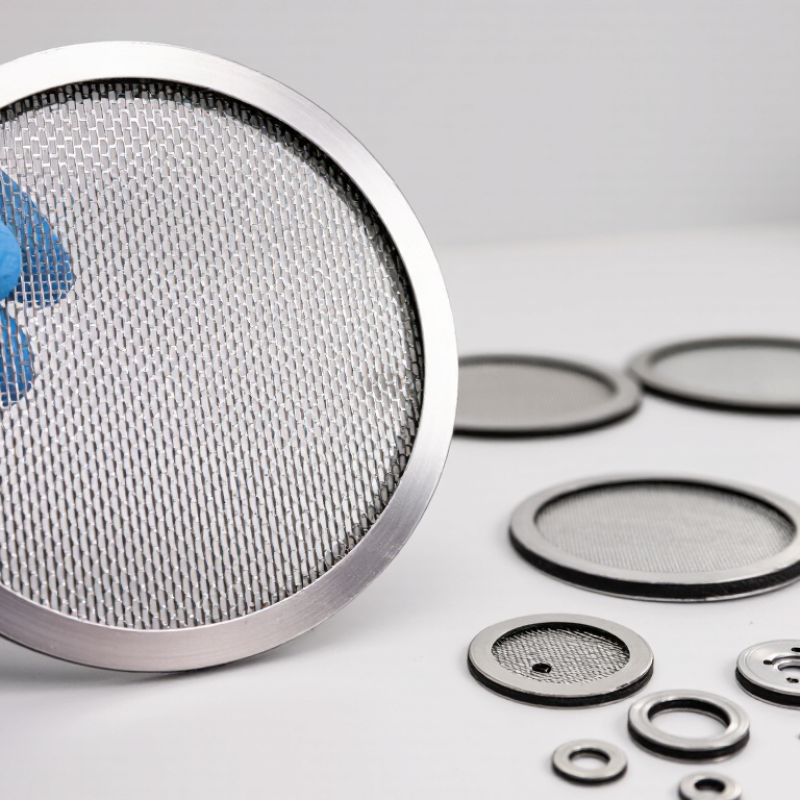
| 1 | Measure disc diameter | Measure the seat or opening where the disc will fit, not just an old disc that may be worn or distorted. Confirm whether the specified diameter is the outside diameter, the opening diameter, or another drawing dimension. | Record the required diameter in millimetres or inches, the measurement location, and any permitted tolerance from the equipment drawing. |
| 2 | Match thickness to the assembly | Choose a thickness that fits the available space and any retaining or sealing arrangement. A thicker disc may affect stack height or clamping; a thinner disc may need more support. For reference, 0.5 mm and 1.0 mm are example thickness specifications, not universal recommendations. | Check the drawing, available clearance, support method, and whether the stated thickness includes a tolerance. |
| 3 | Specify pore size clearly | Match the filtration rating to the particles that must be retained and the required flow. Confirm whether the rating is nominal or absolute; these terms describe different retention claims and should not be treated as interchangeable. | State the pore-size rating and unit, such as micrometres (µm), and ask how the rating is defined and tested. |
| 4 | Distinguish mesh from micron rating | Mesh count describes the number of openings per unit length and does not by itself specify an exact opening size. Wire diameter and weave also affect the opening, so mesh count and micron rating should not be assumed to convert directly. | If using a mesh specification, request the aperture or opening-size information and the wire or weave details. |
| 5 | Choose a compatible metal | Select the alloy for the process fluid, cleaning chemicals, temperature, and operating environment. Stainless-steel grades such as 304 and 316L have different compositions, but neither is suitable for every chemical or service condition. | Provide the fluid and cleaning-agent names, concentration, temperature, and any known corrosive conditions for a compatibility review. |
| 6 | Check pressure and support | A disc's ability to withstand differential pressure depends on more than thickness. Diameter, pore structure, material, edge support, and the direction of loading can all affect performance. | Specify operating and maximum differential pressure, flow direction, support arrangement, and any pressure-cycle requirements. |
| 7 | Confirm the complete specification | Before purchase, review the dimensions, filtration rating, material, edge finish, and any required cleaning or traceability documents. A clear drawing or written specification helps prevent mismatches. | Request confirmation of diameter, thickness, tolerance, pore rating definition, alloy, quantity, and inspection or material documentation needs. |