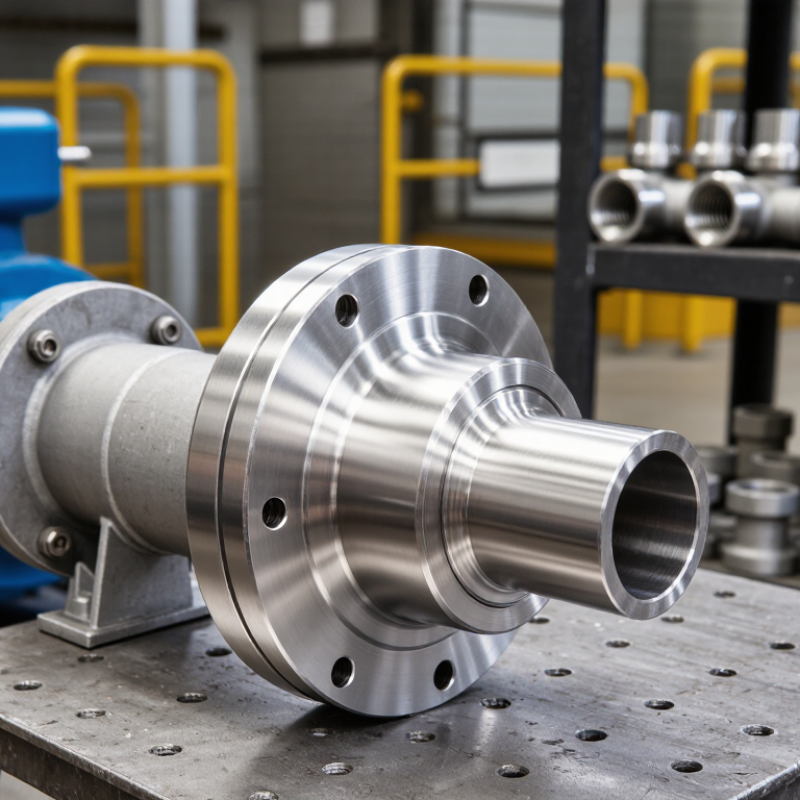
| 1 | Reducer Type | Confirm whether the piping layout requires a concentric or eccentric reducer. | Concentric reducer: The smaller and larger pipe ends share the same centerline.
Eccentric reducer: The centerlines are offset. | Concentric reducers are commonly used in vertical pipe runs, general process piping, and applications where a symmetrical flow path is acceptable. | Choose a concentric reducer when maintaining a common pipe centerline is more important than preventing a low-point pocket or preserving a flat pipe elevation. |
| 2 | Nominal Size and Schedule | Match the large-end size, small-end size, wall thickness, and pressure class to the connected pipe. | Reducers are specified by larger nominal pipe size × smaller nominal pipe size. Wall thickness must be compatible with the pipe schedule or selected pressure rating. | Water, steam, compressed air, chemical, oil, gas, and general industrial piping systems. | Verify the applicable dimensional standard and ensure that the fitting bore and wall thickness do not create an unintended restriction or mismatch. |
| 3 | Connection Method | Select the end connection according to the joining method, installation space, and maintenance requirements. | Common configurations include butt-weld ends, socket-weld ends, threaded ends, flanged ends, and grooved ends. The connection type determines installation procedure and inspection requirements. | Butt-weld reducers suit permanent process piping; flanged reducers support dismantling; threaded or socket-weld types suit smaller pipe systems; grooved types support faster mechanical installation. | Make sure the reducer end preparation, flange facing, thread form, or groove dimensions match the mating components exactly. |
| 4 | Material Compatibility | Compare the fitting material with the fluid, operating temperature, pressure, and surrounding environment. | Common material families include carbon steel, stainless steel, alloy steel, ductile iron, and selected plastic materials. Corrosion resistance and temperature capability vary by grade. | Stainless steel is often selected for corrosive or hygienic service; carbon steel is widely used for general industrial service; alloy materials are used for elevated-temperature or specialized duties. | Check chemical compatibility, galvanic-corrosion risk, weldability, temperature limits, and any required lining or coating before purchase. |
| 5 | Flow and Pressure Requirements | Evaluate pressure rating, flow velocity, pressure drop, and the effect of diameter reduction on the system. | A smaller outlet increases flow velocity when the volumetric flow rate remains constant. The reducer should be selected using the applicable piping code, design pressure, and temperature conditions. | Pump discharge lines, process transfer lines, utility piping, and systems that transition between different pipe diameters. | Use a gradual, correctly sized transition and confirm that the reducer will not cause excessive turbulence, vibration, noise, or unacceptable pressure loss. |
| 6 | Installation Orientation | Review the reducer position, pipe slope, drainage needs, venting, and the possibility of liquid or gas accumulation. | A concentric reducer maintains a centered transition but does not provide the same flat-side alignment as an eccentric reducer. | Vertical liquid or gas lines, centered equipment nozzles, compact layouts, and systems where a symmetrical transition is preferred. | Before selecting a concentric type, check whether the line requires self-draining, avoidance of vapor pockets, or prevention of liquid accumulation; an eccentric reducer may be more appropriate in those cases. |
| 7 | Standards, Quality, and Inspection | Confirm dimensional standards, material certification, manufacturing method, inspection level, and required documentation. | Relevant requirements may include ASME, ASTM, EN, ISO, or project-specific specifications. Inspection can include visual examination, dimensional checks, material verification, and non-destructive testing when required. | Critical process lines, pressure systems, power facilities, chemical plants, water infrastructure, and regulated installations. | Request traceable material documentation and verify marking, dimensions, wall thickness, weld quality, and pressure-test requirements before installation. |