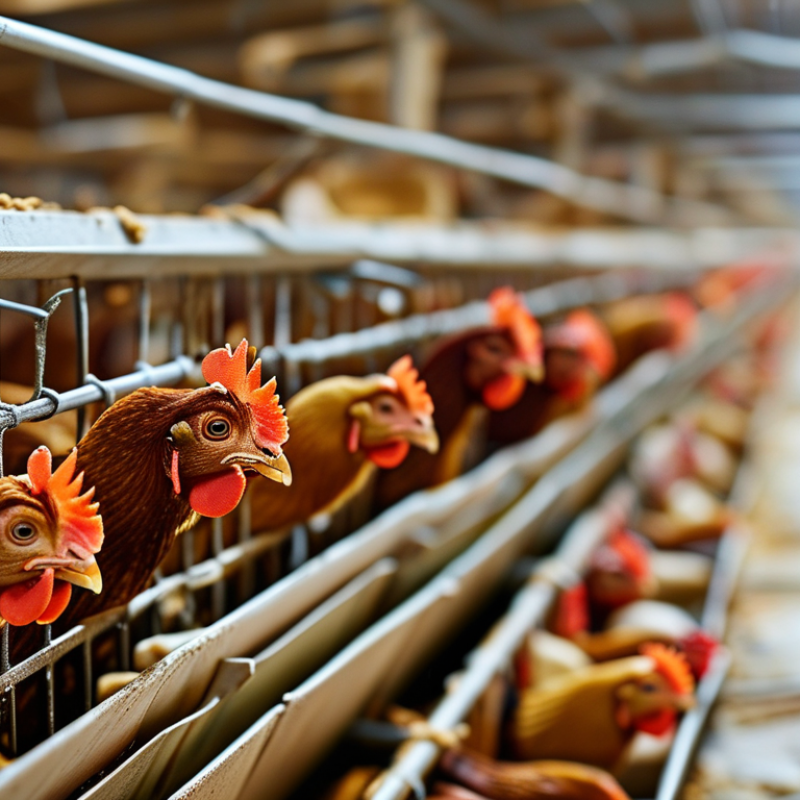
| 1 | Evaluate Space Requirements | Consider the number of birds and space allocation | Ensure compliance with minimum area standards per bird |
| 2 | Assess Ventilation Needs | Check airflow and temperature control | Follow guidelines for air quality and heat stress prevention |
| 3 | Select Quality Materials | Ensure durability and safety of the construction materials | Adhere to material safety standards for livestock housing |
| 4 | Incorporate Easy Maintenance Features | Design for easy cleaning and inspection | Meet hygiene and health regulations |
| 5 | Consider Animal Behavior | Observe natural behaviors and comfort levels | Follow guidelines on the enrichment of environments |
| 6 | Evaluate Water and Feeding Systems | Ensure adequate access to food and water | Comply with feeding standards |
| 7 | Plan for Waste Management | Implement efficient waste removal systems | Meet environmental regulations |
| 8 | Choose Appropriately Sized Cages | Make sure cages provide enough space for movement | Comply with animal housing standards |
| 9 | Implement Biosecurity Measures | Create barriers to disease transmission | Follow health and safety guidelines |
| 10 | Review Regulatory Compliance Regularly | Stay updated on changes in regulations | Ensure ongoing compliance with evolving standards |