| 1 | Start with a clearly defined output objective | End-of-life passenger-car and truck tyres | Small pilot: 5–10 tonnes per day | Batch reactor with basic oil, gas, and char collection | Confirm whether the priority is tyre volume reduction, recovered oil, recovered carbonaceous material, steel recovery, or fuel-gas utilization. |
| 2 | Match the reactor size to the available tyre supply | Mixed passenger-car tyres, commonly containing about 60–75% rubber and polymer material by mass, with steel and textile reinforcement | Commercial entry level: 10–20 tonnes per day | Batch or semi-continuous unit with mechanized feeding | Use a realistic operating schedule. A nominal 10-tonne-per-day rating may require multiple batches and does not equal 24-hour continuous output. |
| 3 | Plan for higher throughput when supply is stable | Large truck, off-road, or pre-shredded tyres | Medium scale: 20–50 tonnes per day | Multiple batch reactors or a continuous-feed system | Check feeding rate, heat-transfer performance, cooling time, loading method, unloading time, and planned annual operating hours. |
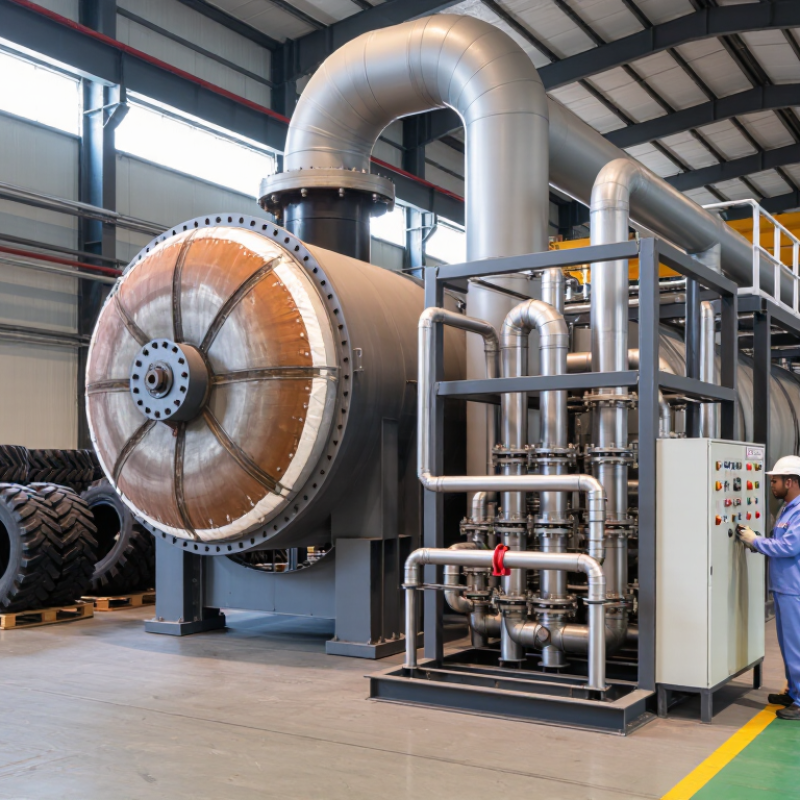
| 4 | Choose the right level of tyre preparation | Whole tyres, stripped tyres, or tyres cut into sections | Any capacity; preparation requirements increase with throughput | Whole-tyre batch system or pre-shredding line with continuous feeding | Whole tyres reduce preprocessing equipment but require more reactor space. Shredding improves feeding and heat transfer but adds power use, wear, and maintenance. |
| 5 | Define the desired product quality | Tyres with varying rubber composition, moisture, steel content, and textile content | Usually 10–50 tonnes per day, depending on market demand | Reactor plus oil condensation, gas cleaning, char discharge, and steel separation | Pyrolysis oil commonly requires filtration or further upgrading before use. Recovered carbonaceous material may require milling, pelletizing, or additional purification. |
| 6 | Evaluate energy and utility requirements | Dry tyres are generally preferred because moisture increases heating demand | Small to large commercial systems | Insulated reactor with heat-recovery and non-condensable-gas recirculation options | Review installed heating capacity, electricity demand, cooling-water or air-cooling needs, fuel consumption, gas-reuse controls, and emergency shutdown systems. |
| 7 | Verify environmental, safety, and maintenance requirements | All tyre types, including mixed and contaminated feedstock | Scale according to local permits and operating staff | Enclosed process line with condensers, gas treatment, dust control, pressure monitoring, and automated safety interlocks | Request emissions data, pressure-vessel documentation, fire protection, leak detection, maintenance intervals, spare-parts availability, operator training, and waste-handling procedures. |