Top 10 11kV to 400V Distribution Power Transformers?
Choosing an 11kv To 400v Distribution Power Transformer affects safety, voltage quality, operating costs, and long-term maintenance. These units reduce medium voltage to usable low voltage for factories, commercial buildings, farms, and public facilities. A reliable transformer should deliver stable 400V power, tolerate daily load changes, and operate safely in its installation environment.
This guide introduces ten notable transformer options for 11kV distribution systems. The comparison considers rated capacity, efficiency, impedance, cooling method, insulation quality, noise, protection features, and service support. It also reviews practical details, such as terminal access, oil inspection points, enclosure strength, and the space required for installation. Small details matter.
Experience from field applications shows that nameplate ratings do not tell the whole story. A 1000 kVA transformer may perform differently under high ambient temperatures, unbalanced loads, or frequent motor starting. IEC 60076 compliance provides an important technical reference, but verified test reports and manufacturer experience remain essential. Product information can also be incomplete. That deserves attention.
The selected models are not ranked by price alone. Their value depends on duty cycle, site conditions, maintenance resources, and future expansion plans. Dry-type designs may suit indoor locations, while oil-immersed transformers often support higher capacities and efficient heat dissipation. Engineers should confirm short-circuit withstand, tap settings, fire requirements, and local grid conditions before purchase.
This overview aims to support informed decisions. It combines technical specifications with practical selection concerns. The final choice should always follow a documented load study, professional inspection, and the applicable electrical standards. Reliability begins before installation.
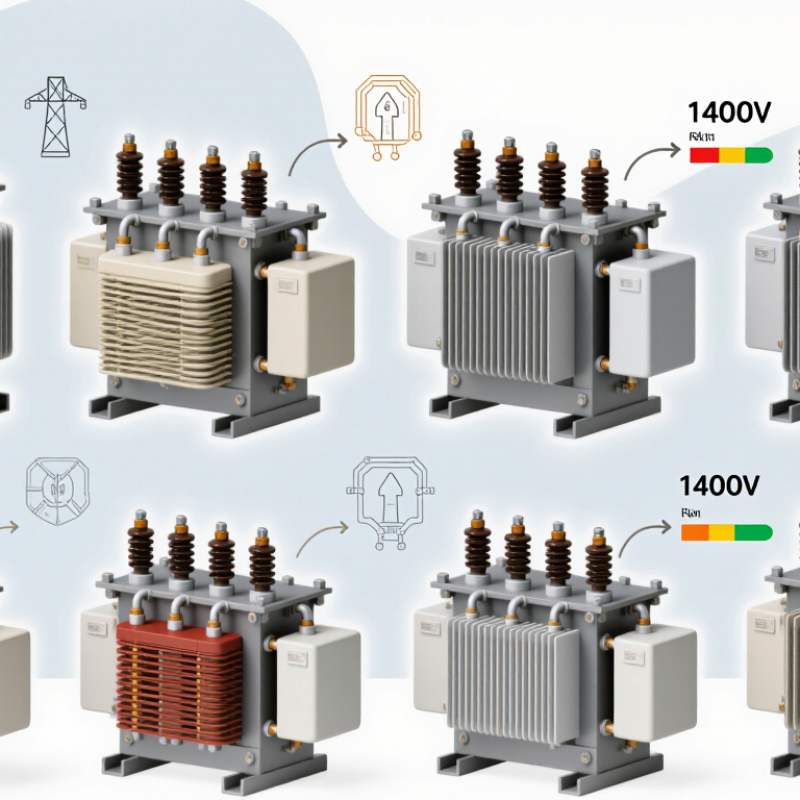
11kV/400V Transformer Fundamentals: 50Hz Supply, Voltage Ratio, and kVA Ratings
Top 10 11kV to 400V Distribution Power Transformers
An 11kV/400V transformer has a nominal voltage ratio of 27.5:1. However, the ratio is not the whole design. Tap settings, winding tolerances, and the vector group can change operating performance. IEC 60076-1 defines transformer ratings, voltage conditions, and test requirements for power transformers. A 50Hz supply also matters, because core flux depends on frequency and applied voltage. Using the wrong frequency can increase heating and saturation risk.
For a three-phase 1,000kVA transformer, the 400V full-load current is about 1,443A. On the 11kV side, it is approximately 52.5A. These figures guide cable sizing, switchgear selection, and protection settings. The calculation uses I = kVA × 1,000 ÷ (√3 × voltage). Small errors become expensive quickly. A 400V system with long cable runs may also suffer noticeable voltage drop.
Efficiency deserves equal attention. The International Energy Agency’s Electricity 2024 report expects global electricity demand to grow by more than 3% annually through 2026, increasing pressure on distribution networks. European Ecodesign analysis also treats no-load and load losses as major lifetime costs. A transformer can look efficient on its nameplate but waste energy while lightly loaded. I have seen designs selected only by kVA, which is convenient but incomplete. In practice, load diversity, ambient temperature, harmonics, enclosure ventilation, and future expansion should be checked together. Not every “standard” 11kV/400V solution fits the site.
Standards and Safety Requirements: IEC 60076, Dyn11 Vector Groups, and Tapping
Top 10 11kV to 400V Distribution Power Transformers
An 11kV to 400V transformer must meet the applicable IEC 60076 requirements. These standards cover insulation, temperature rise, dielectric tests, losses, and routine verification. In practical projects, the nameplate is the first inspection point. It should clearly show voltage ratio, rated power, frequency, impedance, cooling method, and insulation levels. A missing detail can delay commissioning.
Dyn11 is widely used in distribution systems. The “D” indicates a delta-connected high-voltage winding, while “y” indicates a star-connected low-voltage winding. “n” confirms an accessible neutral point. The clock number 11 defines the phase displacement. This arrangement can support common three-phase, four-wire loads, but the neutral still needs correct earthing and protection. Never assume the vector group is suitable without checking the network design.
Tips: Confirm the tap range before ordering. Many units use an off-circuit tap changer, so adjustment requires isolation and proven dead conditions. On-load tapping may be necessary where voltage varies frequently, but it adds complexity and maintenance needs. Check clearances, cable termination space, enclosure protection, and earth continuity during installation. A field mistake I still see is treating tapping as a final correction. It should be calculated from measured system voltage, not guesswork. Witness routine test records, inspect accessories, and verify phase sequence before energizing. Small errors become loud problems.











