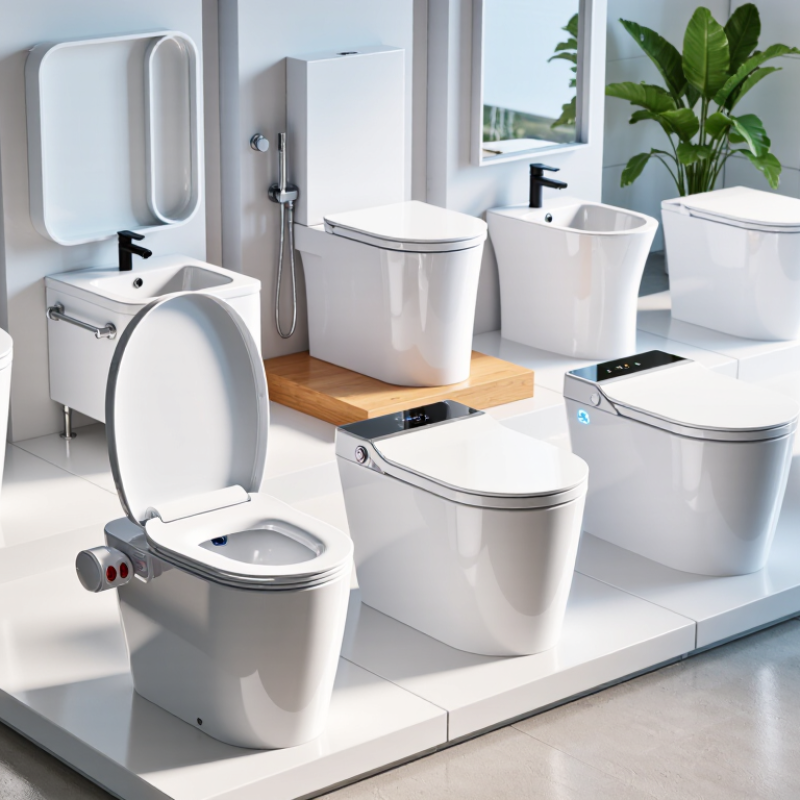
| 1. Integrated Electric Smart Toilet | A single unit combining the toilet bowl, bidet nozzle, heated seat, water-temperature control and electronic controls. | Usually floor-mounted; requires a suitable water inlet, drainage connection and nearby electrical outlet. | Commonly 220–240 V or 110–120 V, depending on the market; typical rated power is approximately 1,000–1,800 W. Exact requirements must match the local electrical system. | High comfort, multiple wash functions, warm air drying and a premium appearance in one product. | Higher purchase price; depends on electricity; electronic components require suitable protection and service support. | New residential projects, upscale apartments, hotels and markets with reliable electrical infrastructure. | Voltage, plug type, water pressure, certification, warranty coverage and after-sales service. |
| 2. Integrated Non-Electric Bidet Toilet | A combined toilet and bidet fixture using mechanical water control rather than electronic heating or powered functions. | Floor-mounted in most applications; installation is similar to a conventional toilet with an additional water connection. | No electrical connection required. Uses the building’s cold-water supply unless a separate tempered-water arrangement is designed. | Works during power outages, has simpler maintenance and is suitable for locations with limited electrical access. | No powered seat heating, warm-air drying or electronic deodorizing; water temperature may depend on the incoming supply. | Regions with unstable electricity, cost-sensitive housing, public facilities and renovation projects without nearby outlets. | Backflow protection, water-pressure range, hygiene design, spare parts and ease of cleaning. |
| 3. Electronic Bidet Seat | An electrically powered bidet seat installed on a compatible existing toilet bowl. | Fast retrofit option; requires dimensional compatibility, a water tee connection and an accessible grounded outlet. | Usually 220–240 V or 110–120 V; many models are approximately 800–1,500 W. Actual values vary by heating and drying functions. | Lower installation cost than a complete smart toilet; offers adjustable spray, heated seat and optional drying. | May not fit every bowl; adds visible height and can require bathroom electrical upgrades. | Existing homes, rental upgrades, mature bathroom markets and consumers seeking comfort without replacing the toilet. | Bowl shape, fixing-hole spacing, seat length, tank clearance, voltage and installation instructions. |
| 4. Mechanical Bidet Seat | A non-electric replacement seat with a manually operated water valve and spray nozzle. | Designed for retrofit installation on a standard toilet; normally needs only a water connection and basic hand tools. | No electricity required. Most units use the existing cold-water supply; pressure is controlled mechanically. | Affordable, simple to install, easy to operate and usable in areas with unreliable power. | Generally lacks heated water, heated seat, drying and advanced user controls. | Budget-conscious households, rental properties, remote areas and first-time bidet users. | Universal fit claims, water-inlet compatibility, leak prevention, nozzle position and cleaning access. |
| 5. Handheld Bidet Sprayer with Conventional Toilet | A manually directed spray hose mounted beside a standard toilet. | Requires wall or toilet-side mounting, a water connection and a shut-off valve; occupies very little floor space. | No electricity required. Uses the local cold-water line and available household water pressure. | Low cost, easy replacement, flexible positioning and strong suitability for basic sanitation applications. | Requires manual handling; spray temperature is not controlled; incorrect storage or pressure can increase leakage risk. | High-use households, apartments, hotels, religious facilities and markets where handheld washing is familiar. | Hose durability, shut-off valve quality, backflow prevention, mounting strength and local plumbing compatibility. |
| 6. Wall-Hung Electric Bidet Toilet | A wall-mounted toilet system with an electronic bidet seat or integrated bidet functions and a concealed cistern. | Requires a certified in-wall carrier, concealed tank, finished-wall access planning, water supply, drainage and electrical provision. | Commonly 220–240 V or 110–120 V; electronic functions may require approximately 800–1,800 W depending on configuration. | Creates an open floor area, supports easier floor cleaning and gives a modern appearance. | Higher construction complexity; concealed components must remain accessible for maintenance. | New-build apartments, premium hotels, accessible bathrooms and projects with planned wall infrastructure. | Carrier load rating, drainage height, service access, wall thickness, voltage and installer training. |
| 7. Dual-Flush Bidet Toilet with Mechanical Nozzle | A conventional dual-flush toilet combined with a non-electric integrated bidet nozzle or valve. | Usually floor-mounted and compatible with standard bathroom layouts; no dedicated electrical outlet is needed. | No electricity required. Dual-flush cisterns commonly use separate reduced and full flush volumes, with exact values determined by the design and local standards. | Combines basic water efficiency with bidet functionality and straightforward operation. | Fewer comfort features; flush performance depends on cistern design, water pressure and drainage conditions. | Residential developments, water-conscious markets and projects prioritizing simple, repairable products. | Flush-water volumes, trapway performance, inlet compatibility, nozzle hygiene and local water-efficiency requirements. |
| 8. Warm-Water Storage Bidet Toilet | An electric bidet toilet or seat using a small internal reservoir to store and heat wash water before use. | Suitable for standard floor-mounted or retrofit installations, provided water, drainage and electrical connections are available. | Typically 220–240 V or 110–120 V; commonly around 800–1,500 W. The reservoir may require a short recovery period between extended uses. | Provides warm washing with relatively stable temperature and can offer a comfortable user experience. | Reservoir capacity is limited; continuous use may reduce warm-water availability; requires regular descaling where water is hard. | Cold-climate homes, hospitality bathrooms and users who prioritize warm water over compact internal design. | Tank volume, heating recovery, anti-scald control, cleaning cycle, descaling procedure and energy consumption. |
| 9. Instant-Heating Bidet Toilet | An electric bidet system that heats water as it passes through the unit rather than storing a large volume of hot water. | Available as an electronic seat or integrated toilet; needs a compatible water supply and correctly rated electrical circuit. | Often requires approximately 1,000–1,500 W, with exact demand affected by inlet temperature, spray flow and heating settings; voltage must match the market. | Continuous warm-water capability, compact internal water storage and generally good suitability for repeated use. | Higher instantaneous electrical demand; performance can vary with water pressure and incoming-water temperature. | High-use households, commercial washrooms and markets that value continuous warm washing. | Circuit capacity, residual-current protection, temperature stability, flow rate, water pressure and safety certification. |
| 10. Portable Travel Bidet | A compact squeeze bottle or battery-powered personal washing device used with an existing toilet. | No permanent installation; designed for travel, temporary accommodation, camping or emergency use. | Manual models require no power; battery-powered models use replaceable or rechargeable batteries and do not connect permanently to household plumbing. | Highly portable, low infrastructure requirement and useful for users who frequently change locations. | Limited water capacity, manual operation and fewer hygiene or comfort features than fixed bidet systems. | Travel retail, outdoor use, healthcare support, temporary housing and areas without permanent plumbing changes. | Capacity, nozzle angle, leak resistance, battery runtime, cleaning method and portability. |