| 1 | Single-Stage Heavy Hammer Crusher | Large rotor with heavy-duty hammers; primary crushing in one stage. | Up to approximately 300–600 mm, depending on machine size and material. | Approximately 0–25 or 0–50 mm. | About 50–1,000 t/h; highly model-dependent. | LimestoneGypsumCoalClay | Can combine coarse crushing and partial shaping; simplified flowsheet; high reduction ratio for soft to medium-hard feed. | High wear when the feed contains abrasive quartz, hard inclusions, or excessive moisture. | Choose it when a single crushing stage is preferred and the feed is relatively soft, non-sticky, and low in abrasive minerals. |
| 2 | Reversible Hammer Crusher | Rotor can operate in either direction; both hammer faces can be used before replacement. | Approximately 100–300 mm. | Approximately 0–10 or 0–25 mm. | About 20–300 t/h. | LimestoneCoalMarlShale | Improved hammer utilization; more uniform wear; convenient for applications requiring regular product sizing. | It is not suitable for highly abrasive feed or large uncrushable metal pieces; directional operation does not eliminate wear. | Choose it when balanced wear and easy maintenance are more important than maximum reduction of very hard rock. |
| 3 | Ring Hammer Crusher | Uses ring-shaped hammers mounted around a rotor; commonly applied in coal and soft mineral preparation. | Approximately 100–300 mm. | Approximately 0–25 or 0–30 mm. | About 30–600 t/h. | CoalLigniteCokeSoft Shale | Good impact action; effective for friable materials; can produce a relatively consistent granular product. | Ring wear and rotor components require inspection; very wet or sticky feed can reduce throughput. | Choose it for high-volume crushing of friable materials where controlled granulation is required. |
| 4 | Fine Hammer Crusher | Smaller discharge openings and a higher-speed impact arrangement for fine crushing. | Usually approximately 50–200 mm. | Approximately 0–3 or 0–5 mm. | About 5–200 t/h. | LimestoneGypsumCoalGlass | Can produce a fine product in a compact process; may reduce the need for a separate secondary crusher. | Fine screens and grates can plug with wet feed; wear may increase with abrasive materials. | Choose it when the required product is fine and the feed moisture is controlled. |
| 5 | Box Hammer Crusher | Enclosed crushing chamber with heavy hammers and impact plates; often designed for coarse-to-medium reduction. | Approximately 200–300 mm. | Approximately 0–25 or 0–50 mm. | About 30–400 t/h. | LimestoneCoalBrickConcrete Debris | Strong impact crushing; relatively simple layout; can handle a broad range of soft to medium-hard feed. | Heavy impact loads require a strong foundation and regular inspection of liners, hammers, and grate sections. | Choose it when a robust crusher is needed for general-purpose primary or secondary crushing. |
| 6 | Hammer Mill Crusher | High-speed rotor with multiple hammers and a grate or screen controlling the discharge size. | Usually approximately 20–150 mm. | Approximately 0–3 or 0–10 mm. | About 1–100 t/h. | CoalBiomassGypsumSoft Minerals | Compact equipment; adjustable product sizing through screens or grates; effective for small and medium production lines. | Not generally preferred for hard, highly abrasive stone; screens may require frequent cleaning with damp feed. | Choose it for fine crushing, laboratory or small industrial applications, and relatively soft materials. |
| 7 | Limestone Hammer Crusher | Application-oriented configuration optimized for relatively soft, brittle, and usually low-to-moderately abrasive limestone. | Approximately 200–600 mm, depending on the crushing stage. | Approximately 0–10 or 0–25 mm. | About 50–1,000 t/h. | LimestoneMarlDolomite | High reduction ratio; suitable for cement, aggregate, and lime-related preparation when the stone is not highly abrasive. | High-silica limestone can cause rapid hammer and liner wear; wet clay contamination can reduce efficiency. | Choose it after testing the limestone's compressive strength, silica content, moisture, and clay proportion. |
| 8 | Clinker Hammer Crusher | Heavy-duty impact crusher configured for hot, hard, and irregular clinker discharge. | Approximately 50–300 mm. | Approximately 0–25 or 0–50 mm. | About 20–300 t/h. | Cement ClinkerHot Granular Solids | Handles irregular clinker lumps and can provide useful size reduction before grinding. | Hot feed, high impact loads, and abrasive clinker can accelerate component fatigue and wear. | Choose it only when the crusher is rated for the actual feed temperature, clinker hardness, and required cooling conditions. |
| 9 | Shale and Clay Hammer Crusher | Impact crusher selected for layered, friable, or moderately soft materials; sometimes fitted with specialized feed and discharge arrangements. | Approximately 100–400 mm. | Approximately 0–25 or 0–50 mm. | About 20–300 t/h. | ShaleClayMarlMudstone | Effective for breaking laminated and friable feed; can support raw-material homogenization in some process lines. | Sticky, plastic, or high-moisture clay can plug the chamber, grates, and transfer equipment. | Choose it when the material is friable and moisture is low enough to maintain free flow through the crusher. |
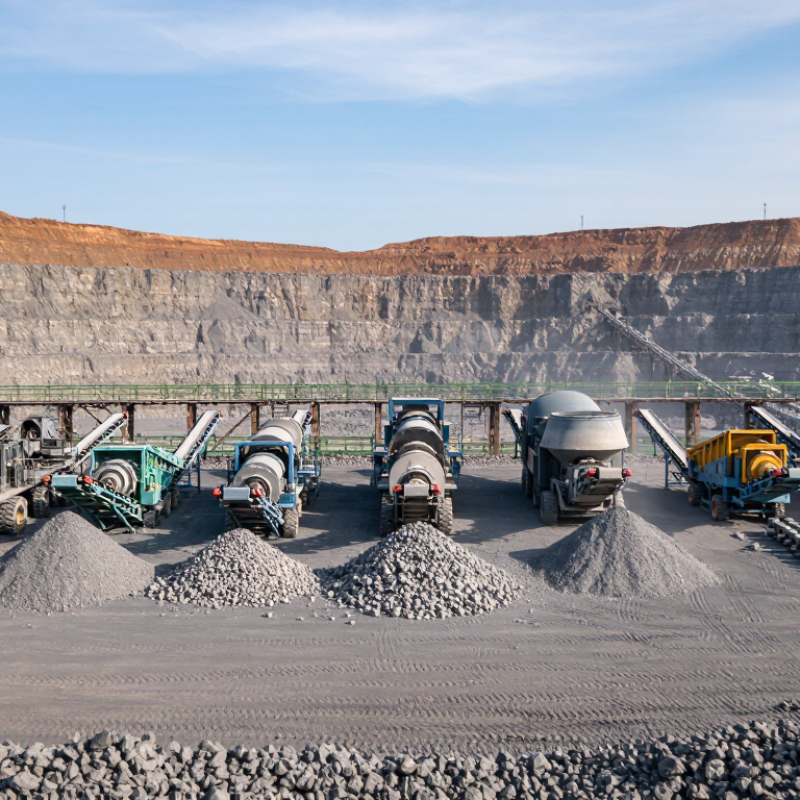
| 10 | Mobile Hammer Crusher | Hammer crusher mounted on a track or wheeled platform; a mobility configuration rather than a separate crushing mechanism. | Approximately 100–500 mm, depending on the integrated crusher. | Approximately 0–25 or 0–50 mm. | About 30–500 t/h. | LimestoneConstruction DebrisCoalSoft Rock | Can move between work areas; reduces fixed civil infrastructure; suitable for short-term or changing sites. | Transport, fuel, dust control, and maintenance space must be considered; mobility does not make the hammer crusher suitable for abrasive rock. | Choose it when the crushing location changes frequently or when a permanent foundation is impractical. |