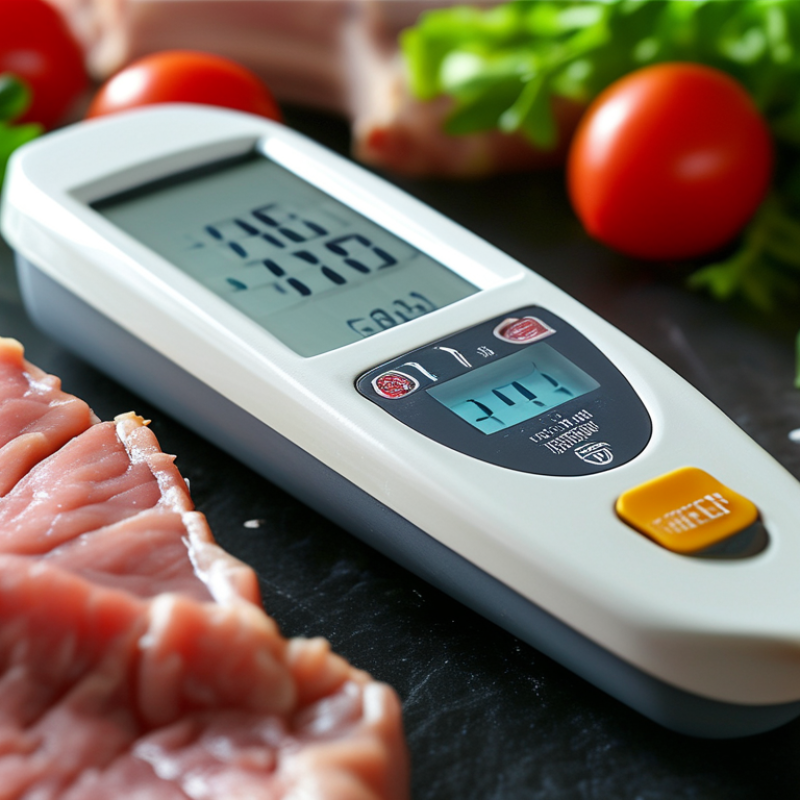
| K-Type Thermocouple | Two different metal wires generate a small voltage when their junction is heated. The instrument converts that voltage into a temperature reading. | Approximately −200°C to 1,260°C, depending on the probe and insulation. | Usually less than 1 second with a fine exposed-tip probe. | Very wide temperature range, rugged construction, and fast readings. | Requires correct reference-junction compensation; readings can drift or be affected by electrical noise. | Ovens, grills, industrial processes, laboratory work, and high-temperature cooking. |
| J-Type Thermocouple | Measures the voltage produced by an iron–constantan junction and calculates temperature from the thermoelectric relationship. | Approximately −210°C to 760°C. | Typically under 1–2 seconds with a small probe. | Good sensitivity in moderate-temperature applications and broad industrial availability. | The iron element can oxidize at high temperatures; it is less suitable for strongly oxidizing environments. | Metal processing, machinery checks, ovens, and general industrial measurement. |
| T-Type Thermocouple | A copper–constantan junction produces a voltage that changes predictably with temperature. | Approximately −200°C to 350°C. | Often under 1 second with a thin-tip probe. | Good accuracy and stability at low temperatures; suitable for food and refrigeration checks. | The copper element limits maximum temperature compared with some other thermocouples. | Refrigeration, frozen products, food preparation, and environmental testing. |
| E-Type Thermocouple | Uses a chromel–constantan junction; the voltage generated at the junction is converted into temperature. | Approximately −200°C to 900°C. | Usually under 1 second with an exposed or reduced-mass tip. | High thermoelectric output and good sensitivity over a wide range. | Requires compatible connectors and calibration; probe construction strongly affects durability. | Scientific instruments, cryogenic testing, furnaces, and process monitoring. |
| Platinum RTD | A platinum sensing element changes electrical resistance in a highly repeatable way as its temperature changes. | Approximately −200°C to 850°C, depending on the element and probe design. | About 1–10 seconds for many compact probes. | Excellent stability, repeatability, and measurement accuracy. | Usually costs more and responds more slowly than a very fine thermocouple probe. | Food processing, laboratories, HVAC systems, and industrial process control. |
| Thermistor | A temperature-sensitive semiconductor changes resistance significantly with temperature; the electronics translate that resistance into a reading. | Commonly about −50°C to 150°C, although specialized versions cover wider ranges. | Often 1–5 seconds, depending on probe size and insulation. | High sensitivity, low cost, and good performance in the everyday temperature range. | Limited high-temperature range and a nonlinear resistance curve requiring calibration. | Kitchen thermometers, medical devices, appliances, and electronics monitoring. |
| Infrared Thermometer | An infrared detector senses thermal radiation emitted by a surface and estimates temperature using the measured radiation and emissivity setting. | Commonly −50°C to 500°C or higher, depending on the instrument. | Usually less than 1 second. | Non-contact measurement, very fast operation, and useful for moving or inaccessible surfaces. | Measures surface rather than internal temperature; steam, distance, reflective surfaces, and incorrect emissivity can affect accuracy. | Griddles, ovens, machinery, electrical panels, and surface inspections. |
| Bimetallic Coil Thermometer | Two bonded metals expand at different rates, causing a coil or strip to move. The mechanical movement is linked to a temperature scale. | Commonly about −50°C to 300°C. | Usually 10–30 seconds; some models require stirring or movement for a stable reading. | Simple, durable, battery-free operation and easy visual reading. | Slower response and generally lower precision than electronic probe thermometers. | Ovens, cooking liquids, grills, and basic process monitoring. |
| Semiconductor Temperature Sensor | A silicon-based junction or integrated circuit produces a voltage or digital signal that varies with temperature. | Commonly about −55°C to 150°C. | Typically under 1–5 seconds, depending on packaging. | Compact size, simple electronic integration, and good repeatability in moderate conditions. | Usually unsuitable for very high temperatures and can be affected by heat transfer through the housing. | Digital thermometers, appliances, computers, and environmental devices. |
| Liquid-Crystal Strip Thermometer | Thermochromic liquid crystals change their reflected color at calibrated temperature intervals, providing a visual indication. | Usually a narrow range, commonly about 0°C to 120°C. | Several seconds to approximately 1 minute, depending on contact and material thickness. | Thin, inexpensive, lightweight, and requires no battery or electrical connection. | Limited precision, narrow temperature range, and sensitivity to lighting, surface contact, and wear. | Aquariums, storage containers, brewing checks, and quick visual monitoring. |