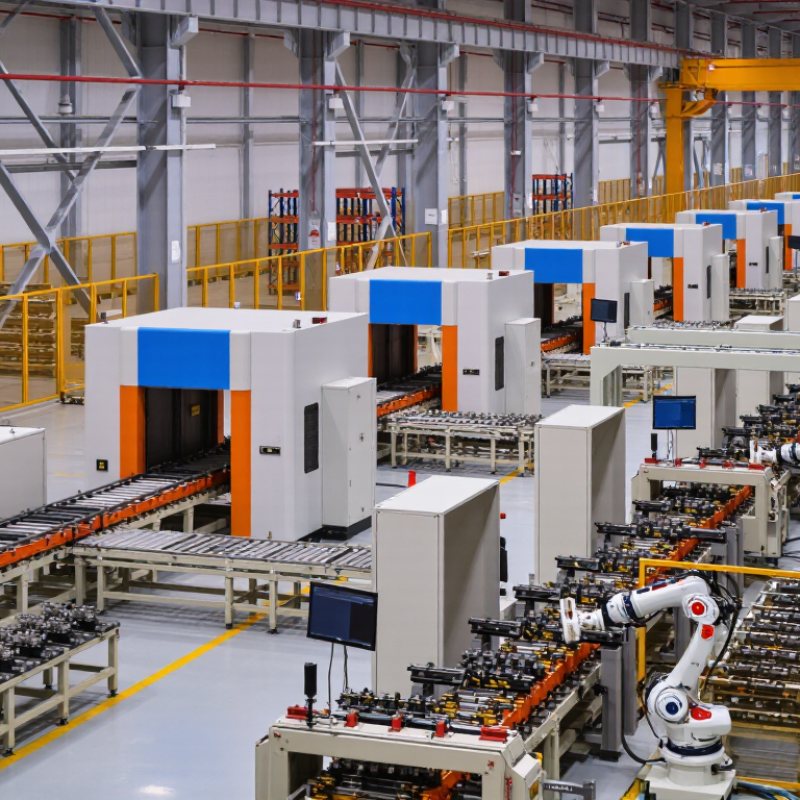
China is a major sourcing destination for production equipment, but choosing a supplier takes more than comparing prices. For global buyers, an Automated Line must fit the product, factory layout, target output, and available workforce. A system that looks impressive in a brochure may still need substantial adjustment on the shop floor. Details matter.
This guide introduces leading Chinese automated line manufacturers and the capabilities buyers can evaluate. These include machine design, robotics, controls, material handling, inspection, and integration with existing equipment. Buyers should also review project references, component specifications, quality procedures, installation support, and spare-parts availability. Ask for clear cycle-time assumptions and acceptance criteria. A sample video helps, but it cannot replace a well-defined factory acceptance test.
No supplier is the right choice for every project. Some excel at standard machinery, while others focus on custom production cells or complete turnkey systems. Communication, documentation, and after-sales service can be just as important as engineering. They are sometimes underestimated. This comparison is a starting point, not a guarantee of performance; actual results depend on product design, operating conditions, and commissioning. Before making a decision, confirm requirements directly with shortlisted manufacturers and check that their proposed solution matches the intended production process.
A reliable automated production line is more than connected machines. It combines material handling, processing stations, inspection, safety equipment, and controls. In a packaging line, for example, conveyors must deliver containers at a steady pitch while sensors detect jams and reject misfilled units. Small timing errors can stop the entire line. That detail matters.
The International Federation of Robotics reported 541,302 industrial robot installations worldwide in 2023, with 4,281,585 robots operating in factories. These figures, published in World Robotics 2024, show the scale of automation—not that every process needs a robot.
Buyers should define cycle time, product variation, changeover frequency, and inspection requirements before comparing proposals. Control scope should specify PLC logic, operator interfaces, safety circuits, data logging, and interfaces with existing systems.
Integration is where assumptions often fail. A quoted line may exclude upstream feeding, plant-network work, or production-data mapping. Request an interface list, acceptance criteria, and test records.
The IFR’s World Robotics 2024 also reported global robot density of 162 robots per 10,000 manufacturing employees in 2023. This is useful context, not a productivity guarantee; layout, maintenance skills, and spare-parts access still shape real output.