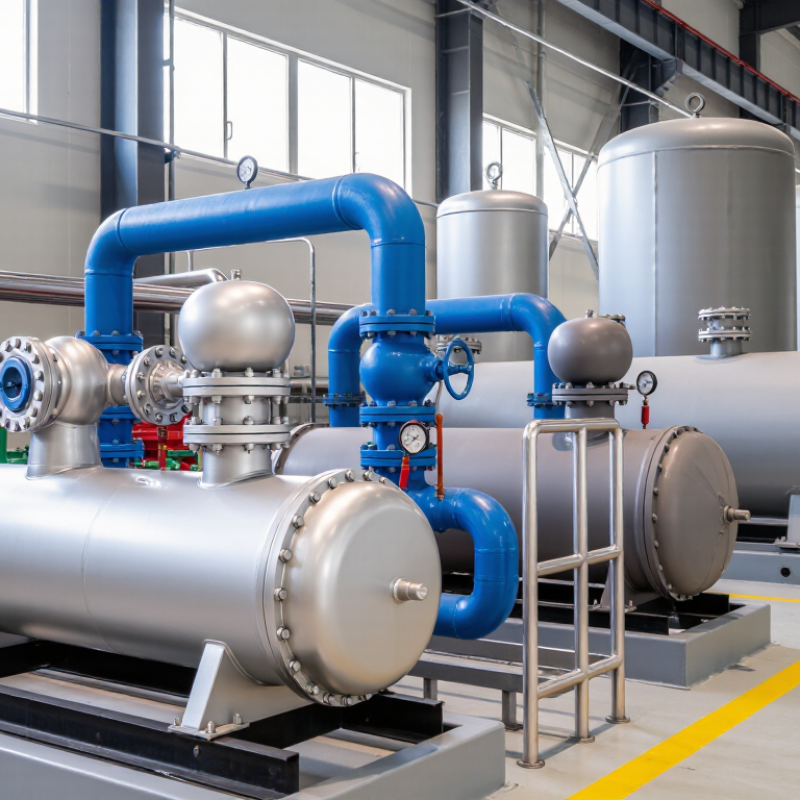
What Are the Top Liquid Ring Compressors in 2026? For process-service applications, a “top” compressor is one that meets the duty safely and reliably. API Standard 681 provides a framework for specifying liquid ring compressors and vacuum pumps used in petroleum, chemical, and gas service. It helps purchasers define operating conditions, materials, inspection, testing, and documentation requirements. That framework matters.
Selection starts with the actual process stream, not a catalogue rating. Record gas composition, inlet pressure, required capacity, discharge pressure, and expected turndown. Then assess seal-liquid temperature and vapor pressure: both affect capacity, while poor operating margins can increase cavitation risk. A warm seal-liquid loop can quietly change the result. API 681 supports consistent technical discussions between purchasers and suppliers, but the project specification still needs clear, application-specific limits.
The U.S. Department of Energy’s 2012 sourcebook, Improving Compressed Air System Performance, estimates that compressed air uses about 10% of industrial electricity. This is a broad industry benchmark, not a liquid-ring-compressor efficiency figure. It does, however, reinforce the value of checking power across the full operating range, rather than at one design point. Review test conditions, seal-liquid consumption, maintenance access, and performance at expected process variations. I would also challenge one common assumption: a compliant datasheet alone cannot prove suitability if real gas conditions remain uncertain.