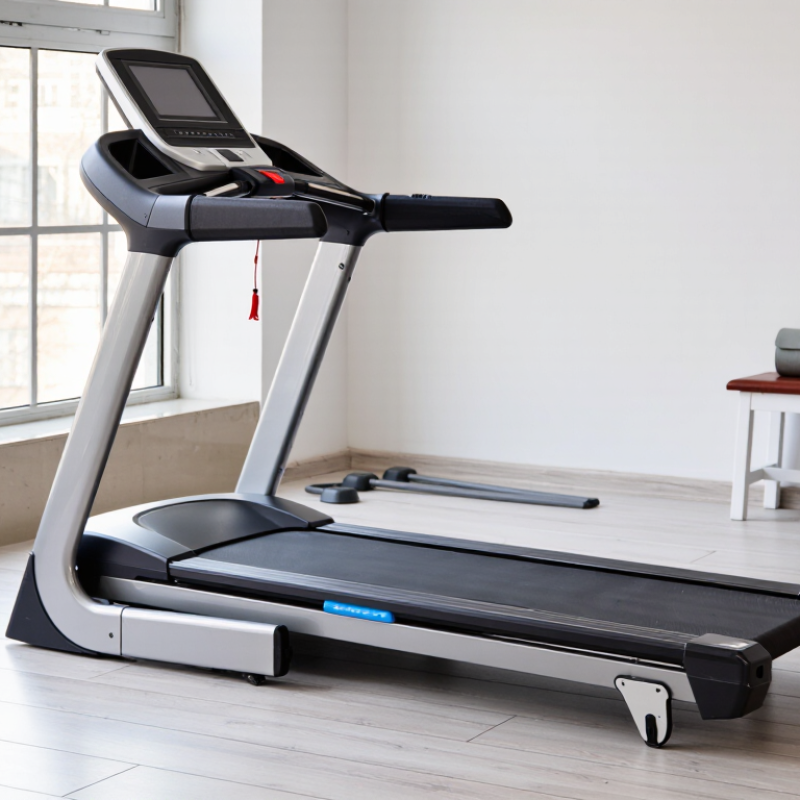
| Product Category | Walking pad, folding treadmill, under-desk treadmill, and compact home treadmill | Different categories serve different use cases, including home fitness, office walking, serviced apartments, and light commercial applications. | Confirm intended user group, operating environment, duty cycle, and whether the model is for residential or commercial use. |
| Typical Motor Rating | Approximately 1.5–3.0 HP for compact portable models; some specifications use continuous horsepower rather than peak horsepower | Motor terminology directly affects performance comparisons and product claims in different markets. | Request the rated continuous power, peak power, motor type, cooling design, and test conditions instead of relying only on peak HP. |
| Typical Walking or Running Speed | About 0.5–6 km/h for walking pads; approximately 1–12 km/h for compact folding treadmills | Speed determines whether the product is suitable for walking, jogging, or running and influences positioning and safety requirements. | Check minimum and maximum speed, speed-control method, acceleration behavior, and whether the stated speed is measured with or without load. |
| Common User Weight Capacity | Approximately 90–120 kg for many compact portable models; higher-capacity models may be available | Load capacity is an important safety, durability, and marketing specification. | Verify the tested maximum user weight, recommended operating weight, frame construction, and warranty conditions for overloaded use. |
| Running Belt Dimensions | Walking pads commonly use a belt around 380–450 mm wide and 900–1,200 mm long; larger compact treadmills may exceed these dimensions | Belt size affects user comfort, carton size, storage space, and freight cost. | Confirm usable belt area rather than the external deck size, together with folded and unfolded product dimensions. |
| Folded Storage Format | Flat-folding, vertical-folding, or non-folding compact construction | Folded dimensions influence retail packaging, warehouse storage, last-mile delivery, and customer assembly requirements. | Request dimensional drawings showing product size, folded size, handle position, caster location, and minimum storage clearance. |
| Typical Product Net Weight | Roughly 20–45 kg for many portable walking pads and compact folding models; heavier frames can exceed this range | Weight affects handling, parcel eligibility, palletization, delivery surcharges, and return logistics. | Obtain verified net weight, gross shipping weight, carton dimensions, and the number of cartons per unit. |
| Electrical Input | Common market configurations include 100–120 V at 60 Hz and 220–240 V at 50 Hz, depending on destination | Electrical compatibility is essential for safe operation and market acceptance. | Specify destination voltage, frequency, plug type, fuse rating, power cord standard, and electrical safety documentation. |
| Control and Connectivity | Remote control, LED display, speed buttons, Bluetooth audio, mobile application support, or wireless device integration | Connectivity can improve product positioning but may create additional software, radio, privacy, and support obligations. | Test application language support, regional availability, firmware update method, wireless compliance, and data-handling terms. |
| Safety Features | Emergency stop function, overload protection, non-slip belt surface, side rails on selected models, and child-lock or safety-lock options | Safety features reduce operational risk and may be required by the buyer’s product policy or destination-market rules. | Request safety test reports, user instructions, warning labels, emergency-stop test results, and fault-protection details. |
| Private Label Customization | Logo printing, carton artwork, user manual, warning labels, color selection, startup screen, and accessory packaging | Private labeling helps create market differentiation without changing the mechanical platform. | Approve artwork proofs, color references, label translations, trademark authorization, and packaging drop-test requirements. |
| Engineering Customization | Possible changes may include belt size, frame color, control panel, motor configuration, software interface, cable length, and accessory set | Engineering changes can improve market fit but may affect tooling, testing, lead time, minimum order quantity, and warranty support. | Use a written specification sheet covering drawings, materials, tolerances, firmware version, sample approval, and change-control procedures. |
| Sample Ordering | One evaluation unit is commonly requested before a larger purchase; sample and freight charges are often paid separately | Sampling allows buyers to evaluate noise, belt alignment, packaging, user experience, and documentation before mass production. | Define sample approval criteria and clarify whether sample charges, tooling charges, or freight can be credited against a later order. |
| Indicative Production Lead Time | Approximately 25–45 calendar days for standard production after deposit and specification confirmation; customized projects may require additional time | Lead time affects launch schedules, seasonal inventory, promotions, and shipping reservations. | Confirm the production start point, component availability, inspection date, holiday shutdowns, and consequences of late delivery. |
| Minimum Order Quantity | Standard models may be available in small trial quantities; customized colors, packaging, tooling, or electronics usually require a higher MOQ | MOQ determines inventory risk and the feasibility of market testing. | Request separate MOQs for standard products, color changes, private labels, packaging, firmware, tooling, and replacement parts. |
| Quality Inspection | Common controls include incoming-material inspection, assembly checks, running tests, noise checks, electrical tests, and final visual inspection | Documented inspection reduces defects and improves consistency across repeated orders. | Agree on an inspection checklist, acceptable quality limits, sampling method, defect classification, and pre-shipment inspection rights. |
| Packaging Configuration | Corrugated export carton, molded protective inserts, plastic film, accessory box, and pallet or reinforced corner protection when required | Packaging must protect heavy moving equipment during multi-stage international transportation. | Confirm carton dimensions, gross weight, moisture protection, stacking limits, drop-test requirements, and packaging photographs. |
| Common Shipping Modes | Ocean freight for larger commercial orders; air freight or express delivery for samples and urgent replenishment; rail or multimodal options may be available for selected routes | Transport mode affects cost, transit time, carbon impact, and inventory planning. | Compare transit time, shipment frequency, destination charges, customs handling, insurance, and delivery appointment requirements. |
| Frequently Used Incoterms | EXW, FOB, FCA, CIF, CPT, DAP, and DDP may be offered depending on the supplier and destination | Incoterms define responsibilities for transport, export clearance, import clearance, risk transfer, and certain costs. | State the selected Incoterms® 2020 rule, named place, included charges, importer of record, taxes, and customs responsibilities in the contract. |
| Customs Classification | Exercise and fitness equipment is commonly associated with HS heading 9506.91, but the final classification depends on the importing country and product details | Correct classification supports accurate duty calculation, documentation, and customs clearance. | Obtain a destination-country tariff ruling or customs broker confirmation; do not rely solely on a supplier’s suggested HS code. |
| Required Commercial Documents | Commercial invoice, packing list, transport document, certificate of origin when applicable, product specification, and inspection records | Complete documents help prevent customs delays and discrepancies in cargo declarations. | Match product descriptions, quantities, weights, values, carton marks, consignee details, and country-of-origin information across all documents. |
| Destination-Market Compliance | Requirements may include electrical safety, electromagnetic compatibility, radio equipment, energy labeling, chemical restrictions, packaging rules, and consumer-product documentation | Compliance obligations vary by destination and by whether the treadmill includes wireless or electronic functions. | Identify the destination market before production and confirm applicable standards, test reports, declarations, labels, manuals, and importer obligations. |
| Warranty Structure | Warranty coverage commonly separates the frame, motor, electronics, and wearable parts; terms vary by supplier and destination | Clear warranty terms affect landed cost, customer service, spare-parts planning, and marketplace risk. | Define warranty duration, covered components, exclusions, proof requirements, response time, replacement policy, and freight responsibility. |
| Spare Parts Planning | Common service parts include walking belts, rollers, control boards, remote controls, power cords, safety keys, and fasteners | Maintaining service parts can reduce returns and improve after-sales response in overseas markets. | Request a recommended spare-parts list, unit prices, compatible model numbers, lead times, storage conditions, and technical instructions. |
| Payment and Order Protection | Commercial arrangements may include a deposit before production and the balance after inspection or before shipment; exact terms are negotiable | Payment structure should match production risk, inspection rights, tooling exposure, and supplier verification results. | Use a written purchase contract covering specifications, delivery dates, inspection, remedies, intellectual property, and payment milestones. |
| Landed-Cost Calculation | Product price should be evaluated together with packaging, inland transport, export charges, freight, insurance, customs duty, taxes, destination handling, warehousing, and last-mile delivery | A lower factory price does not necessarily produce the lowest delivered cost. | Request a shipment-specific quotation with currency, validity period, named destination, charge inclusions, exclusions, and estimated delivery timeline. |