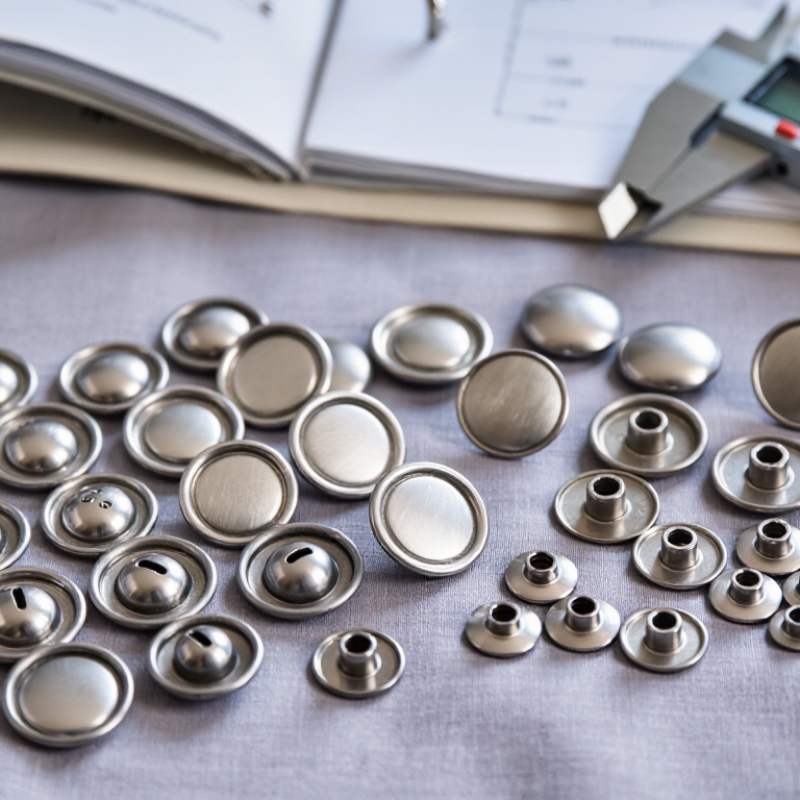
Choosing a stainless steel button supplier in 2026 requires more than comparing online rankings. Real performance begins with material control. Ask whether each batch uses documented stainless steel grades, such as 304 or 316, when the application demands them. Request mill certificates, surface-finish specifications, and test records before approving production. Do not trust a glossy sample alone. Bulk quality can differ.
During supplier evaluations, examine crimping, edge smoothness, shank alignment, and resistance after repeated washing. Place samples in a practical trial, then inspect scratches, discoloration, and loose fittings. Measure dimensions with calipers, not visual judgment. Ask for a controlled pre-production sample. Record the lot number. An experienced supplier should explain tooling life, inspection points, and how defects are isolated. Vague answers deserve caution.
Reliability also depends on communication and traceability. Confirm minimum order quantities, realistic lead times, packaging methods, and replacement procedures in writing. Check whether the supplier can maintain the same finish across repeat orders. Very low pricing may reflect thinner material, weaker plating, or rushed inspection. That is not always true. I have seen buyers focus on unit cost and overlook rework, delayed launches, and rejected garments. Review independent audits or factory evidence where available, while recognizing that documents can become outdated. Choose the supplier whose process you can verify, not merely the one with the loudest claims.