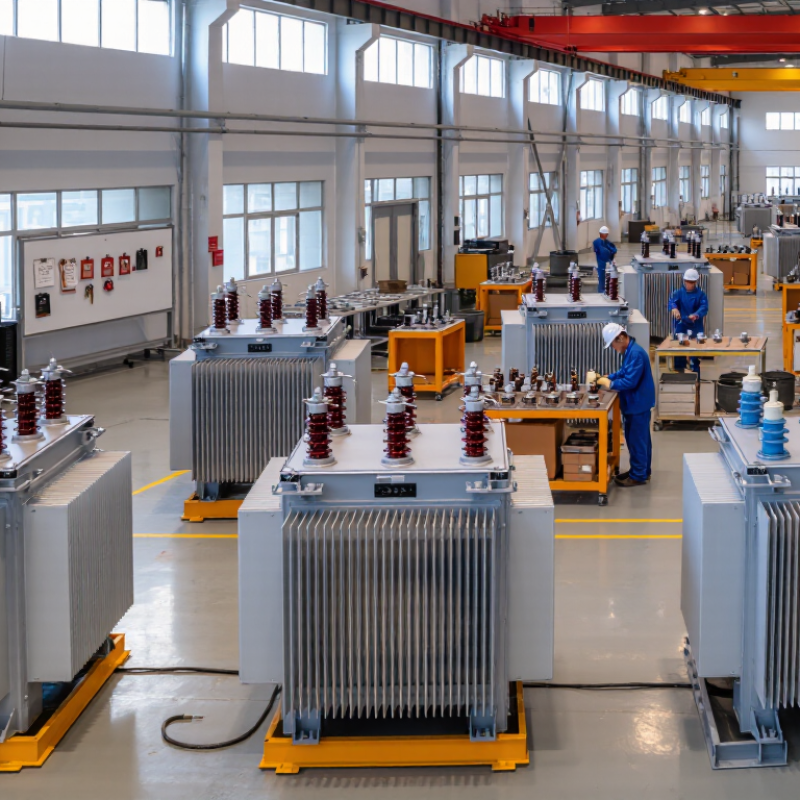
| Oil-immersed power transformer | Three-phase transformer with an oil-filled tank for insulation and heat dissipation | Utility substations, transmission networks, and large industrial facilities | Rated power, voltage ratio, cooling method, insulation level, losses, installation environment, and maintenance requirements | Used in outdoor substations and other applications where liquid insulation and heat transfer are suitable. Applicable product and test requirements should be checked against current Chinese standards and project specifications. |
| Dry-type transformer | Three-phase transformer using air and solid insulation rather than an insulating liquid | Commercial buildings, hospitals, transport facilities, factories, and indoor electrical rooms | Indoor clearance, ventilation, temperature rise, noise, fire-safety requirements, and load profile | Often considered for indoor installations where avoiding an oil-filled unit is a project requirement. The appropriate enclosure and ventilation depend on the site conditions. |
| Distribution transformer | Three-phase step-down transformer supplying low-voltage distribution networks | Local distribution, residential areas, commercial premises, and small-to-medium industrial loads | Primary and secondary voltage, peak and average load, impedance, efficiency, and expected load growth | A common distribution arrangement in China steps medium voltage down to low voltage; 10 kV to 0.4 kV is one widely used example, subject to the local network design. |
| Industrial transformer | Three-phase transformer selected for process loads, motor loads, or plant distribution | Manufacturing plants, mining, water treatment, and other industrial operations | Starting currents, harmonics, duty cycle, short-circuit withstand capability, and coordination with protection equipment | Industrial projects may require customized ratings and interfaces. Load measurements and the facility’s electrical design should guide specification. |
| Renewable-energy transformer | Three-phase step-up or collector transformer used in a renewable power system | Solar and wind power plants, collector systems, and grid interconnection points | Plant voltage, inverter characteristics, harmonics, ambient conditions, cooling, and grid-connection requirements | Renewable projects use transformers to connect generation equipment to collection and grid networks. Requirements vary by project design and connection rules. |
| Special-purpose transformer | Transformer designed for a defined electrical process or operating condition | Furnaces, rectifiers, traction systems, test facilities, and other specialized loads | Waveform, duty cycle, load variation, cooling, insulation, and any required electrical isolation | These units are generally specified around the process and site requirements rather than selected solely by a standard distribution rating. |
| Standards and compliance | Design, manufacture, testing, and documentation for the intended application | All transformer installations | Confirm applicable GB/T or other required standards, routine and type-test documentation, and project acceptance criteria | The GB/T 1094 series covers power-transformer requirements and related tests. Buyers should verify the applicable edition and any additional grid, industry, or project requirements. |
| Procurement and comparison | Technical and commercial evaluation of supplier quotations | New installations, replacement projects, and capacity upgrades | Compare guaranteed losses, temperature rise, sound level, accessories, delivery scope, warranty, test records, and service support | Specifications and prices depend on rating, voltage, insulation and cooling design, materials, testing scope, and delivery terms. Request comparable quotations based on the same technical specification. |