| Basic Definition and Operating Principles |
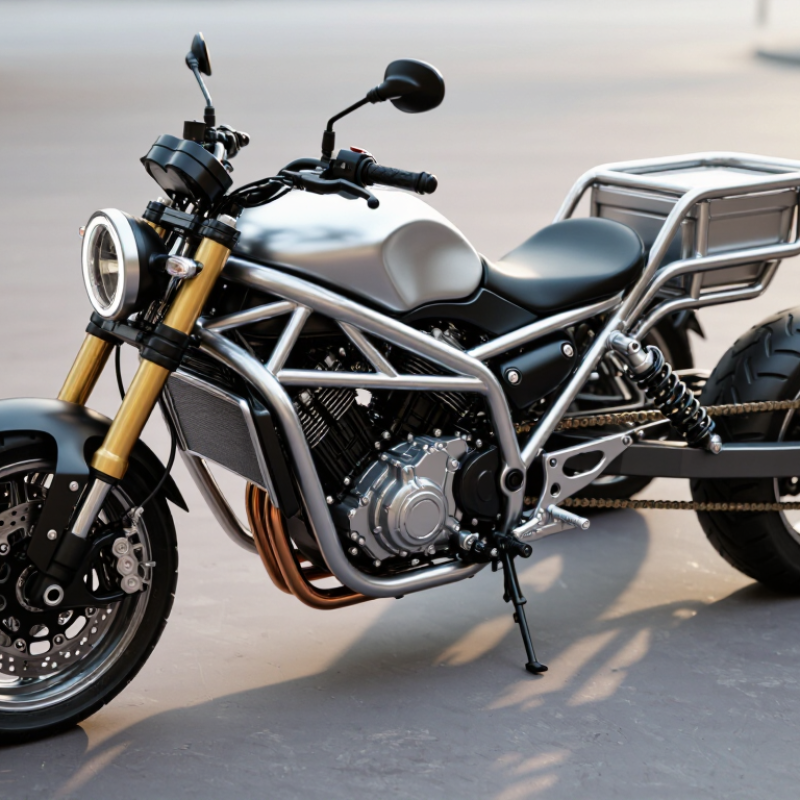
| Definition | Tricycle Motor Bike | A motorized three-wheeled vehicle with either two wheels at the rear and one at the front, or two wheels at the front and one at the rear. | It combines motorcycle-style propulsion with a three-wheel layout that can provide additional stability at low speeds and useful load-carrying capacity. |
| Power Source | Internal-Combustion Engine or Electric Motor | Common power sources include a small gasoline engine or a battery-powered electric motor. | The power source produces rotational force, known as torque, which is transferred through the drivetrain to the driven wheel or wheels. |
| Power Flow | Energy-to-Motion Process | Fuel or stored electrical energy is converted into mechanical rotation. | The engine or motor turns the drivetrain, the drivetrain rotates the axle or wheel, and tire friction against the road moves the vehicle forward or backward. |
| Steering | Handlebar or Steering System | Many motorcycle-style designs use handlebars; some front-two-wheel layouts use a steering linkage connected to the front wheels. | Turning the control changes the direction of the steered wheel or wheels. The frame and suspension must allow the vehicle to turn without excessive instability. |
| Stability | Three-Wheel Configuration | The wheel arrangement creates a wider support base than a conventional two-wheel motorcycle. | The extra wheel can reduce the need to balance at a stop, although stability during cornering still depends on speed, weight distribution, suspension design, and road conditions. |
| Braking | Hydraulic, Mechanical, or Regenerative Brakes | Disc or drum brakes may be used; electric versions can also use regenerative braking. | Brake force slows the wheels. Regenerative braking can recover part of the vehicle’s kinetic energy and return it to the battery during deceleration. |
| Main Mechanical and Electrical Parts |
| Structure | Frame or Chassis | A rigid metal structure that supports the engine or motor, bodywork, suspension, seat, and cargo or passenger loads. | It maintains alignment between the wheels and distributes operating loads throughout the vehicle. |
| Propulsion | Engine | In a gasoline-powered model, the engine typically includes a cylinder, piston, crankshaft, intake system, exhaust system, and cooling system. | Combustion creates pressure that moves the piston. The crankshaft converts that reciprocating motion into rotary motion. |
| Propulsion | Electric Motor | Electric models commonly use a hub motor or a centrally mounted motor connected to the drivetrain. | Electromagnetic force rotates the motor shaft or wheel hub, delivering torque with relatively few moving parts. |
| Energy Storage | Fuel Tank or Battery Pack | Gasoline models store liquid fuel in a tank; electric models store electrical energy in a rechargeable battery pack. | The stored energy determines operating range, while tank or battery capacity affects vehicle weight, packaging, and refueling or charging time. |
| Transmission | Clutch, Gearbox, or Belt Drive | Depending on the design, the drivetrain may include a manual clutch and gears, an automatic continuously variable transmission, or a direct electric drive. | It adjusts the relationship between motor speed and wheel speed, helping the vehicle start, accelerate, climb, and cruise efficiently. |
| Final Drive | Chain, Belt, Shaft, or Differential | Power may be transferred by a chain, toothed belt, drive shaft, or geared axle assembly. | The final drive sends torque to the driven wheel or wheels. A differential can allow wheels on the same axle to rotate at different speeds while cornering. |
| Suspension | Forks, Shock Absorbers, and Springs | Suspension components connect the wheels to the frame and absorb bumps using springs and dampers. | They help maintain tire contact with the road, improve comfort, and control bouncing during acceleration, braking, and cornering. |
| Wheels and Tires | Three Wheels and Tires | The tires provide the contact patch between the vehicle and the road; sizes and tread patterns vary by vehicle purpose. | Tire grip enables acceleration, braking, and steering. Correct inflation is important for handling, load capacity, and tire life. |
| Steering | Steering Head, Linkage, and Tie Rods | These components connect the steering control to the steered wheel or wheels. | They transmit steering input and maintain the intended wheel angles during a turn. |
| Braking | Brake Calipers, Discs, Drums, and Controls | Brake assemblies use friction to slow rotating discs or drums; the controls may be operated by hand levers or foot pedals. | Friction converts motion into heat. Balanced braking is essential because uneven brake force can affect directional control. |
| Electrical System | Wiring, Fuses, Switches, and Lighting | The electrical system powers the starter, lamps, indicators, instruments, sensors, and control devices. | It distributes electrical energy and provides signaling, visibility, monitoring, and protection against electrical faults. |
| Electric Control | Motor Controller and Battery Management System | Electric models use a motor controller and, in most cases, a battery management system. | The controller regulates motor current and speed. The battery management system monitors cell voltage, temperature, charging, and protection limits. |
| Controls and Safety | Throttle, Instrument Panel, and Safety Equipment | Typical equipment includes a throttle, speed display, warning indicators, mirrors, lights, reflectors, and seat belts where applicable. | These systems allow the rider or driver to control speed, monitor vehicle status, communicate intentions, and improve visibility and occupant protection. |
| Typical Operating Characteristics |
| Load Capacity | Passenger and Cargo Support | Capacity depends on the frame, suspension, tires, brakes, powertrain, and legally specified gross vehicle weight. | Adding passengers or cargo increases braking distance, tire loading, and suspension stress, so the manufacturer’s load limit should not be exceeded. |
| Performance | Speed, Torque, and Range | Performance varies according to motor or engine output, gearing, vehicle mass, aerodynamics, terrain, and energy capacity. | Torque affects starting and hill climbing, while available power influences acceleration and sustained speed. Electric range also depends strongly on temperature and riding conditions. |
| Maintenance | Routine Service Items | Common checks include tire pressure, brake condition, suspension components, fasteners, lighting, chain or belt condition, engine fluids, and battery connections. | Regular inspection helps preserve braking, steering, traction, efficiency, and overall operating safety. |