| Flat drop cable | Usually contains one or more optical fibers between strength members in a flat profile. | Outdoor aerial routes and building entry points; some versions are rated for indoor/outdoor use. | Connecting a nearby access network distribution point to a home or small building. | Check the cable’s bend-radius and tensile limits. Use fittings designed for its specific shape and construction. |
| Round drop cable | Round jacket with fiber elements and, depending on the design, strength members or protective components. | Indoor pathways, conduits, and some outdoor routes when the cable is rated for the exposure. | Routing a fiber connection through conduit or within a building to an optical network terminal. | Confirm the cable’s indoor, outdoor, or dual-use rating before installation; a general-purpose indoor cable is not automatically suitable outdoors. |
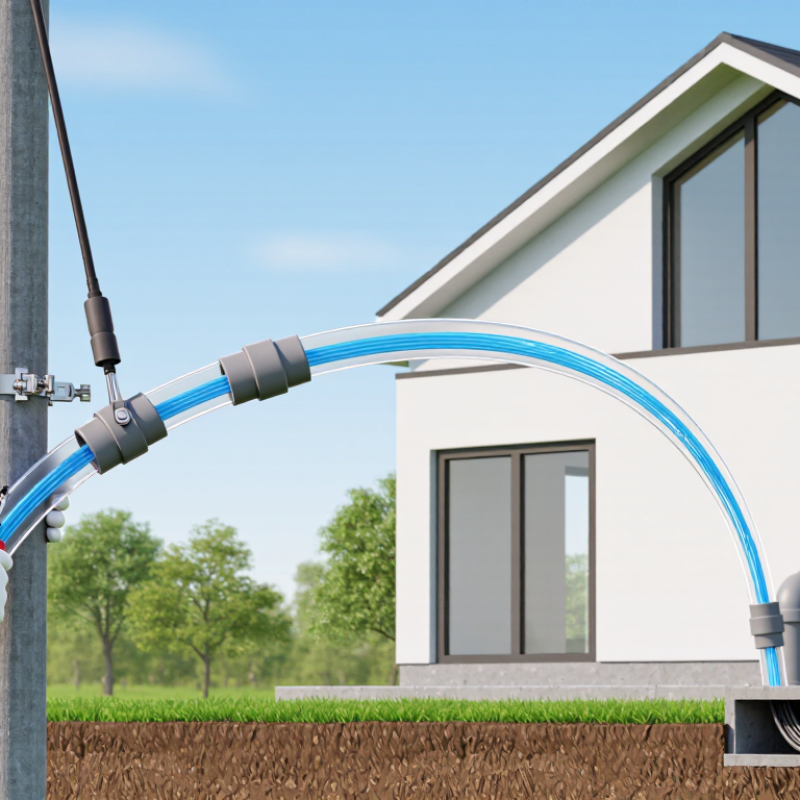
| Figure-eight self-supporting drop | Fiber cable joined to a messenger wire, forming a figure-eight profile. | Outdoor aerial spans between approved support points. | Overhead service drops where the messenger provides support for the fiber cable. | Use compatible clamps and follow span, clearance, and tension requirements. Do not treat the fiber portion as a substitute for the messenger. |
| Dielectric aerial drop | Non-metallic strength members support the cable; the design has no metallic messenger. | Outdoor aerial installations where an all-dielectric cable is appropriate. | Overhead connections between an access network and a customer location. | Requires purpose-designed anchoring and support hardware. Verify mechanical ratings and the route’s exposure conditions. |
| Duct-rated drop | Jacketed cable designed for placement in a duct or conduit; construction varies by product. | Underground ducts and conduits, subject to the cable’s rating. | Protected underground routing from a distribution point toward a building. | Check duct fill, pulling tension, bend radius, and water-exposure requirements. A duct-rated cable is not necessarily rated for direct burial. |
| Direct-burial drop | Outdoor cable with construction intended to tolerate direct burial; some designs include additional moisture or mechanical protection. | Buried routes without a continuous protective duct, where local rules permit. | Underground service connections between network access points and premises. | Use only a cable specifically rated for direct burial. Follow applicable burial-depth, locating, and separation requirements. |
| Indoor drop / premises cable | Compact, flexible cable designed for indoor routing; may have one or more fibers. | Inside walls, raceways, or other approved building pathways. | Connecting the building entry point to an indoor termination or optical network terminal. | Confirm the required fire and building-code rating. Protect the cable from crushing, sharp bends, and abrasion. |