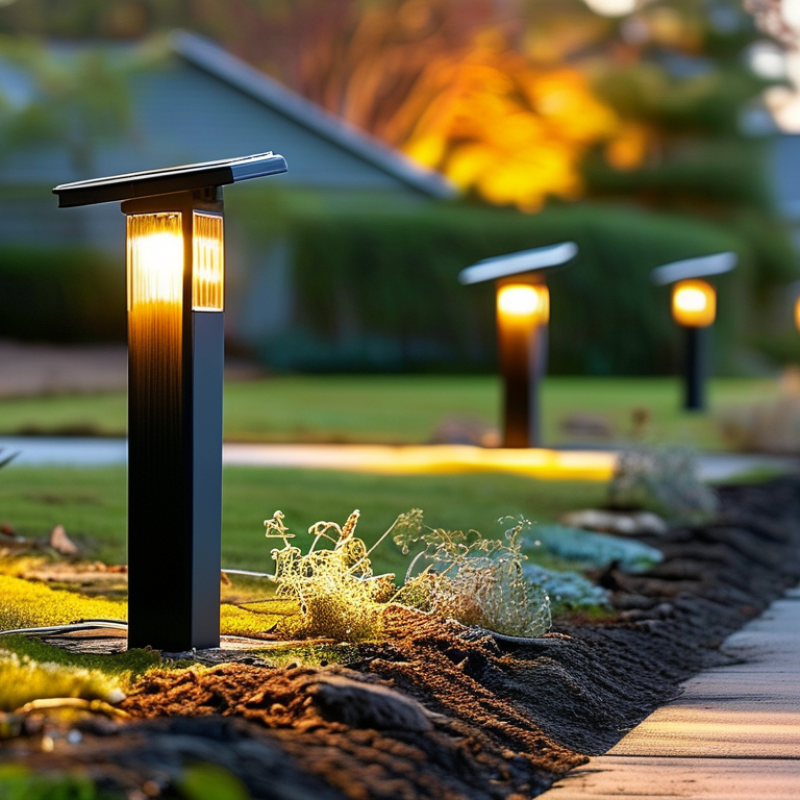
| Solar-powered operation | No external power cable required; the photovoltaic panel charges the battery during daylight. | Suitable for gardens, walkways, driveways, patios, and areas where trenching or electrical wiring is inconvenient. | Performance depends on daily sunlight, panel orientation, weather, and seasonal daylight hours. |
| Energy-efficient LED lighting | LED light sources generally use less electricity and last longer than traditional incandescent lighting. | Lower operating energy demand and reduced maintenance can improve long-term ownership value. | Compare brightness in lumens rather than watts, because watts measure power consumption rather than light output. |
| Automatic dusk-to-dawn control | Light sensor activation turns the lamp on in low light and off during daylight. | Provides convenient nighttime illumination without requiring a wall switch or daily manual operation. | Sensor placement and nearby artificial light can affect activation and shut-off behavior. |
| Rechargeable battery system | Common battery chemistries include NiMH and lithium-ion, depending on the product design. | Stored energy allows the light to operate after sunset and supports use in locations without grid access. | Runtime varies with battery capacity, charging conditions, LED output, temperature, and lighting mode. |
| Weather-resistant enclosure | Outdoor models often use an enclosure rated for protection against dust and water; IP44, IP65, and similar ratings are commonly used. | Helps protect internal components from outdoor exposure such as rain, dust, and splashing water. | An IP rating does not automatically indicate resistance to impact, corrosion, flooding, or extreme temperatures. |
| Durable outdoor materials | Typical housing materials include stainless steel, aluminum, ABS, and polycarbonate. | Material choice affects resistance to corrosion, ultraviolet exposure, impact, and temperature changes. | Coastal or humid locations may benefit from corrosion-resistant finishes and suitable fasteners. |
| Easy installation | Many designs use a ground stake, base plate, or post-mount system rather than mains wiring. | Lower installation complexity makes the product attractive for residential users, rental properties, and landscaping projects. | Check mounting dimensions, ground conditions, required tools, and whether anchors or screws are included. |
| Multiple lighting modes | Available modes may include steady light, low-brightness mode, motion activation, or adjustable brightness. | Allows buyers to balance appearance, security needs, and battery runtime for different outdoor environments. | Motion-sensor range and detection angle should be evaluated for the intended pathway or entrance. |
| Low routine maintenance | Routine care is generally limited to cleaning the solar panel and checking the battery or housing. | Reduced cabling and fewer service requirements are useful for dispersed outdoor installations. | Dust, leaves, snow, and shading can reduce charging efficiency, so the panel should remain unobstructed. |
| Decorative and functional design | Styles range from traditional lantern forms to minimalist and modern profiles. | Buyers can combine pathway visibility, boundary marking, and landscape decoration in one product. | Select the height, beam direction, color temperature, and spacing according to the area being illuminated. |
| Broad climate suitability | Outdoor suitability is influenced by temperature tolerance, water protection, battery performance, and material durability. | Solar post lights can be used in many regions because they do not depend on the local electricity-grid format. | Cold weather can reduce battery performance, while prolonged cloud cover can reduce charging and nighttime runtime. |
| Reduced dependence on grid electricity | The light uses energy collected locally from sunlight rather than continuous mains electricity. | Attractive for off-grid areas, remote gardens, temporary landscaping, and projects where extending electrical service is costly. | Solar lighting is best suited to guidance, ambiance, and general visibility; high-security lighting may require higher output or a separate power source. |
| Technical terms and specifications in this table are based on widely used outdoor-lighting, photovoltaic, battery, LED, and IP-protection principles. Actual performance varies by product design and local conditions. |