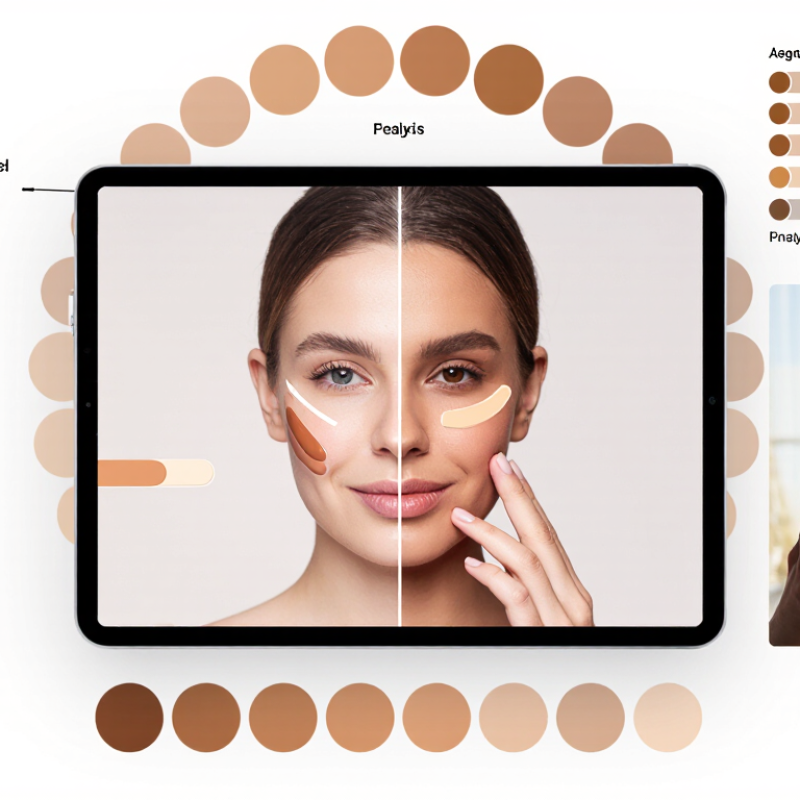
| Foundation and concealer matching | Visible skin color and, in some tools, an estimate of undertone under the captured lighting. | Compares the reading with available product shades to suggest a starting match. | Helps narrow a large shade selection; users can still check the match in person when possible. |
| Online shade recommendations | A color estimate from a photo or camera image, which may be affected by lighting, camera settings, and display calibration. | Uses the estimate to filter or rank shades in an online product catalog. | Makes online shade discovery more convenient while setting realistic expectations about color accuracy. |
| Virtual makeup try-on | Facial regions and visible skin color needed to place and render a digital product preview. | Applies simulated foundation, concealer, blush, or other makeup colors to a live camera view or uploaded image. | Lets shoppers preview color placement and appearance before deciding whether to explore a product further. |
| In-store beauty consultation | A device-based reading of the skin area being assessed, subject to the device’s instructions and environment. | Provides an additional reference for a beauty adviser during shade selection. | Can support a more consistent consultation, but does not replace the customer’s preference or a physical shade check. |
| Shade-range planning | Aggregated, appropriately collected information about shade-selection patterns and unmet shade needs. | Informs research into shade coverage, product assortment, and where additional testing may be needed. | Can help identify gaps in an assortment; analysis should use representative data and protect user privacy. |
| Personalized product discovery | A shade estimate combined with product attributes such as color, coverage, and finish. | Sorts relevant products or shades for a shopper to review. | Reduces the number of options to browse without treating an algorithmic suggestion as a guaranteed match. |
| Skin-care assessment boundaries | Some systems estimate visible characteristics such as redness or pigmentation; these readings are not medical diagnoses. | May be used to guide cosmetic product education or recommend seeking professional advice for health concerns. | Clear limits help prevent a cosmetic analyzer from being mistaken for a clinical examination. |