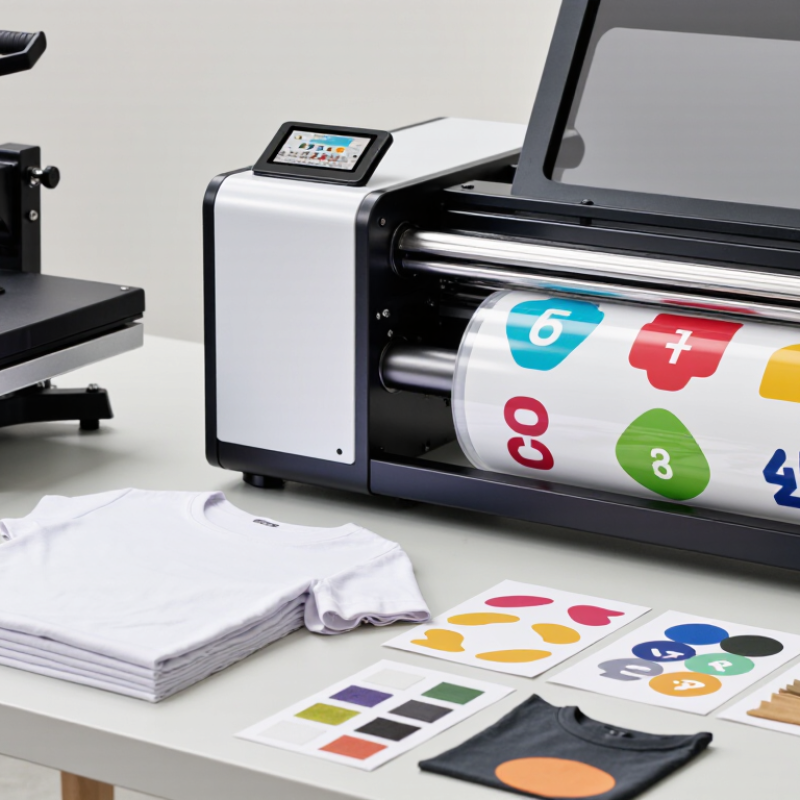
A 600–1,200 dpi rating begins at the printhead, but the number alone cannot predict transfer quality. At 600 dpi, the nominal addressable pitch is about 42.3 micrometres; at 1,200 dpi, it is about 21.2. These values are calculated from the stated resolution, not a guarantee of equally fine detail on film. The printhead’s nozzle spacing, firing control, and ink delivery must work together. A blocked nozzle can leave a pale line across a dark logo. Small details matter.
The RIP and driver determine how artwork becomes printable dots, while encoder feedback and media-feed control help place those dots consistently. Heater and platen stability also matter: uneven heat or film tension can soften edges before transfer.
ISO/IEC 24790:2017 provides methods for assessing printed-image quality, including edge and uniformity measures; it is a useful reminder that resolution is only one part of evaluation. Fogra’s ProcessStandard Digital likewise emphasizes controlled production and measurement. I would compare test prints under magnification, then check transferred samples on the actual fabric. A specification sheet cannot reveal every wrinkle.
The awkward bit: a nominal 1,200 dpi setting may look worse than a well-calibrated 600 dpi setup when feed accuracy or ink control is poor.