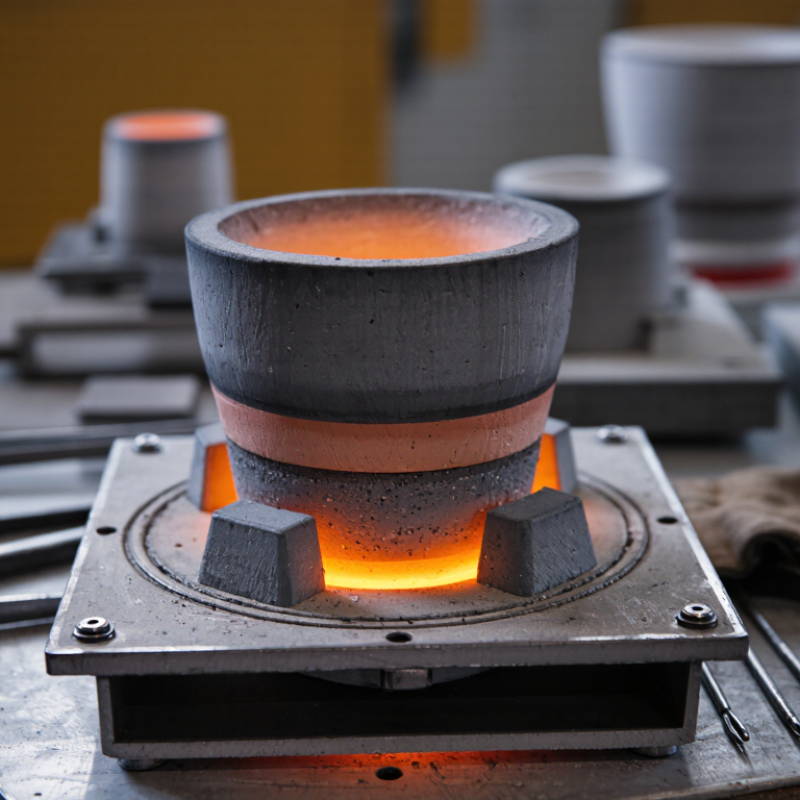
| High-Temperature Capability | Graphite-clay crucibles combine the thermal resistance of graphite with the structural support of a ceramic clay matrix. They are commonly used for melting non-ferrous metals and alloys. | Choose by application
Confirm the supplier's maximum continuous-use temperature and compare it with the planned furnace temperature. The actual limit depends on composition, atmosphere, heating rate, and load. | Do not treat a published maximum temperature as a recommended operating temperature. Maintain a safety margin below the stated limit. |
| Thermal Shock Resistance | Rapid temperature changes can create internal stresses, which may cause cracking, edge failure, or sudden breakage. | Select a crucible designed for the furnace type and heating cycle. A suitable shape, wall thickness, and graphite content can improve resistance to thermal shock. | Avoid sudden changes
Preheat gradually and never place a cold crucible directly into an intensely heated furnace. |
| Thermal Conductivity | Graphite transfers heat efficiently, helping the charge melt more evenly and reducing local hot spots when the furnace is properly controlled. | Choose a size and wall thickness that provide adequate strength without unnecessarily slowing heat transfer. Match the crucible to the furnace power and heating method. | Use controlled heating. Uneven charging or a flame concentrated on one area can still cause localized overheating. |
| Chemical Compatibility | Molten metals, oxides, fluxes, and furnace gases can react with or erode crucible materials. Oxidizing conditions are especially damaging to exposed graphite. | Verify compatibility with the specific metal and flux. Graphite-clay crucibles are often used for non-ferrous metals, but unsuitable alloys or aggressive fluxes may shorten service life. | Check before use
Do not use an unverified crucible for reactive materials, strong oxidizers, or applications involving unknown chemical residues. |
| Furnace Atmosphere | Graphite oxidizes when exposed to oxygen at elevated temperature. Oxidation reduces wall thickness, weakens the crucible, and can cause premature failure. | For air-fired furnaces, choose a crucible with suitable protective treatment or coating when specified by the manufacturer. Inert or reducing atmospheres can reduce oxidation but require properly controlled equipment. | Limit oxygen exposure
Keep the furnace atmosphere appropriate and avoid leaving a hot empty crucible exposed to air for extended periods. |
| Capacity and Working Fill | Molten metal expands and may splash or overflow. Overloading also increases mechanical and thermal stress. | Select capacity according to the metal density, charge mass, and available freeboard. The required volume is not determined by metal weight alone. | Leave sufficient headspace for bubbling, flux action, thermal expansion, and safe pouring. Never fill to the rim. |
| Crucible Shape and Support | Shape affects heat distribution, pouring control, load stability, and stress concentration. Inadequate support can cause distortion or breakage. | Match the base and external profile to the furnace and lifting equipment. Use a compatible plinth, tongs, or pouring shank that supports the crucible without point loading. | Keep the crucible centered and stable. Do not drag it across the furnace floor or lift it by a damaged rim. |
| Moisture and Preheating | Water trapped in a crucible, tool, charge, or flux can rapidly turn into steam and eject molten material. | Use only dry equipment
Store crucibles in a dry location and follow a controlled drying or preheating schedule before charging metal. | Never add wet scrap, damp tools, or moist flux to molten metal. Inspect stored crucibles for moisture before heating. |
| Surface Condition | Cracks, deep scratches, oxidation, wall thinning, and damaged rims reduce mechanical strength and can lead to leakage or breakage. | Inspect the entire crucible before every use, including the base, sidewall, rim, pouring lip, and lifting contact areas. | Reject if damaged
Remove crucibles with visible cracks, severe warping, deep erosion, exposed large pores, or significant wall thinning. |
| Charging Practice | Heavy or sharp pieces can impact the bottom and sidewalls. Bridged charges may collapse unexpectedly as the metal melts. | Load gently, place heavier pieces at the bottom only when appropriate, and avoid forcing oversized material into the crucible. | Keep hands and body away from the opening. Use suitable tools and add charge in a controlled sequence. |
| Flux and Slag Management | Some fluxes can chemically attack the crucible or increase erosion. Excessive scraping can damage the lining and expose weaker material. | Use only fluxes confirmed as compatible with both the metal and the crucible. Minimize unnecessary flux quantity and prolonged contact. | Remove slag with compatible tools and controlled force. Do not aggressively chip or scrape the crucible wall. |
| Handling and Lifting | Hot crucibles are heavy and brittle. Mechanical shock, poor gripping, or an unbalanced load can cause spills and serious injury. | Use lifting equipment rated for the combined crucible and molten-metal load. Confirm that tongs or shanks fit the crucible profile. | Protective equipment required
Use face and eye protection, heat-resistant clothing, gloves, safety footwear, and suitable ventilation. |
| Cooling and Storage | Rapid cooling or contact with cold, wet surfaces can create thermal shock and absorb moisture into the porous body. | Allow the crucible to cool in a controlled, dry area. Store it off the floor and protect it from impact, water, and contamination. | Do not quench a hot crucible or place it on a wet metal surface. Handle only after it has cooled sufficiently for safe inspection. |
| Service-Life Tracking | Crucibles gradually lose strength through oxidation, erosion, repeated heating, and mechanical handling. Failure risk increases when wear is ignored. | Record usage cycles, metals processed, operating conditions, and inspection results. Replace the crucible according to condition rather than appearance alone. | When in doubt, retire the crucible. The cost of early replacement is lower than the risk of a molten-metal spill or furnace damage. |