Why Choose Large Lithium Ion Batteries?
Why Choose Large Lithium Ion Batteries?
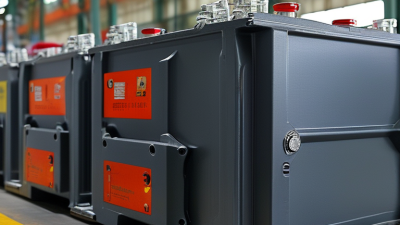
Large lithium ion batteries are becoming central to modern energy systems. They support electric vehicles, renewable energy storage, backup power, and industrial equipment. Their value is not simply their size. It comes from storing substantial energy in a comparatively compact and manageable package.
Battery researcher Jeff Dahn, a leading lithium-ion specialist and former Tesla research partner, has said, “Lithium-ion batteries are not going away anytime soon.” His observation reflects decades of laboratory work and field experience. These batteries can deliver steady power, support repeated charging, and respond quickly when demand changes. A solar facility, for example, may use them to store afternoon electricity for evening consumption. An electric bus can rely on them through long routes, frequent stops, and heavy passenger loads.
The practical case still requires careful thinking. Large lithium ion batteries can reduce operating emissions and improve energy independence, but they are not automatically the best choice. Their performance depends on cell chemistry, temperature control, charging habits, maintenance, and end-of-life planning. A poorly designed battery system may lose capacity faster than expected. It may also create unnecessary costs through oversized equipment.
That matters.
Choosing the right system means examining real usage patterns, not following market excitement. Engineers should compare usable capacity, cycle life, safety features, installation conditions, and total ownership costs. The strongest decision may look less impressive on paper. Yet it often performs better over years of daily service.

Large Lithium-Ion Batteries: Capacity Classes Above 100 kWh
Why Choose Large Lithium-Ion Batteries?
Large Lithium-Ion Batteries: Capacity Classes Above 100 kWh
A battery above 100 kWh changes the design conversation. It can serve a depot, factory, microgrid, or commercial vehicle with fewer recharge stops. Practical capacity classes often include 100–250 kWh, 250–500 kWh, and above 500 kWh. These bands are useful, but not universal standards. According to the IEA’s Global EV Outlook 2024, global electric-vehicle battery demand exceeded 750 GWh in 2023. Demand increased by about 40% that year. That scale matters.
Large systems reduce the number of cabinets, cables, and power-conversion interfaces per megawatt-hour. They can support peak shaving, backup power, and solar shifting within one operating window. The IEA’s Batteries and Secure Energy Transitions report projects battery storage capacity rising from roughly 85 GW in 2023 to 1,200 GW by 2030 under its net-zero pathway. Capacity alone is insufficient. Engineers must match usable energy, discharge power, thermal control, fire protection, and cycling demands. A 300 kWh pack with poor ventilation may underperform a smaller, better-integrated system.
Field evaluations often reveal the overlooked variable: degradation. High heat, frequent fast charging, and deep discharge can reduce usable capacity earlier than expected. BloombergNEF’s 2024 battery price survey reported an average lithium-ion pack price of 115 dollars per kWh, down 20% from 2023. Lower prices improve project economics, but maintenance and replacement planning remain essential. I would question any proposal listing capacity without a measured usable-energy curve. Real performance depends on site data, not a round number.
Why Choose Large Lithium Ion Batteries? - Large Lithium-Ion Batteries: Capacity Classes Above 100 kWh
Representative capacity classes, operating characteristics, and practical advantages of large lithium-ion energy-storage systems
| Capacity Class |
Nominal Energy Range |
Approximate Usable Energy at 90% Depth of Discharge |
Typical Continuous Power Range |
Approximate DC System Voltage |
Common Applications |
Key Advantages |
| Class 1: 100–250 kWh |
100–250 kWh |
90–225 kWh |
50–125 kW |
400–800 V DC |
Commercial buildings, small industrial facilities, electric-vehicle charging support, and renewable-energy self-consumption |
Compact footprint, modular installation, peak-demand reduction, and improved use of on-site solar generation |
| Class 2: 250–1,000 kWh |
250 kWh–1 MWh |
225–900 kWh |
125–500 kW |
600–1,000 V DC |
Medium-sized commercial sites, manufacturing plants, logistics centers, campuses, and microgrids |
Higher load-shifting capability, reduced demand charges, backup support for critical loads, and scalable capacity |
| Class 3: 1–5 MWh |
1–5 MWh |
0.9–4.5 MWh |
0.5–2.5 MW |
800–1,500 V DC |
Utility substations, renewable-energy plants, large industrial sites, and community microgrids |
Grid balancing, renewable-energy smoothing, frequency-response capability, and multi-hour energy shifting |
| Class 4: 5–20 MWh |
5–20 MWh |
4.5–18 MWh |
2.5–10 MW |
1,000–1,500 V DC |
Large solar and wind projects, transmission and distribution support, and utility-scale peak management |
Large-scale dispatchability, curtailment reduction, congestion management, and flexible grid capacity |
| Class 5: Above 20 MWh |
More than 20 MWh |
More than 18 MWh |
10 MW and above |
1,000–1,500 V DC |
Regional grid storage, renewable-energy hubs, capacity markets, and long-duration system support |
Very high energy throughput, system-wide peak shaving, reserve capacity, and integration of variable renewable generation |
Data note: Values are representative engineering ranges for large lithium-ion battery systems. Actual performance depends on cell chemistry, thermal conditions, inverter sizing, operating temperature, state-of-charge limits, cooling design, and project configuration. Usable energy is estimated at 90% depth of discharge and does not represent a guaranteed value for every system.
Energy Density of 150–265 Wh/kg Enables Compact High-Capacity Storage
Why Choose Large Lithium Ion Batteries?
Energy Density of 150–265 Wh/kg Enables Compact High-Capacity Storage
Large lithium ion batteries can store substantial energy without occupying an entire equipment room. At 200 Wh/kg, a 10 kWh battery contains roughly 50 kilograms of cells. The complete system weighs more because of housing, wiring, cooling, and protection hardware. Still, the footprint can remain surprisingly compact.
This energy density supports electric equipment, backup power, and renewable energy storage where space matters. Engineers often compare usable energy, not only the headline rating. A battery rated at 200 Wh/kg may deliver less in practice after reserve limits and conversion losses. Temperature also changes performance. Cold mornings can reduce available power.
Size matters.
In real installations, I would inspect thermal management, cycle-life data, and battery management controls before choosing capacity. A dense design may reduce floor space, but it can increase heat concentration. That trade-off deserves careful testing. The 150–265 Wh/kg range is useful, yet it should never stand alone as a purchasing promise. Verified test conditions, installation records, and maintenance plans provide stronger evidence. Even then, predictions can be imperfect. Real loads fluctuate, and future expansion may alter the original calculation.
Round-Trip Efficiency of 90–95% Reduces Energy Losses
Why Choose Large Lithium Ion Batteries?
Round-Trip Efficiency of 90–95% Reduces Energy Losses
Large lithium ion batteries can return 90–95% of the electricity they store. This round-trip efficiency matters in homes, factories, and renewable energy systems. If 10 kilowatt-hours enter the battery, roughly 9 to 9.5 kilowatt-hours may come back for use. The remaining energy becomes heat or supports internal battery controls.
That difference becomes significant over thousands of cycles. A facility charging during low-cost hours can reduce wasted electricity during evening demand. Solar power also benefits, especially when daytime production exceeds immediate consumption. In field projects, technicians often monitor the battery, inverter, wiring, and temperature together. The battery is only one part of the efficiency result.
Real conditions are less perfect. Efficiency can fall during extreme heat, cold weather, rapid charging, or high power demand. Age also changes performance. A 90–95% rating usually reflects controlled testing, not every installation. Check the complete system data, including standby consumption and conversion losses. Small errors in measurement can influence the final calculation.
Still, the figure is useful. It gives engineers a practical basis for comparing storage options and estimating operating costs. A larger battery may also run at a gentler rate, which can support stable performance. That is not guaranteed, though. Poor ventilation, weak controls, or incorrect sizing can erase part of the expected benefit.
Cycle Life of 2,000–5,000 Cycles Supports Long-Term Operation
Why Choose Large Lithium Ion Batteries?
Cycle Life of 2,000–5,000 Cycles Supports Long-Term Operation
A cycle means using the battery’s rated energy and restoring it. At one full cycle daily, 2,000–5,000 cycles represent roughly 5.5 to 13.7 years of operation. That range makes large lithium ion batteries suitable for storage systems, industrial equipment, and demanding backup applications.
The figure is not magic. NREL’s published battery-degradation research identifies temperature, depth of discharge, charging speed, and time at high charge as major aging factors. A battery operating at 35°C may age faster than one maintained near 25°C. Shallow daily cycling can also produce different results than repeated full discharges. Real conditions matter more than a laboratory headline.
Testing methods such as IEC 62620 help evaluate industrial lithium cells under controlled conditions. The U.S. Department of Energy also uses retained capacity as a key measure of battery performance. In practice, many engineers treat 80% remaining capacity as a useful end-of-life reference. The IEA’s Global EV Outlook 2024 reports continued growth in lithium-ion deployment, increasing the importance of reliable lifecycle data. Buyers should request cycle-test conditions, usable capacity, temperature limits, and warranty assumptions. Otherwise, “5,000 cycles” may sound precise while hiding important limitations.
Grid and EV Applications Benefit from Scalable Megawatt-Hour Systems
Why Choose Large Lithium Ion Batteries?
Grid and EV Applications Benefit from Scalable Megawatt-Hour Systems
Large lithium ion batteries help balance electricity when supply and demand change quickly. A megawatt-hour system can store surplus solar power during the afternoon. It can release that energy after sunset, when household demand rises. Grid operators also use batteries for frequency regulation and short-duration backup. Response times can be measured in milliseconds. That speed supports a more stable grid.
EV charging depots gain similar advantages. A battery system can charge gradually from the grid, then deliver high power to several vehicles. This can reduce pressure on local transformers and avoid expensive peak-demand periods. Modular cabinets also allow capacity to grow with fleet size. A small depot might begin with a few megawatt-hours. Additional modules can follow later.
Performance depends on more than battery capacity. Engineers must assess thermal conditions, fire protection, ventilation, software controls, and available grid capacity. Battery management systems monitor voltage, temperature, and state of charge continuously. Round-trip efficiency varies with operating conditions. Degradation is unavoidable. Harsh temperatures and frequent deep cycling can accelerate it. That part is often underestimated. Careful commissioning, regular inspections, and verified operating data improve reliability. Still, large systems are not a universal answer. Land, permitting, recycling, and upfront costs can limit practical deployment.cuntegn