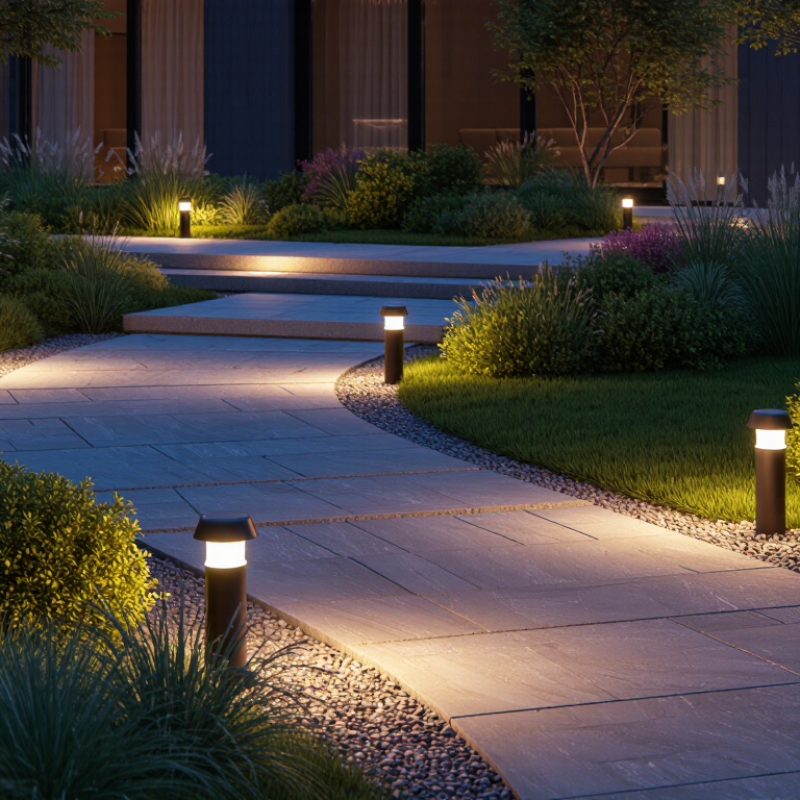
Choosing walk path lights starts with the route, not the fixture. Mark steps, bends, and changes in level, then check where trees or walls cast shadows. Low, shielded lights can reveal the walking surface without shining into a neighbor’s window. For wet or exposed locations, check the fixture’s outdoor ingress-protection rating and follow the maker’s installation guidance. A warm, modest output often feels calmer than a bright, cool beam. Too much light can make dark patches harder to see.
Power source matters. Solar fixtures are simple to place, but shade and short winter days can reduce charging; wired lights offer steadier output but need suitable outdoor wiring. Compare operating costs and service life, too. The U.S. Department of Energy’s Energy Saver guidance says LEDs use at least 75% less energy and last up to 25 times longer than incandescent lighting. That is a useful benchmark, not a promise for every product. Check lumen output, warranty terms, and whether batteries or lamps can be replaced. One easy mistake: buying by appearance alone.
Tips: Set a sample light at dusk before installing a full row. Walk the route from both directions and look for glare, dark gaps, and awkward shadows. Small spacing changes can make a noticeable difference.