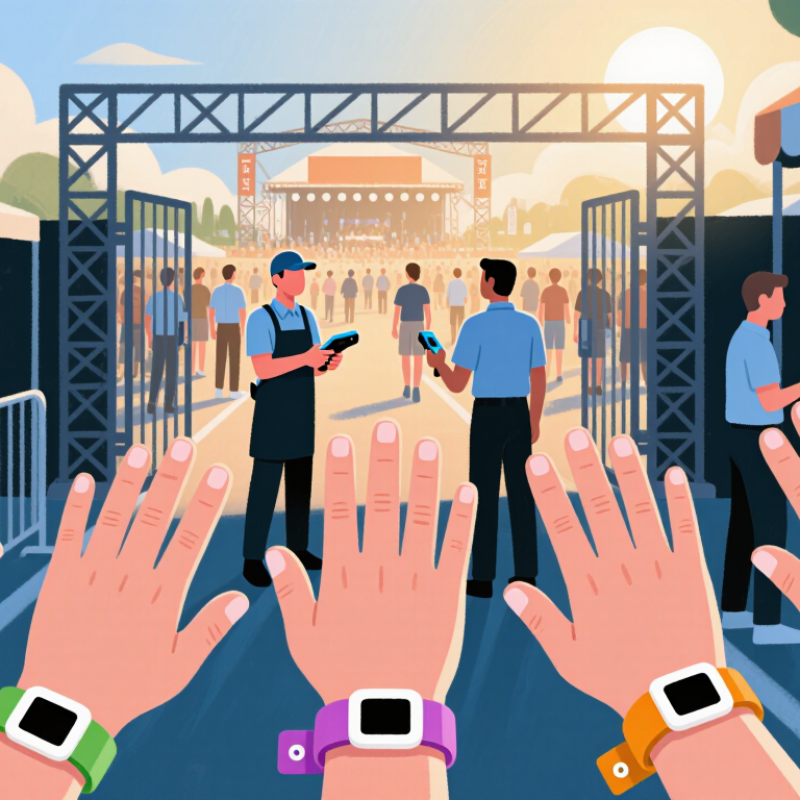
RFID wristbands help event teams manage entry with a quick tap at a reader. At a busy festival, staff can verify a ticket while guests keep moving. Shorter queues matter. The same band may support access to food areas, workshops, lounges, or age-restricted zones. Event organizers can assign permissions before opening day. They can also review entry times and capacity data through a secure management system.
Common access-control applications include conferences, sports venues, swimming facilities, campuses, and temporary exhibitions. A wristband can open an approved door or identify a registered participant at a checkpoint. It reduces the need for printed tickets and visible plastic cards. For multi-day events, staff can issue different access levels by color, account setting, or wristband type. However, color alone is not reliable enough. Lighting changes, damaged bands, and rushed checks can cause mistakes.
Good planning includes clear reader placement, staff training, and a manual backup process. Readers should be tested near metal structures and crowded entrances, where performance may change. Personal data should remain in the event system rather than on the band whenever practical. Access logs also need limited permissions and a defined retention period. RFID is useful, but it is not magic. A guest may lose a wristband, a reader may fail, or a database may contain an error. Regular checks and human judgment still matter.