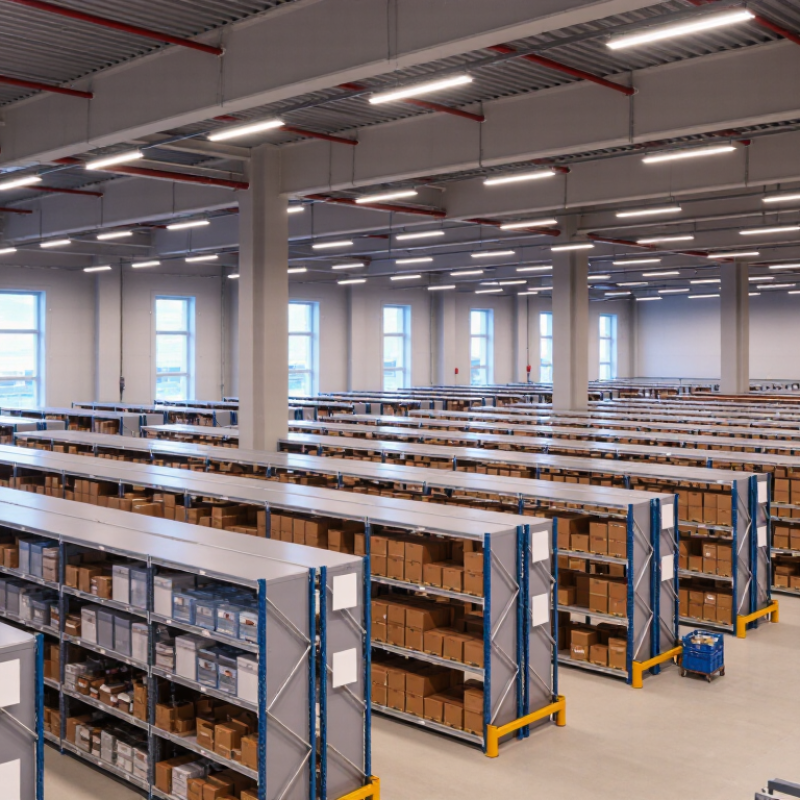
| Bolted or Boltless Shelving | Adjustable shelves on upright frames; assembled with bolts or interlocking clips. | Often about 100–500 lb (45–225 kg) per shelf, depending on the design and load distribution. | Direct access to each shelf; typically arranged in single or back-to-back rows. | Hand-picked cartons, small parts, tools, and general inventory. | Check the rated capacity for each shelf and frame. Evenly distribute loads and secure units where required. |
| Longspan Shelving | Wide shelf levels supported by beams between upright frames; often configured without a front-center support. | Commonly about 500–2,000 lb (225–900 kg) per level, subject to beam length and specification. | Open access from the aisle; accommodates wider or bulkier items than standard light-duty shelving. | Large cartons, components, and medium-weight stock picked by hand. | Longer spans can reduce load capacity. Confirm beam ratings and avoid concentrated loads unless the system is designed for them. |
| Mobile Shelving | Shelving units mounted on movable bases that travel along floor rails or a guided system. | Varies by shelving unit; capacity is based on the specified shelves, frames, and mobile base. | Units move to create an access aisle, reducing the number of permanent aisles needed. | Archives, records, spare parts, and other inventory where storage density is a priority. | Requires a suitable floor and careful planning for access, operating controls, safety features, and emergency egress. |
| Cantilever Racking | Upright columns with projecting arms; shelves or decking may be added where appropriate. | Arm and column capacities vary considerably with arm length, spacing, and load position. | Open-front design supports long items and allows access along the rack face. | Timber, pipes, tubes, furniture, and other long or awkwardly shaped goods. | Loads must be placed and restrained according to the system design. Verify arm and column ratings for the intended item lengths. |
| Carton Flow Shelving | Inclined roller or wheel tracks move cartons from a replenishment side toward a picking face. | Depends on the track, shelf structure, carton size, and weight; systems are configured for specific loads. | Supports first-in, first-out flow and separates replenishment from order picking. | Fast-moving cartons, order-picking operations, and repeat-pick items. | Cartons need compatible bases and weights for reliable movement. Test representative cartons and plan replenishment access. |
| Pallet Racking with Shelf Decking | Upright frames and horizontal beams, with wire mesh or solid decking added to create shelf-like levels. | Beam capacity is specified for each configuration; it depends on span, beam type, and load arrangement. | Provides adjustable storage levels and can be accessed by forklift or, in some layouts, by hand. | Palletized stock, large containers, and mixed warehouse inventory. | Design for the pallet dimensions, handling equipment, floor conditions, and applicable local safety requirements. |