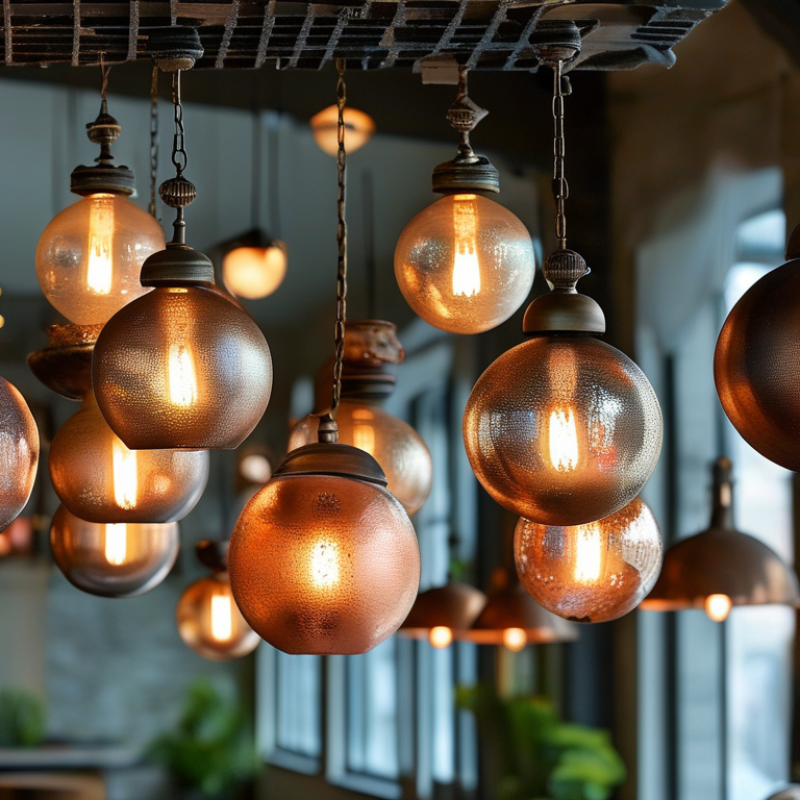
| Product Definition | A pendant light is a ceiling-mounted fixture suspended by a cord, chain, rod, or adjustable stem. An iron pendant light uses iron or steel as its main structural or decorative material. | Its suspended design directs light downward and creates a clear visual focal point above dining tables, kitchen islands, counters, reception desks, and work areas. |
| Common Material | Powder-coated or painted steel is commonly used for the shade and frame; some designs combine iron with glass, wood, fabric, or aluminum components. | Metal construction provides a firm structure and supports a wide range of finishes, colors, shapes, and decorative styles. |
| Typical Shade Forms | Bell, dome, cone, cylinder, cage, geometric, and multi-light linear forms are widely used. | Different shade geometries help buyers match the fixture to residential, hospitality, retail, office, and restaurant interiors. |
| Typical Fixture Diameter | Approximately 150–600 mm for many single-light pendants; larger multi-light fixtures can exceed this range. | The suitable size depends on ceiling height, room scale, table width, and the number of fixtures installed together. |
| Adjustable Suspension | Many models use an adjustable cable, chain, or stem. The supplied suspension length varies by product and market. | Adjustability helps accommodate different ceiling heights and installation requirements in international projects. |
| Common Lamp Bases | E26 and E27 screw bases are widely used; GU10, G9, and other bases are also available depending on the design. | The lamp base should be selected according to the destination market, replacement-lamp availability, and local electrical standards. |
| Light Source | Compatible products may use replaceable LED bulbs, compact fluorescent lamps, or integrated LED modules. The permitted source depends on the fixture design. | Replaceable bulbs can simplify maintenance, while integrated LED models may offer a slimmer appearance and optimized light distribution. |
| Electrical Compatibility | Products must be specified for the destination voltage and frequency, such as 120 V / 60 Hz or 220–240 V / 50 Hz. Actual compatibility must be verified from the product rating label. | Checking voltage, frequency, wiring, plug or terminal requirements, and applicable approvals helps reduce installation and import risks. |
| Recommended Indoor Use | Dining rooms, kitchens, bedrooms, living rooms, cafés, restaurants, hotel areas, retail spaces, and offices. | Iron pendant lights are versatile for both decorative and task-lighting applications when the fixture is correctly positioned and rated. |
| Outdoor Suitability | Indoor-rated pendants should not be installed outdoors. Outdoor use requires a model with an appropriate IP rating and corrosion-resistant construction. | This distinction is important in humid, coastal, or exposed locations where moisture and corrosion can affect safety and service life. |
| Surface Finish | Common finishes include matte black, white, bronze, brass-tone, brushed metal, and other painted or powder-coated surfaces. | A broad finish selection supports different interior styles and enables coordinated lighting schemes without relying on a particular brand. |
| Durability Considerations | Durability depends on steel thickness, welding or joining quality, coating adhesion, hardware quality, installation, and operating environment. | Buyers should review material specifications, finish testing, load capacity, and assembly quality rather than judging durability by appearance alone. |
| Cleaning and Maintenance | Use a soft, dry or slightly damp cloth after switching off and cooling the fixture. Avoid abrasive cleaners that may damage the finish. | Simple maintenance helps preserve the coating and appearance while reducing long-term cleaning and replacement costs. |
| Installation Requirements | Installation normally requires a suitable ceiling outlet box, secure mounting hardware, correct wiring, and a qualified electrician where required by local regulations. | Proper installation is essential because the fixture is suspended overhead and must safely support its own weight and any moving components. |
| Key Buying Checks | Confirm dimensions, net weight, suspension length, lamp base, maximum wattage, voltage, frequency, IP rating, mounting method, and included accessories. | A complete specification review improves product selection, shipment planning, installation efficiency, and compliance with destination-market requirements. |