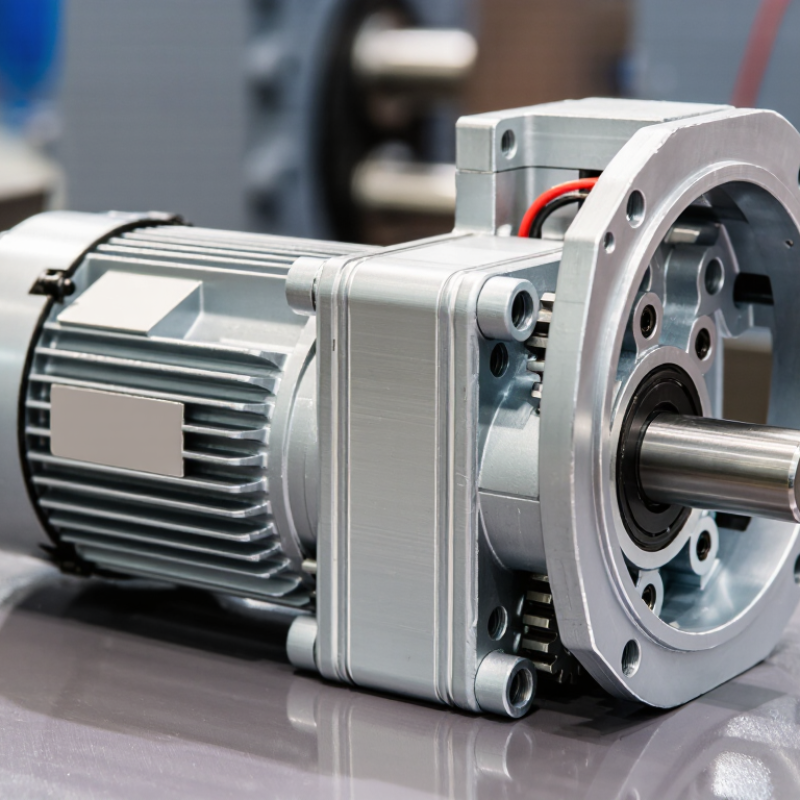
| Electric motor | Provides the input rotation. | Electrical energy creates magnetic forces that turn the rotor and motor shaft. The motor may be designed for AC or DC power. |
| Stator and rotor | Generate the motor’s rotation. | The stator provides a stationary magnetic field; interaction with the rotor’s magnetic field produces rotational force. |
| Motor shaft and coupling | Transfer rotation into the gearbox. | The motor shaft drives the gearbox input directly or through a coupling, depending on the design. |
| Gear train | Reduces speed and increases available output torque. | Meshing gears transfer motion through one or more stages. Spur, helical, planetary, and worm arrangements are common gearbox designs. |
| Reduction ratio | Describes the relationship between input and output speed. | For a simple ratio definition, reduction ratio = input speed ÷ output speed. A higher ratio generally gives lower output speed and greater torque, with actual torque affected by gearbox efficiency. |
| Bearings | Support rotating shafts and manage loads. | Bearings help keep shafts aligned and reduce friction as the motor and gears rotate. |
| Gearbox housing | Holds and protects the gear assembly. | The housing maintains gear alignment and helps contain lubricant. Its material and construction vary by application. |
| Lubricant and seals | Reduce wear and help retain lubricant. | Grease or oil lubricates contacting gear surfaces; seals help limit lubricant leakage and the entry of contaminants. |
| Output shaft | Delivers reduced-speed rotation to the driven equipment. | The shaft connects to a load such as a conveyor, wheel, valve, or positioning mechanism. |
| Electrical connections | Supply power and, where applicable, control signals. | Terminals or leads connect the motor to a compatible power source or controller. Voltage, current, and wiring depend on the motor design. |