Navigation

The C.L. Smith Blog

China Top 10 Lithium Battery Shipping Label Suppliers?

Choosing a reliable supplier matters when lithium battery packages move through busy warehouses, freight terminals, and courier networks. A clear shipping label lithium battery helps staff identify the package and handle it with care. Yet print quality alone is not enough. Buyers should also check material durability, adhesive performance, layout options, production capacity, and customer support.

This guide introduces ten China-based suppliers for comparison, with attention to their product ranges and practical capabilities. A label may face cold storage, moisture, abrasion, or long transit times. Small details matter. Ask for samples and confirm that text remains legible after handling. Review current product specifications, company information, and quality documentation directly with each supplier. Supplier rankings can change, and available public information may be incomplete.

The right choice depends on shipment volume, packaging surfaces, destination markets, and internal procedures. Clear communication helps prevent mismatched sizes or unclear print requirements. Check applicable carrier instructions and relevant shipping requirements before placing a large order. No supplier can replace careful verification by the shipper. That part is easy to overlook. This overview offers a starting point, not an endorsement; compare evidence, request recent references where appropriate, and confirm details before purchasing. A little extra checking can save time at the packing bench.

China Top 10 Lithium Battery Shipping Label Suppliers?

What Are Lithium Battery Shipping Labels and Why Are They Required?

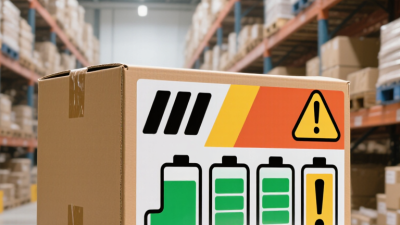
Lithium battery shipping labels are visible notices that identify a parcel as containing lithium batteries and communicate handling information. They may include a battery symbol, a phone number, or other shipment details, depending on the battery and how it is packed. They are not decorative stickers. A clear label helps warehouse staff and carriers recognize a package without opening it.

Why are they required? Lithium batteries can overheat or become damaged, especially if a package is crushed or poorly packed. The label gives people handling the shipment a useful warning and supports the transport instructions that apply to that specific shipment. Requirements can vary with battery type, quantity, packaging, and route, so one label does not fit every parcel. Small details matter. A label that is obscured by tape, placed on a seam, or printed too faintly may be hard to read. Before shipping, check the current carrier guidance and applicable transport rules, and make sure the package contents match the label. This can feel repetitive, but accuracy is worth the extra minute. A label cannot replace suitable packaging or correct documentation.

Which Rules Govern Lithium Battery Labels for Shipments from China?

For lithium battery shipments from China, labeling depends on the battery’s classification, packaging, and transport route. International rules commonly draw on the UN Model Regulations, while air, sea, and road shipments follow their respective dangerous-goods codes. The applicable edition and carrier requirements can change. Check them before packing.

Identify whether batteries ship alone or installed in equipment. Lithium-ion batteries generally use UN 3480 or UN 3481; lithium-metal batteries use UN 3090 or UN 3091.
The correct marks and hazard labels depend on the shipment’s details and applicable packing instructions. Air cargo is subject to the current IATA Dangerous Goods Regulations; sea freight follows the IMDG Code. The UN 38.3 test summary and shipping documents may also be required.

A label cannot fix incorrect classification.

Small details matter. Before dispatch, compare the package markings with the declaration, battery specifications, and carrier instructions. Check that labels are visible, legible, and not folded over an edge. A carton may look compliant while its paperwork says something different; that mismatch deserves a second look. Requirements can vary by route and shipment type, so confirm the current rules with a qualified dangerous-goods professional or carrier.

How Are China’s Leading Lithium Battery Label Suppliers Evaluated?

Evaluating China’s leading lithium battery label suppliers requires more than comparing unit prices. Start with the label itself: check whether hazard symbols, handling text, and identification fields remain sharp after printing. Small details matter. Request samples made with the intended printing process, then inspect contrast, alignment, and barcode readability under ordinary warehouse lighting.

Material performance deserves equal attention. Ask for evidence that the label stock and adhesive suit expected temperatures, moisture, and packaging surfaces. A carton in a cool loading area may behave differently from one exposed to heat or condensation. Test adhesion on actual packaging, not just supplier-provided cards. Review batch consistency, color control, lead times, and how production defects are recorded. These checks reveal more than a polished catalog.

Reliable suppliers should explain their quality checks clearly and provide current specifications and test records. Confirm that layouts can be updated when shipment details change, while keeping approved artwork controlled. Communication matters. A quick reply is useful, but a precise answer about reprints, tolerances, or sample approval is better. No checklist guarantees a perfect choice; even a strong sample may not represent every production batch. Compare suppliers using the same criteria, and retain dated samples for later review.

Who Are Ten Notable Suppliers and What Do They Specialize In?

China has a broad market for lithium-battery shipping labels, from label-stock makers to specialist printers. A useful supplier comparison looks beyond price. Check adhesive performance, print clarity, material specifications, and sample consistency. Requirements vary with packaging surfaces and storage conditions.

Ten supplier profiles are worth considering. One makes coated paper stock for economical, short-term use. Another supplies synthetic film for moisture resistance. A third focuses on strong adhesives for corrugated cartons. A fourth prints durable labels for rough handling. A fifth offers thermal labels for fast in-house printing. A sixth handles custom sizes and layouts. A seventh supports variable data, such as batch codes. An eighth serves small orders and prototypes. A ninth emphasizes color matching and inspection records. A tenth combines labels with broader packaging supplies.

Ask each candidate for material data and physical samples. Test labels on the actual carton, not just a smooth office surface. Check whether text stays legible after rubbing and temperature changes. Details matter. A polished sample is not proof of stable production; that distinction is easy to miss. Supplier claims should be checked against your packaging process and current shipping requirements.

What Should Buyers Check Before Choosing a Supplier?

Before choosing a lithium battery shipping-label supplier, check whether its artwork matches the battery configuration and transport mode. The International Energy Agency’s Global EV Outlook 2024 reports that battery demand in the energy sector exceeded 750 GWh in 2023, about 40% above 2022. That growth makes consistent printing and dependable restocking practical concerns. Ask for proofs covering the shipment types you handle, and compare them with current IATA, IMDG, or road-transport requirements. Rules can change.

Check the label stock, adhesive, print contrast, and resistance to moisture, abrasion, and temperature swings. Test samples on your actual packaging, including a cold warehouse or damp loading area. A neat sample isn’t enough. Ask the supplier for batch traceability, inspection records, and a clear process for correcting misprints. I would not rely on a certificate alone; it may not show how a label performs on your cartons.

Also confirm whether the supplier can support short trial orders, repeat production, and urgent replenishment without changing material or print quality. Request dimensions and artwork files for review, then check symbols and text against the applicable edition of the UN Model Regulations and transport rules. Keep a dated approved proof. It is a small step, and easy to overlook.

Back to top