Navigation

The C.L. Smith Blog

What Are the Top Lithium Batteries Suppliers in China?

China has become a central force in the global lithium batteries supply chain. According to the International Energy Agency’s Global EV Outlook 2024, global electric vehicle battery demand exceeded 750 GWh in 2023, rising by about 40%. China represented nearly 60% of worldwide electric car sales and remained the largest battery manufacturing hub. These figures explain why buyers examine Chinese suppliers so closely.

The market is large. Quality is uneven.

This guide introduces leading Chinese lithium batteries suppliers by examining production scale, chemistry, safety testing, delivery capability, and after-sales support. It also considers whether a supplier can provide consistent cells, transparent sourcing, and reliable battery management systems. BloombergNEF reported that average lithium-ion battery pack prices fell to 115 dollars per kWh in 2024, showing stronger cost pressure across the industry. Lower prices, however, do not automatically mean better value.

Fatih Birol, Executive Director of the International Energy Agency, said, “The combination of solar PV and batteries is going to change the way we produce and consume electricity.” His observation highlights the growing role of storage in vehicles, factories, and renewable-energy projects. The IEA’s Batteries and Secure Energy Transitions report also stresses the importance of resilient supply chains and responsible mineral sourcing. That point deserves attention. A supplier with a polished website may still lack transparent traceability or dependable export experience. Therefore, this overview focuses on evidence rather than reputation alone, while acknowledging that supplier rankings can change with technology, policy, and capacity expansion.

What Are the Top Lithium Batteries Suppliers in China?

What Defines a Leading Lithium Battery Supplier in China?

A leading lithium battery supplier in China is not defined by factory size alone. It combines stable cell chemistry, disciplined process control, and transparent technical evidence. The International Energy Agency reported that global battery demand for electric vehicles and storage approached 750 GWh in 2023. China supplied more than 80% of global battery cell production that year. Scale matters, but consistency matters more.

Look for traceable raw materials, batch records, and independent safety testing. A serious supplier should explain cycle life, energy density, operating temperature, and warranty limits without vague promises. IEC test reports, ISO 9001 systems, and transport compliance documents provide useful verification. Site experience also reveals practical weaknesses, such as uneven welds, damaged terminals, or unclear labeling. These details are easy to overlook.

Price alone misleads. BloombergNEF’s 2024 Battery Price Survey placed the average lithium-ion pack price at 115 dollars per kWh, reflecting intense cost pressure. A supplier offering less may reduce quality, service, or testing. A higher quote is not automatically safer either. No supplier gets every forecast right. Buyers should compare failure data, production capacity, after-sales response, and replacement procedures. A leading supplier communicates problems early, supports audits, and improves designs after field feedback. That standard is harder to measure, but it often separates dependable supply from attractive paperwork.

What Are the Top Lithium Batteries Suppliers in China? - What Defines a Leading Lithium Battery Supplier in China?

Evaluation Dimension Objective Benchmark or Technical Reference Evidence Buyers Should Request Why It Defines a Leading Supplier
Cell Chemistry Expertise LFP: 3.2 V nominal NMC: approximately 3.6–3.7 V nominal Cell datasheets, chemistry declarations, safety data sheets, and application-specific design recommendations. A qualified supplier should match chemistry, energy density, thermal behavior, cost, and service life to the application rather than offer a one-size-fits-all battery.
Manufacturing Quality System ISO 9001 quality-management certification with a defined process-control and corrective-action system. Valid certificate, certification scope, manufacturing-site address, audit history, inspection procedures, and nonconformance records. A documented quality system supports consistent production, traceability, root-cause analysis, and continuous improvement.
Automotive Capability IATF 16949 is the relevant quality-management standard for organizations supplying automotive production and service parts. Current IATF 16949 certificate, customer-specific requirements process, production-part approval records, and automotive warranty procedures. Automotive projects require stricter process discipline, traceability, change control, and failure-prevention methods than many general-purpose applications.
Product Safety Compliance UN 38.3 transport testing includes eight test categories, T.1 through T.8, for lithium cells and batteries. UN 38.3 test summary, applicable test reports, transportation classification, packaging instructions, and shipment documentation. Verified transport compliance reduces shipment delays and demonstrates that the battery design has passed internationally recognized abuse and environmental tests.
Industrial Battery Safety IEC 62619 applies to safety requirements for secondary lithium cells and batteries used in industrial applications. IEC 62619 test report or certificate, protection design information, abnormal-operation test results, and production inspection records. Industrial systems often operate at higher capacity and require controlled protection against overcharge, over-discharge, short circuit, and overheating.
Portable Product Safety IEC 62133-2 covers safety requirements for portable sealed secondary lithium cells and batteries. IEC 62133-2 report, cell-to-pack design documentation, enclosure information, protection-circuit specifications, and sample test results. Compliance is particularly important for consumer, medical, handheld, and portable electronic products.
Battery Management System Core functions should include overcharge, over-discharge, overcurrent, short-circuit, temperature protection, balancing, and state monitoring. BMS functional specification, protection thresholds, balancing method, communication protocol, firmware revision control, and fault-response test results. A well-designed BMS helps control electrical and thermal risks while improving usable capacity, reliability, and service life.
Thermal Management The design should define operating and charging temperature limits, thermal sensors, heat dissipation, and any cooling strategy. Thermal test reports, temperature maps, sensor layout, cooling-system drawings, thermal-runaway mitigation plan, and enclosure test data. Thermal control is essential because elevated temperature can accelerate degradation and increase safety risks.
Cycle-Life Transparency Cycle-life claims must specify depth of discharge, charge and discharge rates, temperature, end-of-life capacity threshold, and test method. Raw cycle-life curves, laboratory conditions, sample quantity, capacity-retention definition, and independent or witnessed test results. Cycle-life figures without test conditions cannot be compared reliably or used for accurate total-cost calculations.
Energy and Power Performance Key parameters include nominal voltage, rated capacity, usable energy, continuous current, peak current, and round-trip efficiency. Standardized performance datasheet, discharge curves, power-limit tables, efficiency results, and test-condition definitions. Transparent performance data allows engineers to size the battery correctly and avoid overestimating runtime or power capability.
Traceability and Recall Readiness Traceability should cover raw-material batches, cell lots, production dates, assembly records, BMS versions, and final inspection results. Serial-number structure, barcode or QR-code system, batch records, retention policy, change-notification process, and recall procedure. Complete traceability enables faster failure analysis, targeted corrective action, and controlled product recalls.
Environmental Compliance RoHS restricts specified hazardous substances in applicable electrical and electronic products; REACH governs chemical registration and related obligations in the European Union. Material declarations, restricted-substance test reports, REACH statements, supplier declarations, and controlled-substance management procedures. Environmental documentation supports international market access and reduces regulatory and supply-chain risk.
Customization and Engineering Support Capability should cover cell selection, mechanical enclosure, connector design, BMS parameters, communication interfaces, firmware, and validation testing. Engineering team structure, design-review process, prototype schedule, sample-validation plan, CAD capability, and engineering-change procedure. Application-specific engineering is often more important than catalog capacity when space, safety, communication, or environmental constraints are demanding.
Production Capacity and Delivery Control Capacity should be stated by product type and supported by defined lead times, capacity planning, and production-line information. Monthly capacity statement, production schedule, equipment list, bottleneck analysis, on-time-delivery records, and business-continuity plan. Reliable delivery requires more than nominal factory capacity; it depends on planning, material availability, process stability, and contingency management.
After-Sales and Warranty Support Warranty terms should clearly define duration, operating conditions, capacity-retention limits, exclusions, and claim procedures. Written warranty policy, response-time commitment, remote diagnostic process, spare-parts plan, failure-analysis workflow, and service contact structure. Responsive technical support reduces downtime and helps customers manage field failures, firmware updates, and maintenance requirements.
Commercial and Total-Cost Transparency Pricing should identify battery configuration, cells, BMS, enclosure, testing, packaging, logistics terms, warranty, and recurring engineering charges. Itemized quotation, bill of materials, payment terms, tooling charges, minimum order quantity, warranty reserve, and lifecycle-cost assumptions. The lowest purchase price may not be the lowest total cost after safety testing, replacements, downtime, logistics, and end-of-life handling are included.
Note: The benchmarks above are supplier-evaluation criteria and technical reference points, not rankings or performance claims for any specific company or brand. Certification validity, test scope, product model, and manufacturing site should be verified before procurement.

Which Types of Lithium Batteries Do Chinese Suppliers Offer?

Chinese lithium battery suppliers offer several chemistries for different operating conditions. Lithium iron phosphate batteries are popular for energy storage, electric vehicles, and backup systems. They provide strong thermal stability and a long cycle life. Their energy density is lower than some alternatives. That can increase pack size. Nickel manganese cobalt batteries deliver higher energy density for compact vehicles and portable equipment. They require careful thermal management and reliable battery management systems. Lithium titanate batteries support rapid charging and excellent low-temperature performance. They often cost more and store less energy per kilogram. Lithium polymer batteries use flexible pouch cells. These cells suit drones, medical devices, and slim electronic products. Cylindrical and prismatic cells offer different space and cooling advantages.

Suppliers can also build complete battery packs with busbars, fuses, sensors, communication ports, and custom enclosures. A professional supplier should explain cell grading, capacity tolerance, charging limits, and protection settings clearly. Ask for cycle-test data, temperature records, and transport documentation. Certifications and test reports should match the final battery configuration, not only individual cells. This detail is easy to overlook. During evaluation, check performance at partial charge, low temperature, and repeated fast charging. Real installations rarely operate under perfect laboratory conditions. A supplier may recommend one chemistry too quickly. That deserves a second review. The best choice depends on weight, usable capacity, service life, safety margins, charging speed, and total ownership cost.

How to Compare China’s Top Lithium Battery Manufacturers

Comparing China’s top lithium battery manufacturers requires more than checking production volume or online rankings. Start with cell chemistry, usable capacity, cycle-life data, and safety controls. Ask for test conditions, not only impressive figures. A cycle-life claim means little without temperature, charging rate, and depth-of-discharge details. Reliable manufacturers should provide traceable reports from qualified laboratories and explain their quality systems clearly.

Visit the factory when possible. Observe incoming material checks, cell grading, welding, insulation, and end-of-line testing. I have found that small process details often reveal more than polished presentations. Check whether production samples match the approved sample. Review warranty terms, failure-response times, spare-part planning, and export documentation. Pricing matters, but an unusually low quote may hide weaker materials or limited support. Still, factory visits can mislead; one clean day does not prove consistent performance.

Tips: Build a comparison sheet with identical questions for every supplier. Request ten or more samples and test them independently. Compare delivered capacity, voltage consistency, heat behavior, packaging, and documentation. Confirm compliance with the regulations in your destination market. Ask for references from similar applications, not unrelated projects. Avoid relying on one test result. Battery performance changes with temperature, storage time, and operating habits. A careful decision may feel slower, but it reduces surprises after installation.

What Industries Rely on Chinese Lithium Battery Suppliers?

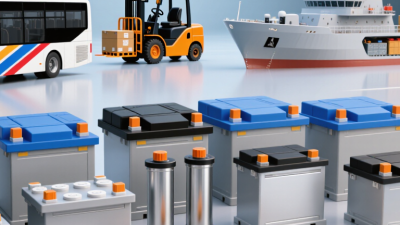
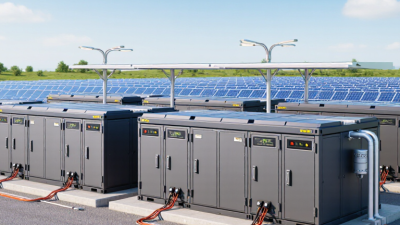
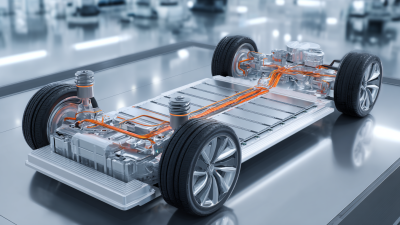
Chinese lithium battery suppliers serve many industries because they offer flexible production, varied cell designs, and competitive manufacturing capacity. Electric vehicle makers use battery packs for cars, buses, forklifts, and delivery vans. Energy storage companies also depend on them for solar systems, microgrids, and backup power cabinets.

Warehouses use lithium batteries in automated vehicles and electric pallet trucks. Construction companies select them for compact machines that operate indoors with less noise. Medical equipment manufacturers require stable battery modules for portable monitors, mobility devices, and emergency systems. Marine equipment, communication towers, and consumer electronics also create steady demand.

Performance alone is not enough. Experienced buyers inspect cell consistency, thermal controls, cycle testing, and factory traceability. They should review transport documents, safety certifications, quality records, and replacement procedures before signing contracts. A lower quotation may conceal weaker testing or unclear warranty terms. That risk is easy to underestimate.

The supply chain is powerful, but not flawless. Raw material prices can change quickly, and shipping delays still affect project schedules. Some suppliers communicate well during sampling but respond slowly after mass production begins. Buyers should test real operating conditions, not only laboratory data. Small temperature changes, heavy vibration, or irregular charging can expose weaknesses that a polished sample never shows.

What Factors Shape Supplier Selection and Market Growth?

Lithium battery supplier selection in China depends on more than production capacity. Buyers should examine cell consistency, chemistry, cycle data, and thermal behavior. A factory visit can reveal testing discipline, material storage, and worker training. Ask for batch records, safety reports, and clear warranty terms. Numbers need context. A high cycle figure may reflect gentle laboratory conditions, not daily field use. Real projects face heat, vibration, irregular charging, and imperfect maintenance. Independent sampling and pilot testing remain valuable before large orders.

Market growth is shaped by electric transport, energy storage, renewable power, and charging infrastructure. These sectors demand safer batteries, faster delivery, and stable performance across different climates. Suppliers with flexible production lines can respond better when demand changes suddenly. However, rapid expansion can pressure raw material quality and skilled labor. Buyers should check traceability from incoming materials to finished battery packs. They should also review quality-control records instead of trusting polished presentations.

Cost remains important, but the lowest quotation can create expensive problems later. A cheaper pack may require more inspections, replacements, or engineering changes. Lead time, minimum order quantity, communication speed, and technical support also influence the real purchase value. In my experience, unclear responsibility during a fault causes more frustration than a modest price difference. Supplier selection is therefore a technical and commercial decision, with room for careful doubt. Forecasts can fail, too. A practical contract should address changing volumes, inspection rights, warranty handling, and end-of-life recycling expectations.

Back to top